
search
Design, build, pressure test and maintain low pressure rural natural gas distribution systems in Alberta in line with provincial technical standards and CSA Z662.
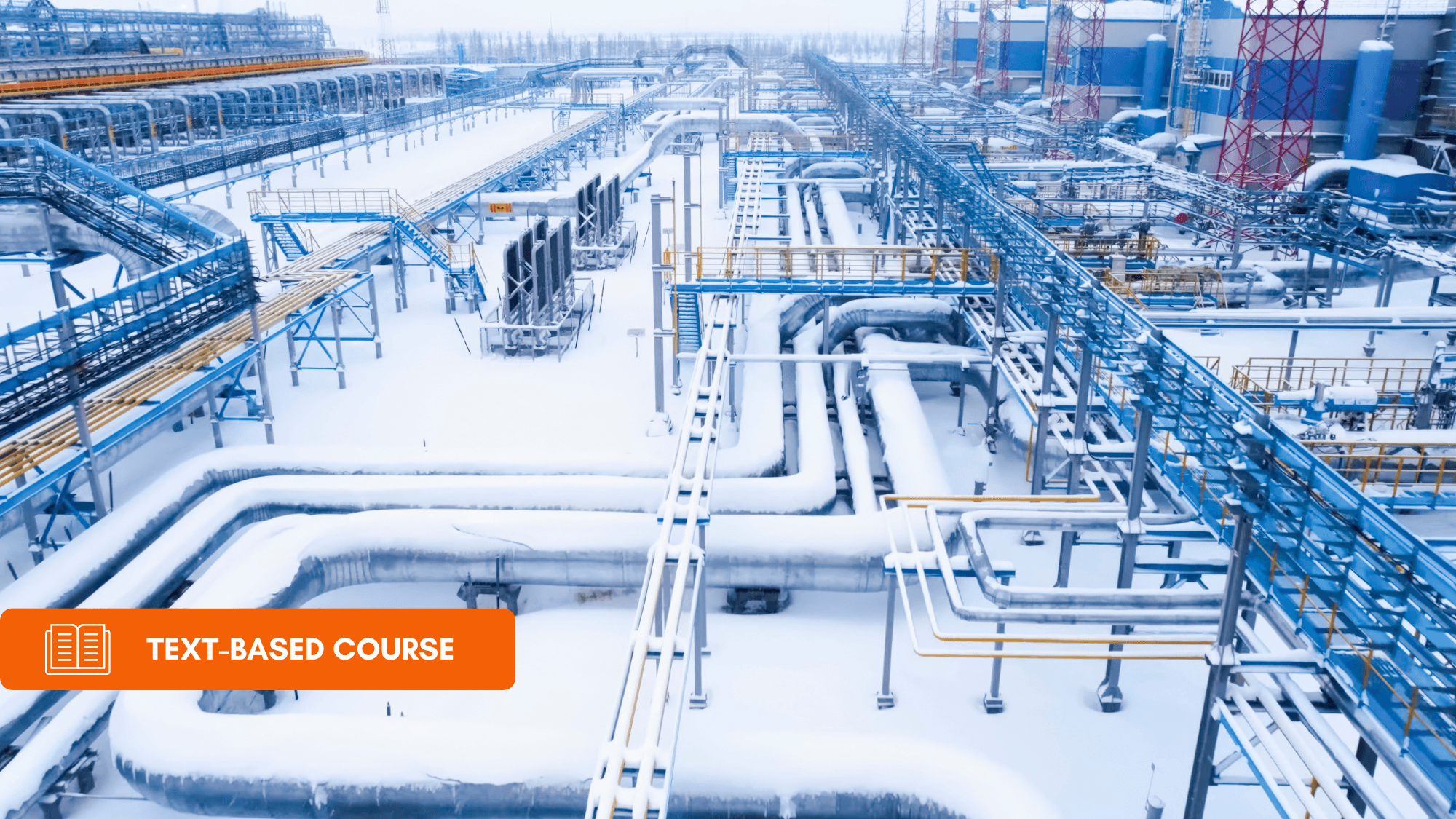
Rural natural gas distribution systems in Alberta carry gas from regulating stations to farms, residences and small communities at pressures of 700 kilopascals (kPa) or less. This course explains how these low pressure systems are regulated, which pipelines fall under provincial rural utility oversight rather than the energy regulator, and how the Oil and Gas Pipeline Systems standard (CSA Z662) applies with accepted provincial variations. Learners work through the design process, from consumer load surveys, connected loads and coincidence factors to peak hour design loads, the degree day method, pipe sizing with general flow equations, and options for improving the capacity of existing systems.
The course then moves from design to the field. It covers routing, depth of cover, clearances and crossings of roads, railways, watercourses and foreign pipelines, along with the use of road rights-of-way. Construction topics include approved polyethylene (PE) pipe and materials, handling and storage, joining by fusion and welding, domestic meter installations and cathodic protection. Learners also review regulator stations and isolation valve assemblies, maximum operating pressure, pressure testing and test duration, location surveys and records, and the operations, maintenance, training and third-party locating duties that every rural gas distributor must meet.
What Will Be Covered:
Scope of low pressure rural gas distribution and regulatory jurisdiction in Alberta
Consumer load surveys, connected load and coincidence factors
Peak hour design loads and the degree day method
Pipe sizing with general flow equations and PE design coefficients
Routing, depth of cover, clearances and crossings of other facilities
Use of road rights-of-way and crossing requirements
Materials, PE fusion, welding, meter installations and cathodic protection
Regulator stations and isolation valve assemblies
Maximum operating pressure, pressure testing and test duration
Location surveys, records, operations, maintenance and training

Leading Global Provider of Cutting-Edge Engineering CPD Courses
The Global Engineering Excellence Institute (GEEI) is a leading provider of Continuing Professional Development (CPD) courses designed to meet the evolving needs of engineers worldwide. Established in 2010, GEEI has a proven track record of delivering high-quality, industry-relevant training that empowers engineering professionals to stay at the forefront of technological advancements and best practices. Our comprehensive course offerings cover a wide range of disciplines, including civil, mechanical, electrical, and software engineering, ensuring that our learners receive the most up-to-date and practical knowledge. With a focus on practical application, GEEI's courses are developed by industry experts and are recognized by leading engineering bodies globally. We are committed to fostering a culture of continuous learning and professional growth, helping engineers achieve their career goals and contribute to the advancement of the engineering profession.
Professional development requirements vary by profession, country, and regulatory body. Before enrolling, review the course details and confirm that the content, learning format, and any listed credits meet your specific requirements. You are responsible for confirming eligibility with your regulator or professional association and keeping the records required for reporting.