Stop the leaks before they start: A deep dive into building envelope performance, design, and long-term moisture management.
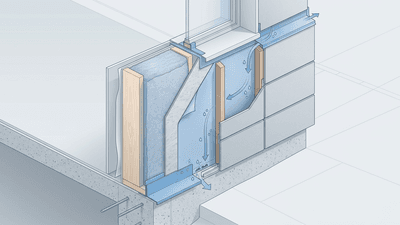
This six-hour course examines the science of moisture intrusion, movement, and consequences; analyzes guidance provided by building codes and standards; and assesses the performance of moisture-resistant foundations, wall systems, and roofing systems. The course concludes by examining mechanical systems that can be utilized to control moisture.
Delving into the science of thermodynamics and moisture movement, the curriculum covers how bulk water, capillary action, and vapor diffusion interact with various building materials and envelope assemblies. The course provides a thorough overview of effective mitigation strategies, including the proper use of flashing, vapor retarders, drainage planes, and ventilation techniques tailored to diverse climates. From strategic material selection to precise construction detailing, this overview emphasizes the critical practices needed to prevent mold, decay, and structural failure, ultimately promoting long-term building durability and healthier indoor spaces.

Online Courses for Engineers
HalfMoon Education is a nonprofit continuing education provider offering live webinars and on-demand courses for engineers, architects, landscape architects, land surveyors, attorneys, paralegals, accountants and others. Since 1996, we’ve helped thousands of professionals nationwide stay current with industry standards and codes, earn CE hours, and advance their expertise through practical, expert-led learning experiences. Learn more about us at: www.halfmoonseminars.org

Licensed Professional and Structural Engineer at Exponent, Inc
Dr. Bishop specializes in the holistic evaluation of building and bridge structures. While at Exponent, he has led investigations of concrete, steel, wood, and masonry structures and their interior finishes and building envelope components that were damaged as a result of design/construction defects, construction procedures, and natural hazards, such as wind, floods, hurricanes, and earthquakes. These investigations typically include on-site testing and documentation, analysis of structural and non-structural component response, interpretation and application of building codes and standards, and identification of the most appropriate repair. He often employs sophisticated engineering analysis and state-of-the-art research in support of these investigations. Dr. Bishop's sound engineering advice provides the basis necessary for building owners, insurers, and other stakeholders to make informed decisions.
Professional development requirements vary by profession, country, and regulatory body. Before enrolling, review the course details and confirm that the content, learning format, and any listed credits meet your specific requirements. You are responsible for confirming eligibility with your regulator or professional association and keeping the records required for reporting.
