How to scope, conduct, report and implement a technically sound site-specific risk assessment for a contaminated site in Alberta.
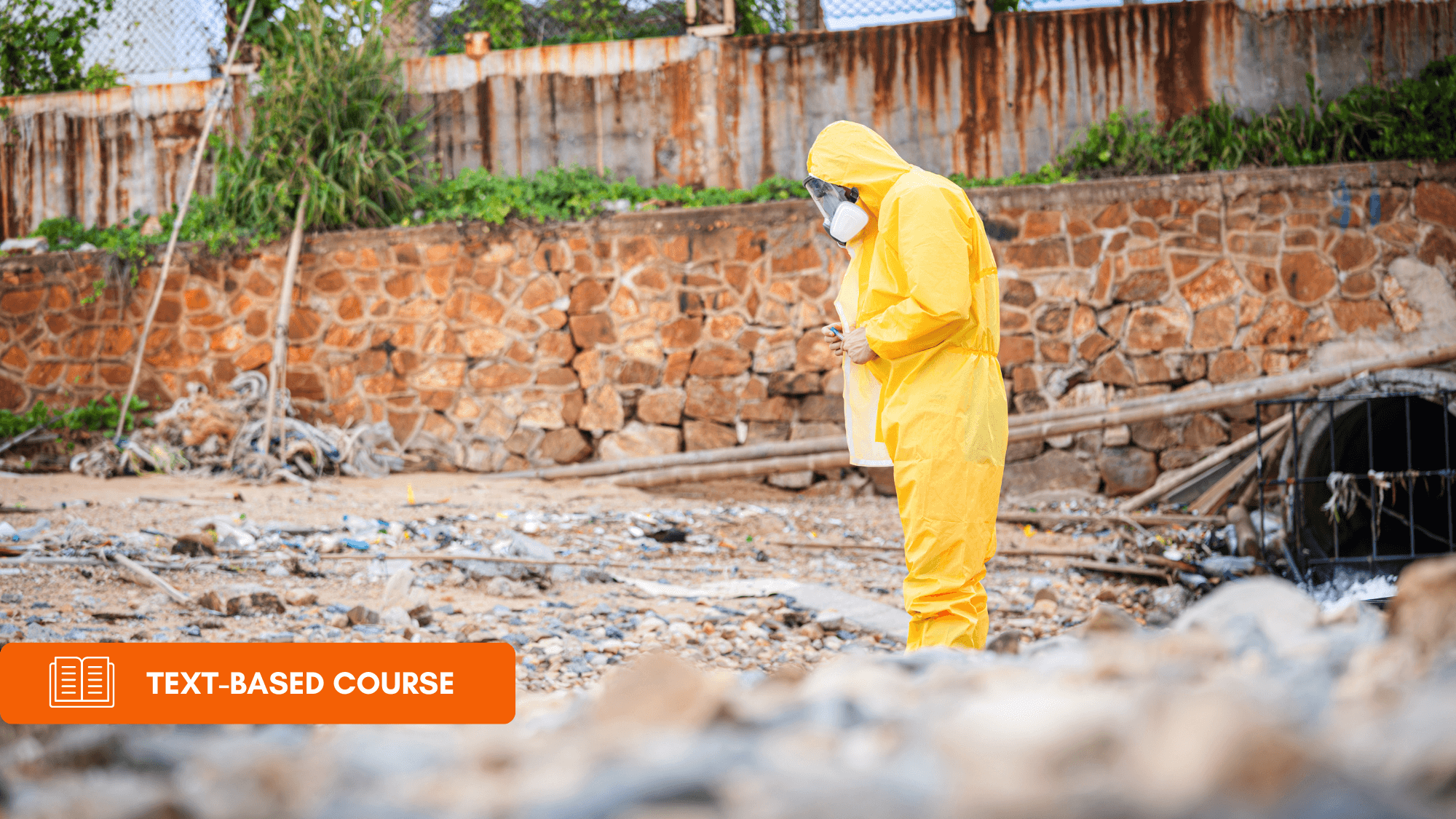
A site-specific risk assessment (SSRA) combines a human health risk assessment (HHRA) and an ecological risk assessment (ERA) to develop site-specific remedial objectives (SSROs) when generic Tier 1 values do not fit the conditions at a contaminated site. This course explains where an SSRA sits within the provincial contaminated sites framework alongside Tier 1 guidelines, Tier 2 guidelines and Exposure Control, the conditions for regulatory closure, and the duties of the signing professional, including competence, disclosure of conflicts of interest, insurance and supervision of contributors. It then covers scoping: setting risk assessment goals, scaling the level of effort from screening level to detailed assessment, the land use, receptor and exposure pathway combinations to consider, and the data needed to characterize contaminants of potential concern (COPCs) and site conditions.
The second half of the course works through the four stages of the risk assessment framework: problem formulation with a conceptual site model (CSM), exposure assessment, toxicity or effects assessment, and risk characterization using hazard quotients (HQs), hazard indices and incremental lifetime cancer risk (ILCR) against provincial target risk levels. It addresses selection of toxicity reference values (TRVs) from primary, secondary and tertiary sources, bioavailability, exposure parameters for all human life stages, fate and transport and intake modelling, ecological protection endpoints, acceptable effect levels, food chain modelling and weight of evidence. The course closes with reporting expectations and common deficiencies, and with how SSRA results translate into remediation requirements, risk management and exposure control, land and water use restrictions and regulatory consultation.
What Will Be Covered:
The legislated duty to remediate and how Tier 1, Tier 2 and Exposure Control options relate to an SSRA
Role of the SSRA in contaminated sites management and eligibility for regulatory closure
Qualifications, experience and obligations of the professional who signs an SSRA
Scoping, risk assessment goals, complexity and level of effort, and data collection requirements
Problem formulation, conceptual site models, operative exposure pathways and receptors of concern
Human health TRVs, threshold and non-threshold effects, bioavailability, exposure parameters and life stages
Risk characterization with hazard quotients, hazard indices, ILCR, mixtures and uncertainty analysis
Ecological assessment and measurement endpoints, acceptable effect levels, ecological TRVs, food chain modelling and weight of evidence
Ranked primary reference sources, reporting requirements and common reasons reports are found deficient
Implementing results through remediation, risk management plans, land and water use restrictions and regulatory consultation
2 activities • 1 chapters • duration: 1.5 hours

Professional online education for engineers and technical professionals
Engineering Education Group provides online professional development and continuing education courses for engineers, technical professionals, and industry practitioners. Our programs focus on practical skills, technical knowledge, industry standards, and lifelong learning through flexible and accessible online education.
Professional development requirements vary by profession, country, and regulatory body. Before enrolling, review the course details and confirm that the content, learning format, and any listed credits meet your specific requirements. You are responsible for confirming eligibility with your regulator or professional association and keeping the records required for reporting.
