Design details for building durable, low-maintenance trails on Alberta public land, from sustainable alignment and drainage to water crossings, erosion control, junctions, and access control.
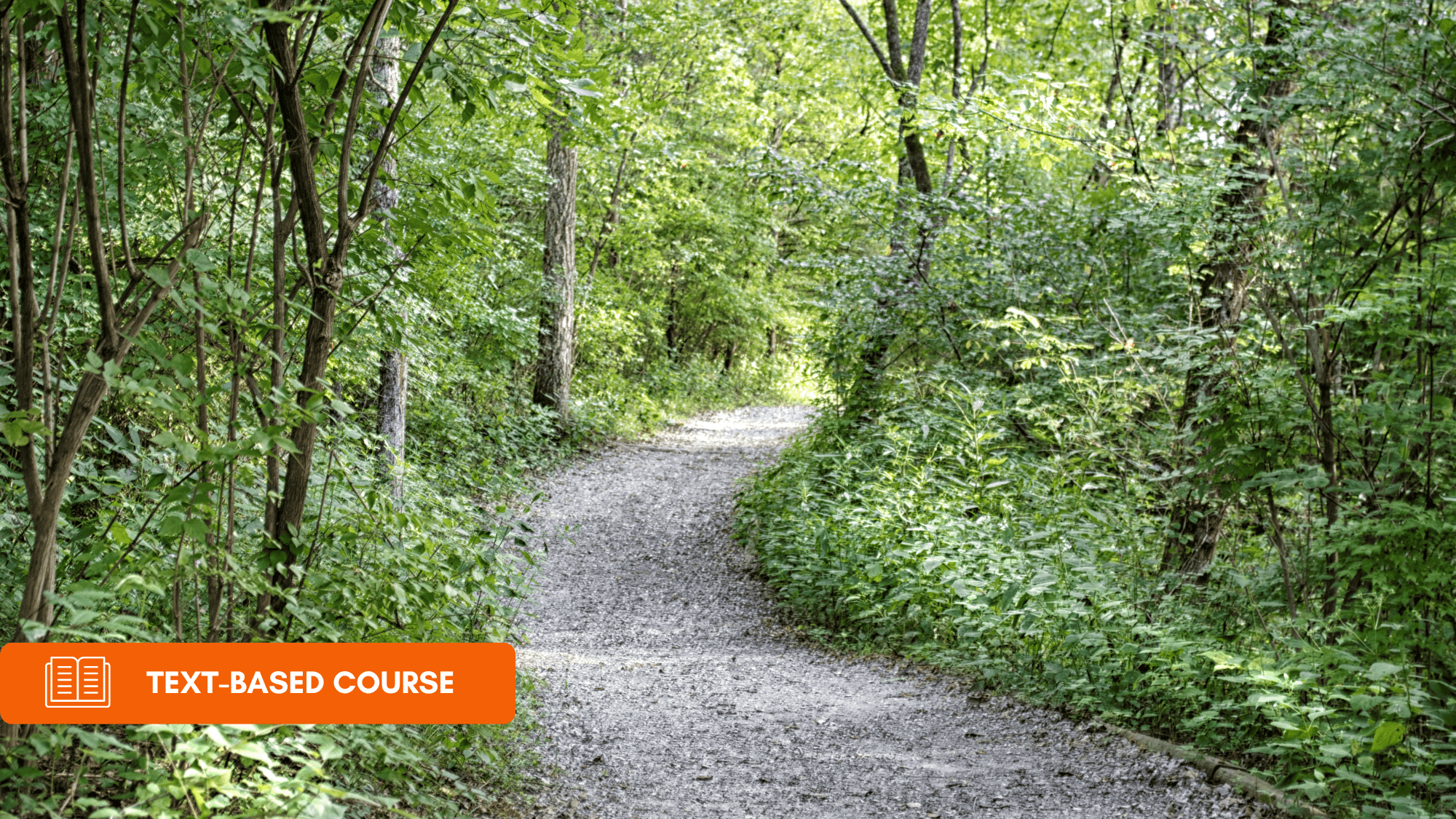
Most trail failures start with water: a tread that captures runoff, a crossing that suits neither the stream nor the user, or a slope that was never stabilized. This course sets out the detailed design toolkit for trails on Alberta public land. It begins with alignment for sustainability, covering bench cut trails with backslopes, the challenges of flat and steep terrain, switchbacks and climbing turns, anchors and corrals, and tread armouring. It then works through water management structures such as grade reversals, rolling grade dips, knicks and sumps, waterbars, ditches and subsurface drains, before comparing water course crossing options including hardened fords, culverts, bridges of timber, glued laminated timber, aluminum, fibreglass and steel, boardwalks, puncheons and corduroy.
The second half addresses how trails hold together and how users move through them. Topics include erosion control structures, planting and seeding for slope stabilization, tread compaction methods and targets, mechanical and chemical soil stabilization, geotextiles and geogrids, and when retaining walls are worth their cost. Guidance follows on junction layout and spacing, filters that let users test their skill near the trailhead, limiters, fences, gates and fence crossings, and trails that cross or run within highway and roadway rights-of-way. The course closes with activity-optimized trail design built around play, challenge, escape and risk, technical trail features by activity type, and skill development areas that support safe progression.
What Will Be Covered:
Sustainable trail alignment, bench cuts and backslopes, and design in flat and steep terrain including switchbacks and climbing turns
Anchors, corrals and tread armouring techniques such as stone pitching
Water management structures: grade reversals, rolling grade dips, knicks, sumps, waterbars, cross ditches and subsurface drains
Selection and approvals for water course crossings, including hardened crossings, culverts and bridge width and material options
Boardwalks, puncheons and corduroy for wet and boggy ground
Erosion control structures, revegetation, tread compaction, soil stabilization and geosynthetics
Retaining structures and the maintenance trade-offs of retaining walls
Junction design, filters, limiters, fences, gates and fence crossings for user management
Trails crossing or running within highway and roadway rights-of-way
Activity-optimized design, technical trail features (TTFs) and skill development areas
2 activities • 1 chapters • duration: 2 hours

Leading Global Provider of Cutting-Edge Engineering CPD Courses
The Global Engineering Excellence Institute (GEEI) is a leading provider of Continuing Professional Development (CPD) courses designed to meet the evolving needs of engineers worldwide. Established in 2010, GEEI has a proven track record of delivering high-quality, industry-relevant training that empowers engineering professionals to stay at the forefront of technological advancements and best practices. Our comprehensive course offerings cover a wide range of disciplines, including civil, mechanical, electrical, and software engineering, ensuring that our learners receive the most up-to-date and practical knowledge. With a focus on practical application, GEEI's courses are developed by industry experts and are recognized by leading engineering bodies globally. We are committed to fostering a culture of continuous learning and professional growth, helping engineers achieve their career goals and contribute to the advancement of the engineering profession.
Professional development requirements vary by profession, country, and regulatory body. Before enrolling, review the course details and confirm that the content, learning format, and any listed credits meet your specific requirements. You are responsible for confirming eligibility with your regulator or professional association and keeping the records required for reporting.
