The site factors, classification system and design parameters that determine how recreation trails, staging areas, signs and amenities are designed on Alberta public land.
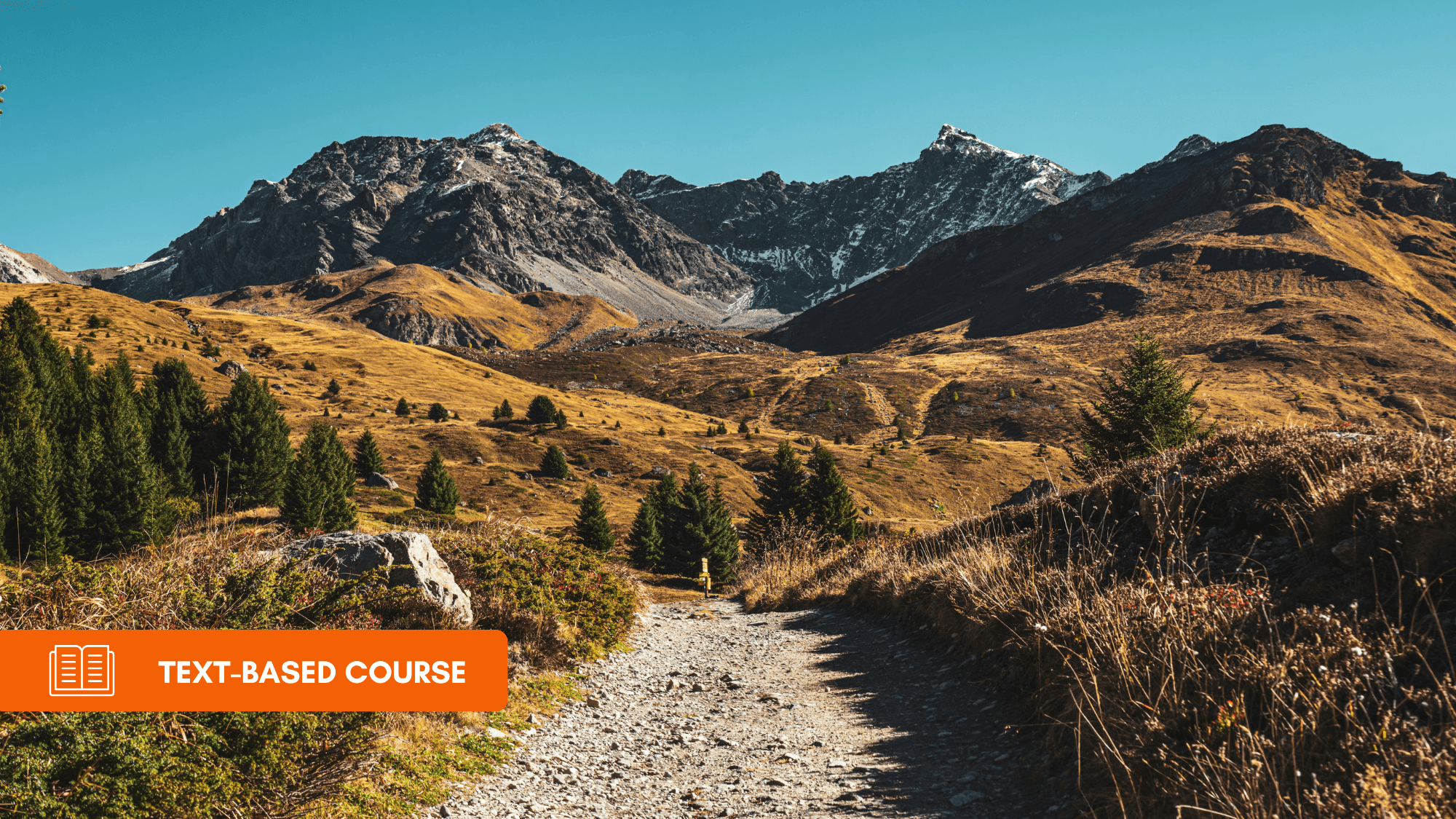
A sustainable trail alignment starts with reading the site. This course examines the natural factors that influence trail design: water and drainage, including grade reversals, seep crossings and hardened gullies in place of culverts; vegetation as an indicator of soil moisture and stability; sun exposure and slope aspect; snow and avalanche terrain, including hazard mapping and communicating Avalanche Terrain Exposure Scale (ATES) ratings; and the physical forces that different user types exert on the tread through compaction, erosion and soil displacement. It also introduces universal accessibility (barrier free design) as a trail objective.
The course then applies the public land trail classification system, which describes every trail by trail type, enthusiast group, use type, level of development and activity type, and shows how the level of development guides the appropriate infrastructure, signage and comfort amenities. It explains each trail design parameter, from clearing limits, tread width and surfacing to target and maximum grades, cross slope, turning radius and sight lines, and how their values change with the degree of challenge for non-motorized, mechanized and motorized activities. It closes with the typology and layout of high, medium and low use staging areas and trailheads, signage planning, siting and sign types, and the design of trail amenities such as shelters, warming huts, toilets, benches, waste receptacles, bicycle parking and loading ramps.
What Will Be Covered:
Water and drainage, vegetation, sun exposure and snow as factors in trail alignment
Avalanche terrain hazard assessment and communication to trail users
Soil displacement, compaction and erosion caused by different user types, and universal accessibility
The trail classification system: trail type, enthusiast group, use type, level of development and activity type
Matching infrastructure, signage and amenities to the intended level of development and recreation setting
Design parameters: clearing limits, tread width, surfacing, protrusions, grades, cross slope, turning radius and sight lines
Design parameter values by degree of challenge for non-motorized, mechanized and motorized activities
High, medium and low use staging areas and trailheads: parking, circulation, amenities and signage
Signage planning, siting and sign typology, from kiosks and trail markers to regulatory, advisory and interpretive signs
Trail amenities including shelters, warming huts, toilet options, benches, receptacles, bicycle parking and loading ramps
2 activities • 1 chapters • duration: 2 hours

Leading Global Provider of Cutting-Edge Engineering CPD Courses
The Global Engineering Excellence Institute (GEEI) is a leading provider of Continuing Professional Development (CPD) courses designed to meet the evolving needs of engineers worldwide. Established in 2010, GEEI has a proven track record of delivering high-quality, industry-relevant training that empowers engineering professionals to stay at the forefront of technological advancements and best practices. Our comprehensive course offerings cover a wide range of disciplines, including civil, mechanical, electrical, and software engineering, ensuring that our learners receive the most up-to-date and practical knowledge. With a focus on practical application, GEEI's courses are developed by industry experts and are recognized by leading engineering bodies globally. We are committed to fostering a culture of continuous learning and professional growth, helping engineers achieve their career goals and contribute to the advancement of the engineering profession.
Professional development requirements vary by profession, country, and regulatory body. Before enrolling, review the course details and confirm that the content, learning format, and any listed credits meet your specific requirements. You are responsible for confirming eligibility with your regulator or professional association and keeping the records required for reporting.
