An advanced analysis of avoidance doctrine, anti-deprivation principles, and property allocation in Canadian insolvency and restructuring.
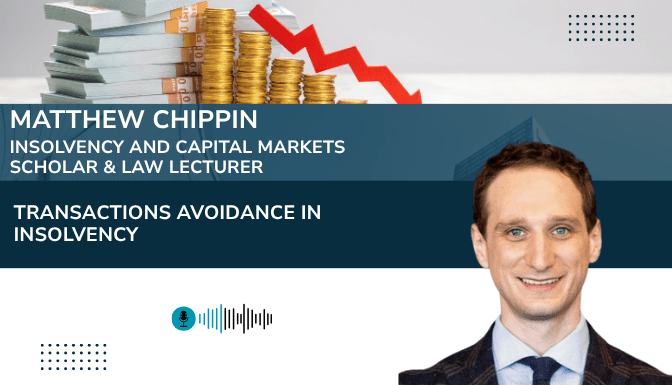
Canadian insolvency law rests on a careful balance between contractual freedom, property rights, and collective creditor recovery. Avoidance provisions, anti-deprivation doctrine, and statutory preferences operate to unwind transactions that distort pari passu distribution or improperly remove value from the estate prior to insolvency.
This program examines the doctrinal foundations and practical operation of transactions avoidance under the Bankruptcy and Insolvency Act and Companies’ Creditors Arrangement Act, including preferences, transfers at undervalue, and the anti-deprivation rule. It also addresses the interaction between insolvency law structures and capital markets arrangements..
Participants will gain a deeper understanding of how formal property arrangements are tested in insolvency proceedings, how courts reconcile commercial expectations with statutory policy, and how avoidance risk should be evaluated in transactional structuring.
By the end of this course, participants will be able to:

Insolvency, and Capital Markets Scholar & Law Lecturer
Matthew Chippin is a comparative insolvency and restructuring scholar whose work examines how property rights, avoidance rules, and market ordering operate in practice across common-law systems. His research focuses on the anti-deprivation rule, transaction avoidance, and trust taxation, combining doctrinal analysis, historical methodology, and comparative law to explain the divergence between formal legal rules and commercial reality. He is also exploring marine insolvencies, with a focus on designing mechanisms to ensure funding is available for environmental remediation. Matthew’s recent and forthcoming publications include articles in leading journals such as Capital Markets Law Journal, International Company and Commercial Law Review, and Trusts & Trustees, as well as book chapters with Edward Elgar and Intersentia. He completed his PhD at the University of Leeds in 2025, with a thesis on the anti-deprivation rule. His research has been presented at major international forums, including INSOL International and INSOL Europe, the Chicago–Harvard–Wharton conference, Law & Society, and academic workshops across Europe, North America, and Australia. In addition to academic appointments at the University of New Brunswick, Matthew has held visiting roles at Dalhousie University, Arizona State University, and Sydney Law School.
Professional development requirements vary by profession, country, and regulatory body. Before enrolling, review the course details and confirm that the content, learning format, and any listed credits meet your specific requirements. You are responsible for confirming eligibility with your regulator or professional association and keeping the records required for reporting.
