
search
Why standard email platforms are exposing your firm to foreign surveillance and how to secure your practice.
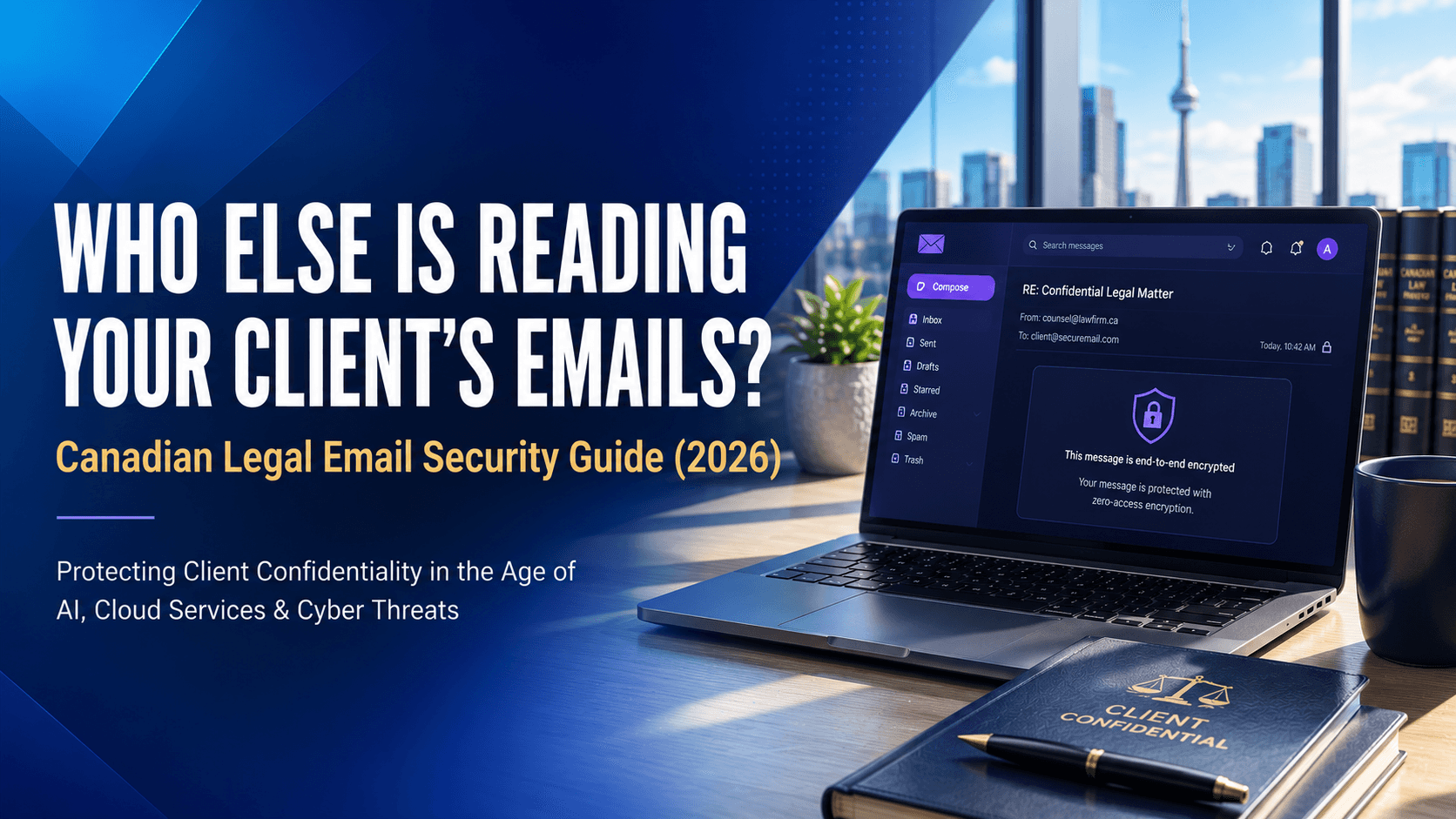
Solicitor-Client Privilege and the Email You Already Use: A Confidentiality Audit for Canadian Legal Practices
Could you tell a client, with confidence, exactly what happens to their privileged communications after they hit send? For most Canadian legal practices, the honest answer is uncertain — because the email infrastructure carrying litigation strategy, settlement positions, and client admissions has never been examined against the confidentiality obligations that privilege requires. This course closes that gap.
It opens with a sworn 2025 statement from a senior Microsoft legal official who told the French Senate he could not guarantee that data in Microsoft's cloud would be shielded from US authorities, then traces why that admission matters for Canadian lawyers. Because Google and Microsoft are American companies, the communications sitting in a Canadian lawyer's inbox are subject to the US Clarifying Lawful Overseas Use of Data Act (the CLOUD Act), which allows American law enforcement to compel these companies to produce stored data regardless of where the servers are located — without a Canadian court order and without notice to the lawyer or the client.
From there, the course builds a practical, evidence-based case. It uses the "postcard versus sealed envelope" framing to explain how standard email encryption actually works and why the platform provider always holds the decryption key. It reviews the sharp rise in ransomware attacks targeting law firms, walking through documented Canadian and US breach cases and the professional, financial, and reputational fallout that follows. It examines the evolving duty of technological competence across Canadian law societies and the Federation of Law Societies of Canada. It then introduces the technical alternative — end-to-end encryption with zero-knowledge architecture — and compares three email platforms on data access, legal jurisdiction, and cost. Finally, it lays out a realistic migration path for practices that decide to act, including account recovery setup and the importance of documenting the decision so it can be defended in a law society inquiry, an indemnity claim, or a client dispute.
This course is designed for sole practitioners, small and midsize firms, and anyone in a Canadian legal practice responsible for how confidential communications are handled. No technical background is required.
Learning objectives
By the end of this course, participants will be able to:
Try Proton Mail free for 14 days — no credit card required. Get started here: https://now.getproton.me/hrfjs8infz4q-o3hzta

Practical online learning for lawyers, paralegals, and legal professionals.
NorthBridge Learning Group provides continuing professional development and practical education programs for legal professionals across Canada. Our online courses focus on legal practice, regulatory developments, ethics, risk management, and professional skills, helping practitioners stay informed and effective in a changing legal environment.
Professional development requirements vary by profession, country, and regulatory body. Before enrolling, review the course details and confirm that the content, learning format, and any listed credits meet your specific requirements. You are responsible for confirming eligibility with your regulator or professional association and keeping the records required for reporting.