
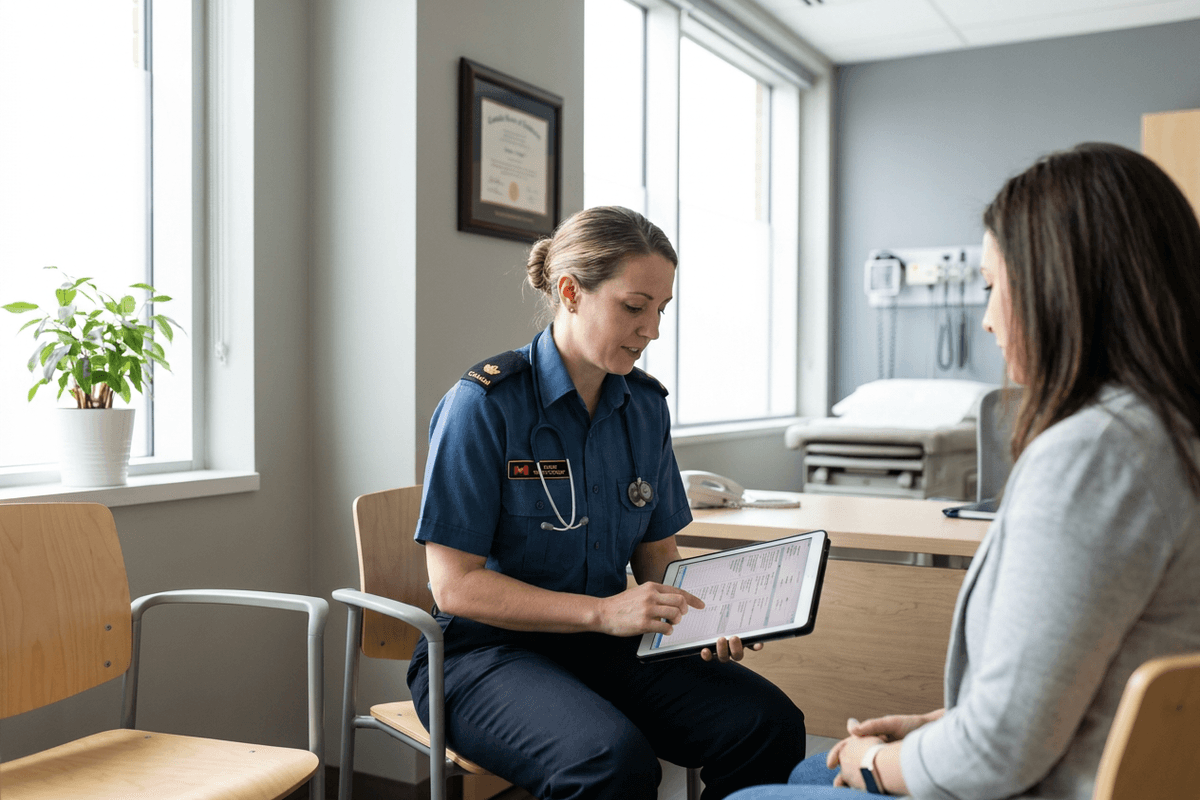

In an institutional transformation with far-reaching consequences for both defence health logistics and the broader profession of advanced practice nursing, the Canadian Armed Forces (CAF) has officially established Nurse Practitioner (NP) as an independent military occupation. The historic restructuring, detailed by the Department of National Defence, formally uncouples NPs from general Nursing Officer classifications, carving out a distinct military occupation code, dedicated career continuum, and specialized command structure within the Canadian Forces Health Services (CFHS).
For decades, military nurse practitioners occupied an ambiguous clinical niche. While civilian healthcare systems steadily modernized legislation to recognize NPs as autonomous, licensed primary and acute care providers, the Armed Forces largely slotted these advanced clinicians within generic Nursing Officer (MOSID 00195) frameworks. The structural shift represents far more than an administrative renaming: it constitutes federal operational validation of autonomous nursing authority in both garrison clinics and austere expeditionary environments.
The Architecture of the Change: From Generic Officer to Autonomous Clinician
To appreciate why this shift is generating widespread dialogue among clinical leaders across Canada, one must understand how military occupations are configured. Within the Royal Canadian Medical Service (RCMS), healthcare delivery relies on precise military occupational structures that dictate everything from promotion criteria and operational deployment roles to post-graduate specialty pay and equipment procurement.
Under the legacy framework, a Nurse Practitioner serving in uniform was first and foremost classified as a Nursing Officer. While their provincial civilian licenses authorized autonomous diagnostic reasoning, prescriptive authority, and direct admission rights, their military administrative classification often restricted career progression. Advancement beyond the rank of Major typically forced talented clinicians away from the bedside and into senior staff officer or administrative command roles, effectively stripping frontline units of high-level clinical acumen.
"Establishing a distinct occupational classification recognizes that the competencies, clinical autonomy, and diagnostic mandates of Nurse Practitioners are functionally unique from conventional acute-care nursing officers. It protects advanced clinical currency while cementing their status as primary care providers under military doctrine."
Under the newly enacted standalone occupation, the CAF establishes a tailored trajectory. Key elements of the new military occupational framework include:
- Dedicated Clinical Leadership Streams: NPs can now compete for promotions, clinical leadership appointments, and command postings specifically tied to advanced practice capabilities rather than general administration.
- Harmonized Scope of Practice: Military clinical directives are brought into direct parity with top-of-license provincial NP regulations, including unrestricted direct diagnostic ordering, autonomous pharmacological management, and specialized trauma interventions.
- Targeted Recruitment and Retention Allowances: A dedicated occupational code enables the Department of National Defence to build distinct compensation incentives, lateral entry pathways for civilian NPs, and competitive retention allowances directly benchmarked against competitive civilian markets.
- Specialized Operational Employment: Formally defining the NP role enables specialized pre-deployment tasking, from isolated Arctic sovereignty missions to naval deployments on surface combatants and forward surgical detachments.
Comparing Clinical Operating Models: Civilian vs. Military Evolution
Across provincial healthcare systems, Nurse Practitioners continue to fight structural battles over independent billing models, institutional credentialing, and archaic collaborative physician oversight agreements. The CAF’s decisive structural split provides an instructive contrast in health human resource modernization.
| Domain | Legacy Military Framework | New CAF Standalone NP Trade | Civilian Sector Parity |
|---|---|---|---|
| Occupational Code | Sub-specialty under Nursing Officer | Dedicated Autonomous Occupation | Regulated Advanced Practice Profession |
| Clinical Governance | Dual reporting to Medical and Nursing leadership | Direct clinical autonomy within CFHS medical doctrine | Self-regulated by provincial nursing colleges |
| Career Longevity | Promotion forced migration to non-clinical desk roles | Dual-track progression (Senior Clinical Specialist or Command) | Varies widely; limited clinical ladders in hospitals |
| Deployment Role | Frequently assigned to general triage or ward support | Primary care lead, trauma resuscitation, remote base clinician | Community clinic lead, remote primary care, emergency fast-track |
Frontline Operational Impact: From Garrison Bases to Austere Deployments
The operational calculus of modern armed forces has transformed dramatically. Forward operating bases, disaster response task forces (such as Operation LENTUS deployments during domestic wildfires and floods), and UN peacekeeping missions require agile, multidisciplinary medical footprints. In austere settings, deploying a full surgical-physician cadre is logistically intensive and often unfeasible.
Autonomous Nurse Practitioners offer a versatile capability. Equipped with master's-level preparation in comprehensive health assessment, pathophysiology, advanced pharmacology, and procedural interventions, an NP operates as a self-contained primary healthcare hub. Establishing a standalone trade allows military task planners to officially mandate NP-led Forward Resuscitative Care teams and assign them to independent patrol vessels or remote Arctic radar installations where a physician cannot be stationed.
Closing the Primary Care Gap in Uniform
Domestically, the Canadian Armed Forces Health Services faces the exact primary care crisis gripping civilian Canada. Military personnel are excluded from provincial health insurance plans (OHIP, MSP, RAMQ) under the Canada Health Act; their healthcare is a direct federal responsibility managed by CFHS clinics. Shortages of military medical officers (physicians) have strained base health facilities from CFB Gagetown to CFB Esquimalt.
Elevating NPs to a standalone occupation dramatically accelerates the transition toward collaborative, NP-led primary care rosters within military bases. Base personnel can rely on NPs for comprehensive primary care, chronic disease management, mental health assessments, and occupational medicine evaluations—reducing sick-parade bottlenecks and enhancing overall military readiness.
Implications for Civilian Nursing and National Health Policy
While the administrative jurisdiction of this reform is federal, the symbolic and structural repercussions will resonate across provincial health ministries. For years, the Canadian Nurses Association (CNA) and provincial nurse practitioner associations have urged health authorities to dismantle systemic barriers that keep NPs locked into restrictive auxiliary roles.
The CAF’s structural reorganization carries three critical lessons for the broader Canadian nursing ecosystem:
- De-linking Advanced Practice from Institutional Hierarchy: The military—an organization rooted in rigid ranks and hierarchies—has acknowledged that advanced practice nursing is not a subordinate subset of medicine, but an independent clinical pillar. Civilian hospitals still wrestling with medical advisory committee roadblocks regarding NP admitting privileges should take note.
- Accelerating National License Portability: Military NPs must be capable of deploying across provincial boundaries seamlessly. By formalizing their baseline federal competencies, the CAF accelerates pressure on provincial regulators to expedite the pan-Canadian licensure compacts currently being championed by national nursing organizations.
- Creating a Viable Civilian-Military Pipeline: Canadian nursing faculties, which have struggled to find clinical preceptors and sustainable funding for NP training seats, now have a formidable institutional partner. The CAF offers full-salaried post-graduate subsidized education plans for active-duty nurses pursuing NP credentials, creating a high-retention pipeline that feeds advanced expertise directly into Canadian society.
A Forward-Looking Milestone for Advanced Practice
The institutional codification of Nurse Practitioners as an independent military occupation is a defining victory for Canadian nursing. It acknowledges reality on the ground: patient outcomes, operational resilience, and clinical efficacy improve when advanced practice nurses are granted structural autonomy, fair operational recognition, and dedicated leadership pathways.
As the Canadian Armed Forces operationalizes this new occupation across bases, naval vessels, and international deployments, it does more than bolster military healthcare capacity. It establishes an undeniable benchmark for civilian policymakers: full-scope nursing is no longer an auxiliary fallback in times of shortage, but the strategic foundation of a modern, resilient healthcare delivery system.