
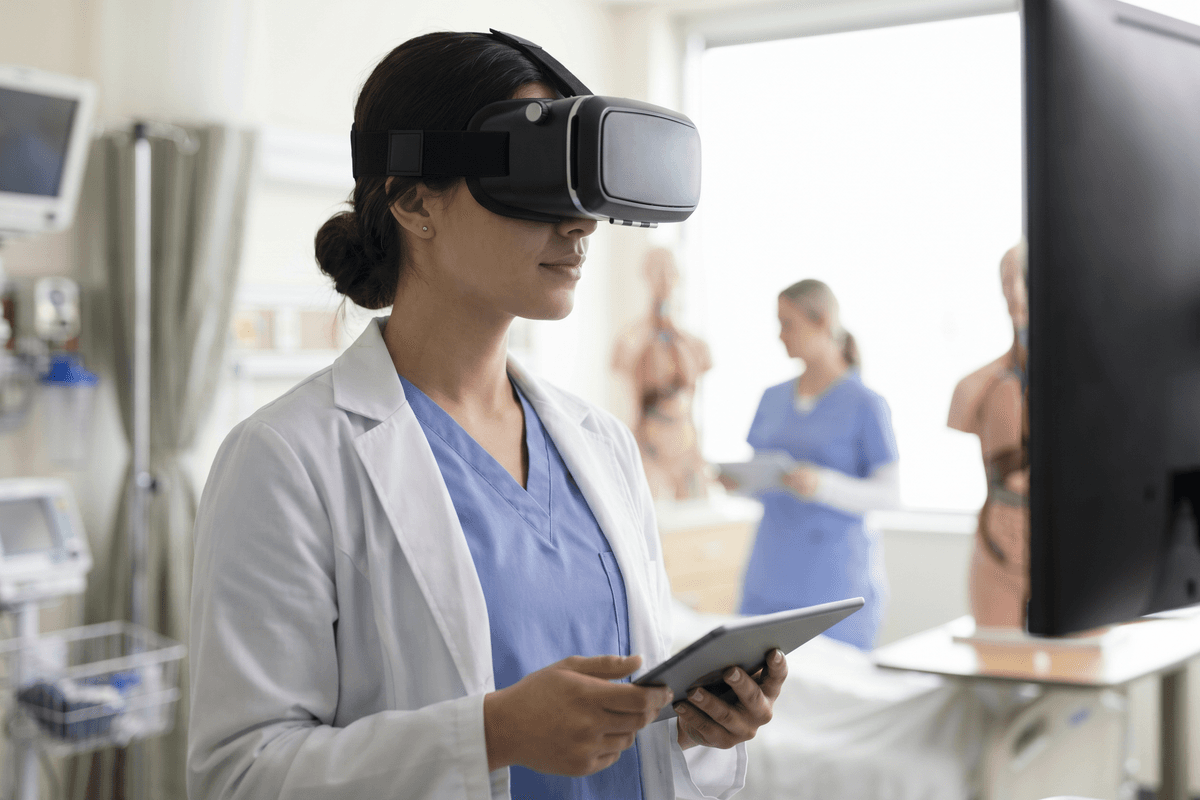



Imagine stepping into a bustling emergency room. The monitors are blaring, a patient is deteriorating rapidly from anaphylaxis, and the interdisciplinary team is looking to you for the next critical intervention. For a seasoned registered nurse, this is a challenging but familiar scenario. For a nursing student, it is a terrifying baptism by fire. Historically, bridging the chasm between textbook theory and high-stakes clinical reality has relied heavily on physical clinical placements and static simulation mannequins. But a new frontier is opening up in Canadian nursing education, and it requires nothing more than a headset.
A groundbreaking virtual reality (VR) pilot project at the University of Alberta Faculty of Nursing is currently making waves by offering students immersive, hands-on experience with real-life nursing scenarios. This initiative isn't just an exploration of a new technological gimmick; it represents a fundamental shift in how we can prepare the next generation of healthcare professionals in Canada to meet the complex demands of modern healthcare.
The University of Alberta Pilot: A Glimpse into the Future
The University of Alberta's initiative places nursing students directly into highly realistic, three-dimensional clinical environments. Using VR headsets, students can interact with virtual patients, assess vital signs, administer medications, and make split-second clinical decisions. The software tracks their choices, response times, and procedural accuracy, providing immediate, objective feedback.
What makes this pilot project so vital for the Canadian context is its focus on high-acuity, low-frequency events. In a standard clinical placement, a student might spend weeks on a medical-surgical floor and never witness a cardiac arrest, a severe postpartum hemorrhage, or an acute psychiatric crisis. When these events do occur, students are rightfully pushed to the periphery so that experienced clinicians can save the patient. VR changes this dynamic entirely.
"Virtual reality allows students to step into the role of the primary nurse during critical events. They are no longer just observing; they are doing. And if they make a mistake, the only consequence is a powerful learning opportunity, not patient harm."
Bridging the Gap Between Classroom and Clinic
For years, nursing educators have struggled with the "theory-practice gap"—the disconnect between what students learn in a controlled classroom setting and the chaotic, unpredictable reality of a hospital ward. VR serves as a robust bridge across this gap, offering several distinct advantages:
- Psychological Safety: In a VR simulation, students can make fatal errors without the devastating emotional and professional consequences of harming a real patient. This psychological safety encourages students to take the lead rather than hang back, fostering deeper experiential learning.
- Standardized Exposure: Clinical placements are inherently unequal. One student might have an incredibly proactive preceptor and complex patients, while another might spend their practicum performing routine tasks. VR ensures every single graduating nurse has managed the exact same baseline of critical scenarios.
- Infinite Repeatability: Unlike physical simulation labs—which require extensive setup, expensive consumable supplies, and dedicated faculty time—a VR scenario can be reset with the push of a button. Students can practice a complex protocol ten times in a row until it becomes muscle memory.
Implications for the Canadian Nursing Shortage
To understand the true value of the University of Alberta's pilot project, we must view it through the lens of Canada's ongoing nursing crisis. Across the country, provincial health authorities are desperately trying to recruit and retain nurses. However, nursing schools face a major bottleneck: the availability of clinical placements.
Hospitals are currently severely understaffed. Asking an exhausted, overworked floor nurse to act as a preceptor for a student adds to their cognitive load and contributes to burnout. Consequently, facilities are taking fewer students, which limits the number of nurses educational institutions can graduate.
By shifting a portion of clinical hours into high-fidelity virtual environments, nursing programs can alleviate the pressure on the healthcare system while simultaneously graduating more robustly prepared novices. While VR will never fully replace the need for physical human interaction and bedside placements, supplementing education with virtual hours can drastically optimize the time students *do* spend in the hospital.
Comparing Traditional vs. VR-Enhanced Training
To fully appreciate the paradigm shift, it is helpful to compare traditional clinical education methods with the emerging VR-enhanced model.
| Educational Metric | Traditional Clinical Placements | VR-Enhanced Simulation |
|---|---|---|
| Patient Safety Risk | Variable; requires constant preceptor oversight to prevent errors. | Zero; completely risk-free digital environment. |
| Scenario Control | Low; dependent on patient census and unit acuity on any given day. | High; educators can program exact symptoms, complications, and outcomes. |
| Resource Intensity | High; requires 1:1 or 1:2 preceptor-to-student ratios in clinical settings. | Moderate; high upfront hardware cost, but highly scalable with lower ongoing staffing needs. |
| Feedback Mechanism | Subjective; relies on the preceptor's observation and communication skills. | Objective; system tracks exact data points, response times, and procedural steps. |
Navigating the Implementation Hurdles
Despite the overwhelming benefits highlighted by pilot projects like the one at the U of A, integrating VR into nursing curricula nationwide is not without its challenges. Canadian nursing leaders and educators must navigate several hurdles before this technology becomes standard practice.
The Cost of Innovation
The most immediate barrier is financial. While VR headsets have become more affordable, outfitting an entire cohort of hundreds of nursing students requires a significant capital investment. Furthermore, the proprietary software licenses for high-fidelity medical simulations require ongoing subscription fees. For publicly funded universities facing budget constraints, securing this funding requires demonstrating a clear return on investment—something pilot projects are currently striving to prove.
Digital Literacy and Cybersickness
Not all students—or faculty—are digital natives. Implementing VR requires dedicated IT support and comprehensive training for educators so they can seamlessly integrate the technology into their lesson plans rather than treating it as a standalone novelty. Additionally, a small percentage of users experience "cybersickness" (virtual reality-induced motion sickness), meaning nursing programs must maintain alternative simulation methods for these individuals to ensure equitable access to education.
Preserving the "Human Touch"
Perhaps the most profound concern raised by veteran nurses is the potential erosion of the "human touch." Nursing is fundamentally an art of human connection. A VR headset cannot teach a student how to hold the hand of a grieving family member, how to read the subtle body language of a patient in pain who claims they are "fine," or how to navigate the complex interpersonal dynamics of a multidisciplinary healthcare team.
It is crucial that VR is viewed as a supplement to, rather than a replacement for, human interaction. The goal is to use VR to master the clinical algorithms and procedural skills so that when students finally reach the bedside, they have the cognitive bandwidth to focus on empathy, communication, and holistic patient care.
The Path Forward for Canadian Nursing
The virtual reality pilot project at the University of Alberta Faculty of Nursing is more than just a local success story; it is a blueprint for the future of nursing education in Canada. As our healthcare system becomes increasingly complex, the demands placed on new graduates will only intensify. We can no longer rely solely on the traditional apprenticeship model of clinical placements to prepare them for the realities of the modern ward.
By embracing innovative technologies like VR, we can provide nursing students with the rigorous, repeatable, and safe training environments they need to build true clinical competence and confidence. As this technology evolves and becomes more accessible, it holds the promise of not only transforming how we teach nurses but ultimately improving the quality and safety of patient care across the country. The future of nursing education is virtual, but its impact on Canadian healthcare will be very, very real.