
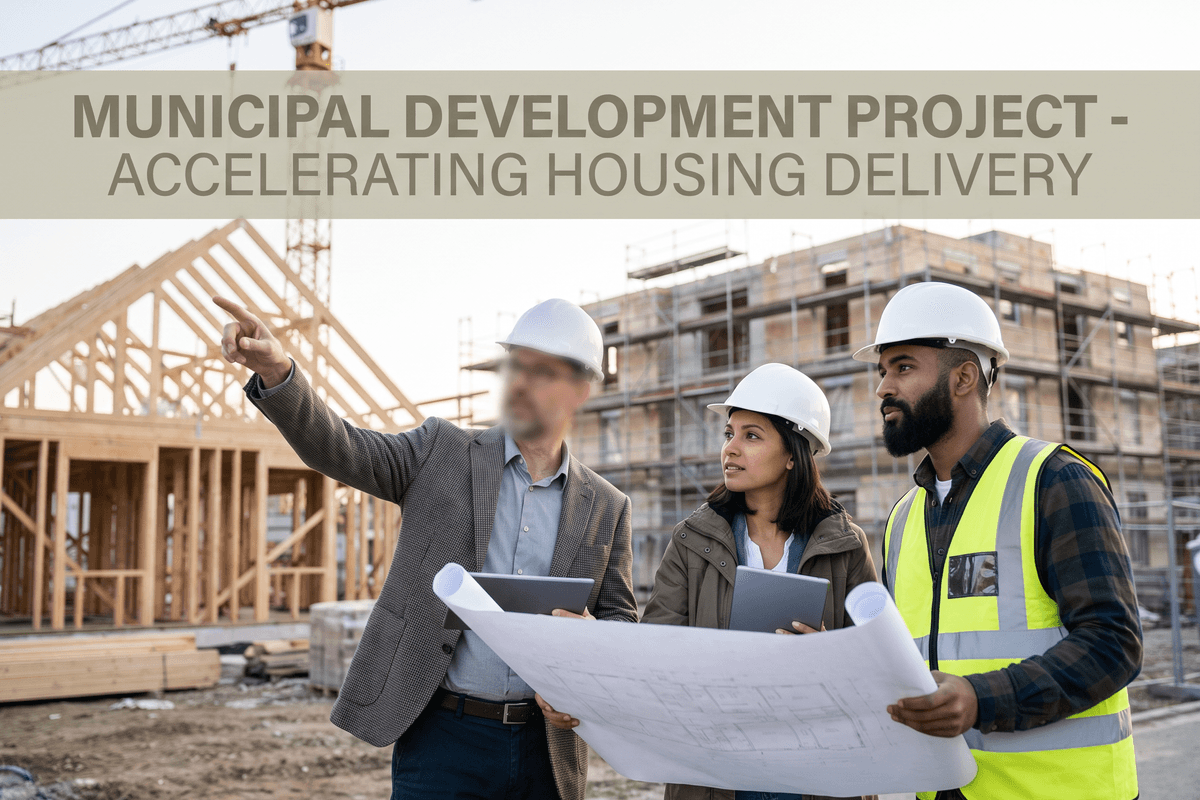



For municipal leaders across Canada, the housing crisis has long ceased to be a looming threat—it is the defining operational challenge of the decade. The mandate to build more homes, faster, and more affordably is forcing local governments to rethink their traditional roles. They are no longer just regulators of land use; they are active facilitators of development. This shift requires a dual approach: securing vital capital from higher levels of government while simultaneously dismantling bureaucratic friction at the local level. Recent developments in British Columbia perfectly encapsulate this two-pronged strategy, offering a blueprint for municipalities nationwide.
Two distinct but complementary actions—a major federal funding announcement for Vancouver and innovative policy shifts out of Prince George—highlight how local governments are navigating the complexities of the 2026 housing landscape. By pairing top-down financial support with bottom-up process efficiencies, municipalities are finding new ways to accelerate the housing pipeline.
The Top-Down Catalyst: Federal Funding for Vulnerable Populations
The financial realities of building transitional, supportive, and affordable housing mean that municipalities simply cannot go it alone. The property tax base is ill-equipped to absorb the massive capital costs required to shelter a city's most vulnerable residents. Recognizing this, the Government of Canada recently announced targeted funding to partner with municipalities and non-profit groups to build new homes in Vancouver.
This funding specifically targets the most challenging segments of the housing continuum. For municipal planners and housing directors, federal injections like these are critical, but they also come with complex coordination requirements. Local governments must ensure their zoning bylaws, infrastructure capacity, and community consultation processes are aligned to rapidly deploy these funds before they expire.
Strategic Implications for Municipalities
When federal funds are unlocked for transitional and supportive housing, municipal professionals must act swiftly. The Vancouver announcement underscores several best practices for local governments aiming to capitalize on federal partnerships:
- Pre-Zoning Land: Municipalities that proactively upzone city-owned or non-profit-owned land for high-density supportive housing are far more likely to secure federal funding. Shovel-ready projects win grants.
- Streamlining Public Hearings: Supportive housing often faces intense "Not In My Backyard" (NIMBY) opposition. Forward-thinking councils are delegating approvals for affordable housing to staff or utilizing new provincial frameworks to bypass protracted public hearings for compliant projects.
- Intergovernmental Liaisons: Having dedicated municipal staff who understand the intricate reporting and compliance metrics of the Canada Mortgage and Housing Corporation (CMHC) ensures that once funding is secured, the project doesn't stall in the administrative phase.
"The modern municipal housing strategy relies on a delicate balance: leveraging federal dollars to protect the most vulnerable, while aggressively reforming local red tape to unleash the private market for everyone else."
The Bottom-Up Revolution: Standardized Housing Design Catalogues
While federal funding addresses the non-market housing sector, the vast majority of new supply must come from the private market. Here, the greatest barrier is often municipal process. Lengthy permitting times, unpredictable design reviews, and high holding costs stifle development, particularly for "missing middle" housing like multiplexes, townhomes, and laneway suites.
During their July 20, 2026, council meeting, Prince George City Council took a decisive step to address this bottleneck by directing administration to implement a standardized housing design catalogue. This policy shift represents one of the most effective, low-cost tools available to local governments today.
How Design Catalogues Transform Local Planning
A standardized housing design catalogue provides developers and homeowners with a suite of pre-approved architectural blueprints that comply with local zoning and building codes. If a builder selects a design from the catalogue, the municipal review process is drastically shortened—often reduced from months to mere weeks.
For municipal professionals, implementing a catalogue offers profound operational benefits:
- Reduced Staff Workload: By eliminating the need for back-and-forth design revisions, municipal plan checkers can clear their desks faster, allowing them to focus on more complex, large-scale developments.
- Cost Certainty for Builders: Developers save tens of thousands of dollars on architectural and engineering fees, savings that can theoretically be passed on to buyers or used to make marginal projects financially viable.
- Predictable Neighborhood Integration: Because the municipality commissions or approves the designs upfront, planners can ensure the aesthetics and massing of the missing middle housing align with the community's character, mitigating resident pushback.
Prince George's adoption of this tool signals a maturity in municipal housing strategy. It acknowledges that the city's role is not just to regulate what cannot be built, but to provide a frictionless pathway for what must be built.
Managing Growth: The Intersection of Resource Economics and Housing
Housing policy does not exist in a vacuum; it is deeply intertwined with regional economic development. At the same July 20th meeting, Prince George City Council appointed a representative for the Blackwater Gold Project. While seemingly a separate issue, this administrative move is intrinsically linked to housing demand.
Major resource and infrastructure projects act as massive economic engines, drawing a transient workforce that eventually transitions into permanent residency. This "boomtown" effect can devastate local housing markets if municipalities are caught off guard. Rents skyrocket, low-income residents are displaced, and the municipality is left scrambling to upgrade infrastructure.
By appointing a dedicated representative to interface with the Blackwater Gold Project, Prince George is practicing proactive growth management. This ensures the city has a voice at the table regarding workforce accommodation, transportation impacts, and long-term demographic shifts. It allows municipal planners to forecast housing demand accurately and adjust their standardized catalogues and infrastructure master plans accordingly.
Comparing Municipal Housing Levers
To fully grasp the evolving toolkit available to municipal leaders, it is helpful to contrast the two primary approaches highlighted by Vancouver and Prince George:
| Strategy | Primary Target | Municipal Role | Key Benefit |
|---|---|---|---|
| Federal Capital Partnerships | Transitional, Supportive & Affordable Housing | Grant applicant, land provider, intergovernmental coordinator | Injects massive external capital to house vulnerable populations that the market ignores. |
| Standardized Design Catalogues | Missing Middle & Market Housing | Process facilitator, design curator, regulatory reformer | Dramatically accelerates building permit timelines and reduces overhead costs for local builders. |
| Economic Project Liaisons | Workforce & Future Permanent Housing | Stakeholder, forecaster, infrastructure planner | Aligns upcoming housing supply with projected demographic spikes driven by regional industry. |
Conclusion: The Era of the Agile Municipality
The actions taken in Vancouver and Prince George illustrate the multifaceted reality of modern municipal governance in Canada. The days of passive urban planning are over. Today's municipal professionals must be agile operators—capable of negotiating complex funding agreements with federal ministries one day, and redesigning the mechanics of local building permits the next.
As the 2026 municipal agenda unfolds, local governments that embrace this dual mandate will thrive. By leveraging external funding to build critical social infrastructure, and streamlining internal processes to unleash market-driven supply, municipalities can transition from managing the housing crisis to actively solving it. The blueprints for success are already being drafted; the challenge now is scaling these solutions across the country.