
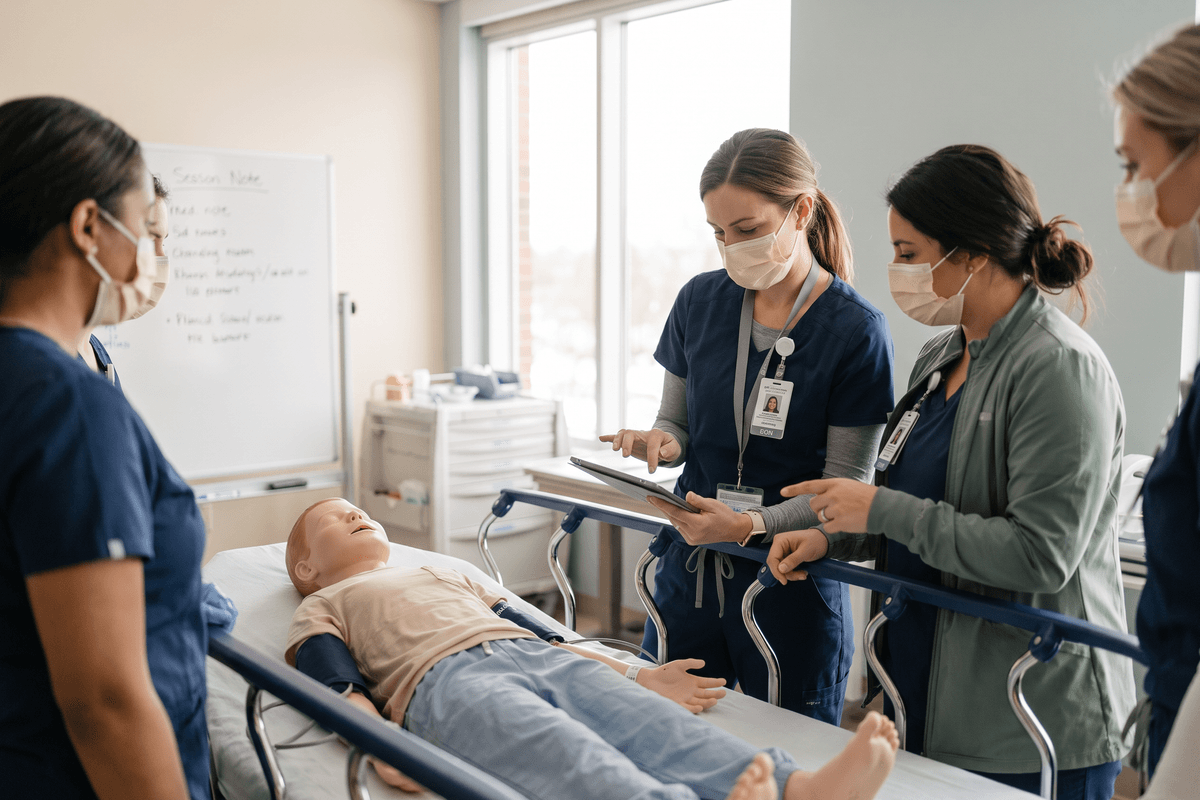



Imagine the adrenaline spike when a critically ill or injured child is rushed through the doors of a regional emergency department. For the frontline nurses receiving that patient, clinical precision and specialized knowledge are the only things standing between crisis and stabilization. Yet, for years, many Canadian nurses outside of major urban pediatric centers have faced a systemic barrier: acquiring the specialized certification required to confidently manage these high-stakes scenarios often meant leaving their province, their units, and their families for extended periods.
That paradigm is finally shifting. A groundbreaking initiative in Nova Scotia is demonstrating that the future of specialized nursing education doesn't require a plane ticket. By bringing advanced pediatric emergency training directly to its workforce, the province is not only elevating patient care but also providing a masterclass in nursing retention and professional development.
The Nova Scotia Breakthrough: Democratizing Specialty Skills
According to a recent announcement from Nova Scotia Health, a newly implemented specialized pediatric training program is transforming how emergency department (ED) nurses are prepared for pediatric crises. Historically, obtaining this level of highly acute, specialized certification required travel to larger pediatric hubs outside the province. This out-of-province model inherently limited the number of nurses who could pursue the training, creating critical knowledge bottlenecks in regional emergency departments.
The new localized program eliminates these geographical and logistical hurdles. By integrating the certification process into the local health system infrastructure, Nova Scotia is empowering a broader swath of its emergency nursing workforce to upskill.
Why This Matters for the Bedside Nurse
For the individual ED nurse, the implications of this shift are profound. Emergency departments are inherently unpredictable, and pediatric emergencies—though less frequent than adult cases—are notoriously high-stress and require distinct clinical protocols.
- Reduced Cognitive Load: When more nurses on a shift possess specialized pediatric training, the cognitive and emotional burden is shared, rather than resting solely on the shoulders of one or two "pediatric experts" on the floor.
- Work-Life Balance: Removing the requirement to travel out-of-province respects the nurse's time, making professional development a realistic goal rather than an exhausting logistical puzzle.
- Immediate Application: Training conducted within the nurse's home province often aligns more closely with the specific resources, referral pathways, and equipment available in their actual clinical environment.
The Macro View: Upskilling a Growing, Diverse Workforce
Nova Scotia's localized training model arrives at a pivotal moment in Canadian nursing demographics. To understand the true value of accessible specialty education, we must look at the changing face of our workforce.
According to the latest data from the Canadian Institute for Health Information (CIHI), the overall supply of registered nurses in Canada grew by an encouraging 4.7% in 2025. Crucially, this report highlights that Internationally Educated Nurses (IENs) are accounting for a significantly larger share of this growing workforce.
"We are successfully recruiting numbers, but raw numbers do not automatically equate to specialty readiness in high-acuity environments like the ED. The true metric of success is how quickly and effectively we can upskill this growing workforce to meet Canadian clinical standards."
This is where the intersection of the CIHI data and the Nova Scotia initiative becomes a blueprint for the rest of Canada. We are injecting thousands of new nurses—both domestic graduates and IENs—into our healthcare system. However, integrating an IEN into a rural or regional emergency department requires accessible pathways to Canadian-standard specialty certifications. If an internationally educated nurse, who has already navigated complex immigration and credentialing processes, is then told they must travel to another province to learn pediatric emergency protocols, we risk stalling their integration and exacerbating burnout.
Comparing the Models: Traditional vs. Localized Training
To fully grasp why nursing leadership across Canada should be paying attention to the Nova Scotia model, it is helpful to contrast the traditional approach with the localized approach.
| Feature | Traditional Out-of-Province Model | Localized In-Province Model (The NS Approach) |
|---|---|---|
| Cost & Logistics | High. Requires funding for travel, accommodation, and per diems. | Low. Leverages existing provincial infrastructure and local clinical educators. |
| Accessibility | Limited to a select few nurses per year due to budget and staffing coverage constraints. | Broad. Can be integrated into regular scheduling, allowing entire cohorts to upskill simultaneously. |
| Impact on Unit Staffing | High disruption. Nurses are removed from the schedule for extended periods. | Minimal disruption. Training can be modularized and completed closer to home. |
| IEN Integration | Creates additional barriers for newly arrived nurses navigating a new geography. | Fosters community and allows IENs to learn alongside their immediate peers. |
Practical Implications for Canadian Nursing Leaders
The success of the pediatric training program in Nova Scotia serves as a clarion call for nursing directors, educators, and provincial health authorities across the country. As we navigate the dual challenges of complex patient acuity and workforce transition, leaders must adopt proactive strategies:
- Audit Specialty Bottlenecks: Nursing leaders must identify which critical certifications (e.g., pediatric emergency, trauma nursing, advanced critical care) currently require out-of-province or highly restrictive travel. These are your immediate targets for localization.
- Leverage Technology and Partnerships: Localizing training doesn't mean inventing the curriculum from scratch. Health authorities can partner with national bodies to license curriculum, utilizing a "train-the-trainer" model to build a roster of local clinical educators.
- Align Education with Recruitment: As highlighted by the CIHI 2025 data, international recruitment is a primary growth driver. Health authorities should explicitly market localized, accessible specialty training as a recruitment and retention tool to attract IENs and new graduates to regional centers.
Conclusion: Redefining the Standard of Care
The ability to save a child's life in an emergency department should not be dictated by postal code, nor should a nurse's ability to advance their clinical skills be hindered by geographical boundaries. Nova Scotia's decision to bring pediatric emergency training home is more than an educational update; it is a structural evolution in how we value and support our frontline staff.
As Canada's nursing workforce continues to grow and diversify, the provinces that will thrive are those that recognize a fundamental truth: the best way to ensure world-class care at the bedside is to ensure world-class, accessible training for the professionals standing beside it. By dismantling the barriers to specialty certification, we are not just training better nurses—we are building a more resilient, equitable, and confident healthcare system for the future.