
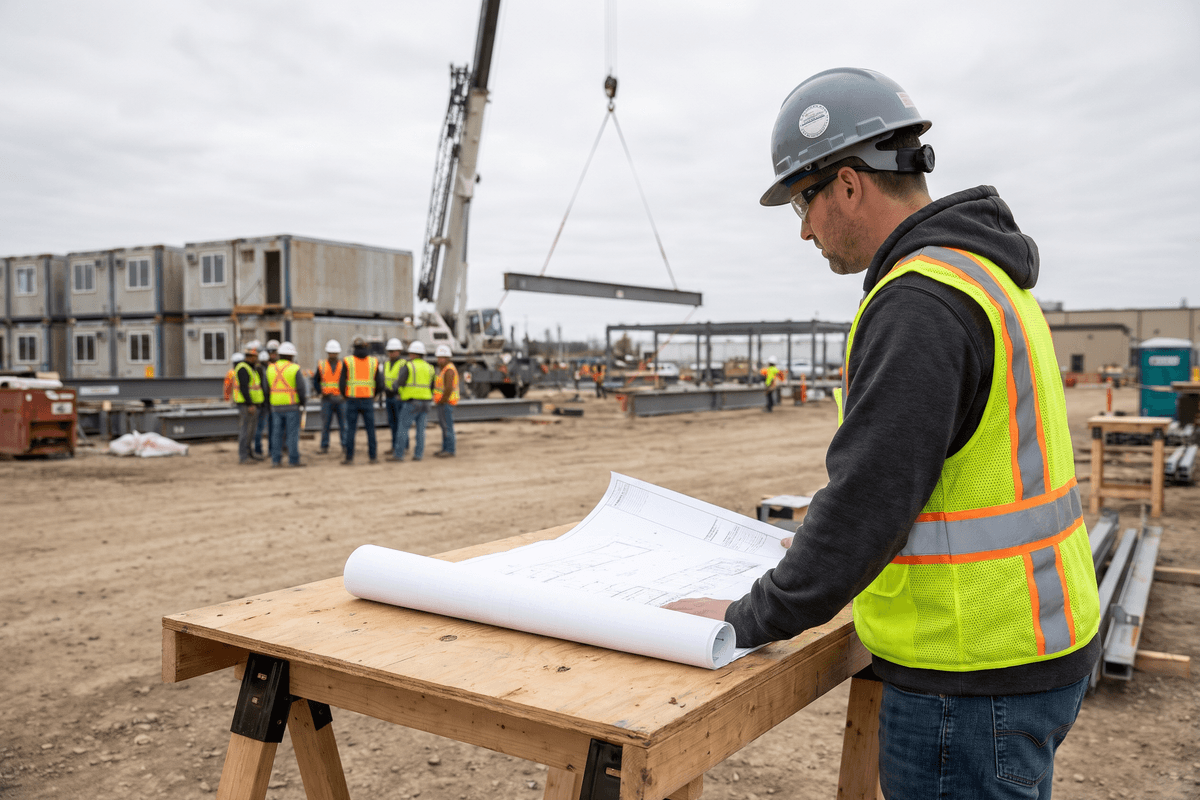

For years, the slowest part of building American infrastructure has not been the concrete, steel, or copper. It has been the paperwork. Projects often sit for months or years waiting on environmental reviews and federal sign-offs before a single crew mobilizes. Now the Senate has passed the Bipartisan American Affordability and Jobs Act of 2026, legislation designed to accelerate infrastructure approvals and shorten federal environmental reviews across energy, manufacturing, and transportation. For engineers, contractors, and owners, the question is no longer whether the approval clock will move. It is what happens to the rest of the project when it does.
The answer is less obvious than it looks. Faster permitting removes one constraint, but it can expose others that were quietly absorbing delay. This article examines what the reform signals, why a parallel federal move on transmission financing matters, and where the next bottleneck is likely to form. The source reporting is available from ENR's coverage of the Senate vote.
The Approval Clock Is Moving
Environmental review has been one of the most unpredictable line items in capital planning. Schedules built around optimistic review timelines often collapse under the weight of comment periods, supplemental studies, and litigation risk. A bill aimed at shortening those reviews addresses the front end of the project lifecycle, where uncertainty is most expensive.
The legislation's reach across energy, manufacturing, and transportation matters because these sectors compete for the same engineering talent, the same electrical contractors, and often the same equipment. A reform that speeds approvals in one category will not stay contained to it. Owners who previously deferred starts may now compress their schedules, which increases demand on shared resources.
Permitting reform changes when a project is allowed to start. It does not change how fast a substation can be energized or how many qualified electricians a region can field in a given quarter.
A $2.8 Billion Test Case for Grid Resilience
The permitting bill arrives alongside a significant financing decision. Federal backing has been finalized for a $2.8 billion interregional transmission project engineered to connect the Eastern and Western power grids and strengthen nationwide grid resilience. Interregional links are among the most complex transmission assets to deliver, because they cross multiple jurisdictions, involve long-lead equipment, and must coordinate operations across grid operators that have historically planned separately. The details of the project are covered in ENR's report on the federal backstop.
Taken together, the two developments send a clear message. Federal policy is trying to reduce both the time it takes to approve major assets and the financial risk of building them. For grid projects in particular, that combination could support a wave of procurement that has been waiting on certainty.
Where the Bottleneck Moves Next
When approvals accelerate, the constraint shifts downstream. Electrical and specialty contractors are already feeling this pressure. Reporting on the data center construction boom shows how surging capital investment in AI and digital infrastructure is pushing top electrical contractors toward prefabrication, modularization, and integrated project delivery. Those are the same tools firms will need to absorb a faster and larger transmission and energy pipeline.
Prefabrication as a Capacity Strategy
Prefabrication and modularization move labor-intensive work off the jobsite and into controlled environments. For engineers, this changes design sequencing. Components must be detailed earlier, interfaces must be locked sooner, and tolerances must be verified before shipment. The payoff is that fabrication shops can run more consistent shifts and field crews spend less time on work that could have been done under cover.
Integrated Delivery Under Load
Integrated project delivery aligns owners, designers, and contractors around shared risk and shared schedules. Under a surge in demand, that alignment becomes more valuable, because a delay in one discipline cascades quickly. Firms that have invested in collaborative contracting structures are better positioned to reallocate scarce crews across projects without renegotiating every change.
| Pressure Point | Before Accelerated Approvals | After Permitting Reform | Engineering Response |
|---|---|---|---|
| Project start timing | Uncertain, driven by review duration | Earlier and more predictable | Front-load design and procurement packages |
| Electrical labor | Managed across staggered starts | Concentrated demand across overlapping projects | Plan crew rotations and cross-training early |
| Equipment and components | Ordered against long-range forecasts | Ordered against compressed schedules | Lock long-lead specifications sooner |
| Fabrication capacity | Flexible, lower utilization pressure | Tighter, higher utilization | Expand prefabrication and modular scope |
| Contract structure | Traditional bid-build common | Pressure toward shared-risk delivery | Evaluate integrated project delivery options |
Practical Steps for Engineering Teams
Professionals who want to benefit from faster approvals rather than be overwhelmed by them should focus on the upstream work that determines downstream speed. The following steps are a practical starting point:
- Map your review-dependent projects. Identify which pipeline assets are most likely to accelerate and prepare design packages so they can move the moment approvals clear.
- Audit electrical and specialty labor availability. Forecast skilled-trade demand by region and quarter, not just by project, to find where overlapping starts will collide.
- Expand prefabrication scope where it reduces field exposure. Target repeatable assemblies, such as switchgear packages, skids, and modular enclosures, where factory production delivers the most schedule value.
- Lock long-lead specifications early. Transformers, breakers, and specialized conductors remain sensitive to supplier queues, so specification freezes should happen before the permit timeline compresses.
- Test integrated delivery on a pilot scope. Use a bounded package to evaluate shared-risk contracting before committing an entire program to it.
A Forward-Looking Outlook
The Senate's passage of permitting reform, combined with federal backing for a $2.8 billion interregional transmission link, marks a shift in how the federal government intends to manage infrastructure risk. If implemented effectively, it could make major energy, manufacturing, and transportation projects easier to start and easier to finance. The next test will be whether the industry can deliver that volume of work with the labor, fabrication, and coordination capacity it requires.
For U.S. engineering professionals, the priority over the coming quarters is clear. Approval speed will become a competitive advantage only for firms that can convert it into executed scope. That means investing now in prefabrication, workforce planning, and collaborative delivery models, so that when the permit clears, the crew, the components, and the design are already ready to move.