
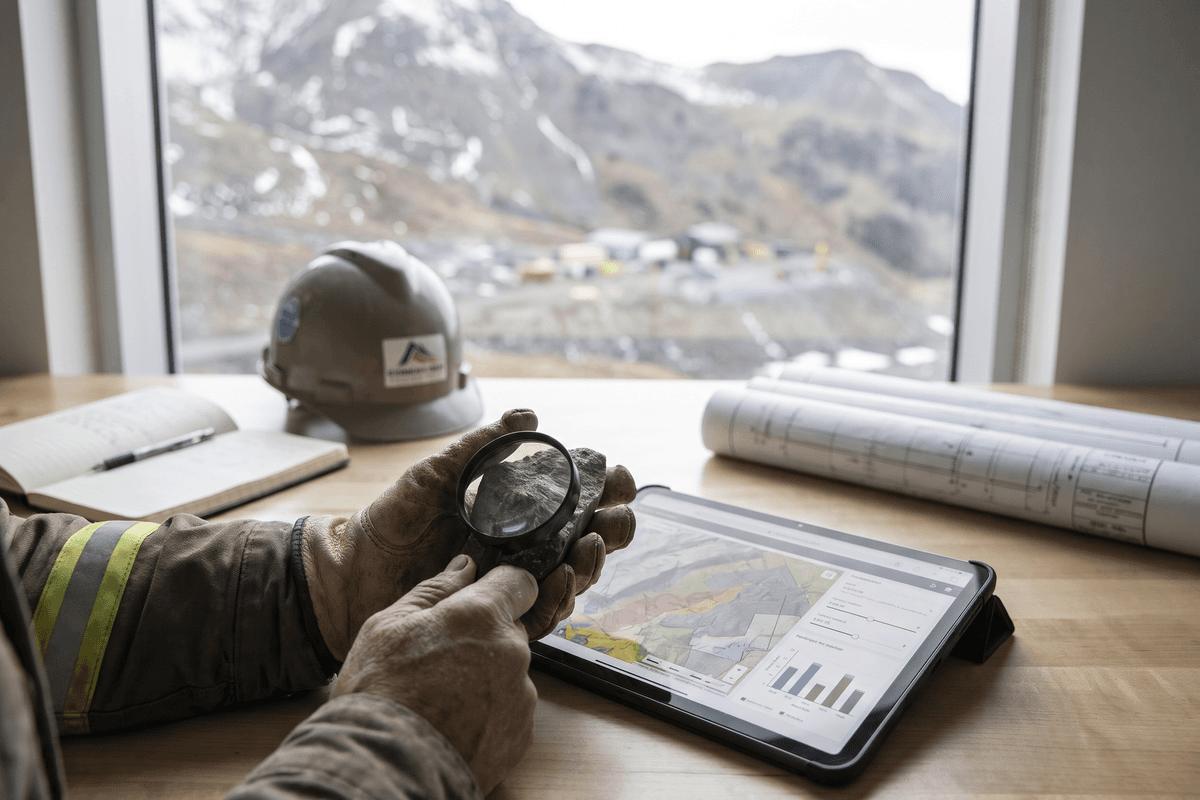

Tungsten rarely makes headlines, yet it sits inside everything from cutting tools and aerospace components to defence hardware and electronics. That makes the federal government's decision to commit up to $14 million to Fireweed Metals Corp.'s Mactung project in Yukon more significant than its dollar figure suggests. The money is not earmarked for shovels in the ground. It is directed at the engineering, technical studies, and validation work that determine whether a remote critical mineral deposit becomes a bankable mine. For Canadian engineers, that stage is where much of the real technical risk lives, and where the profession's expertise is most needed.
The announcement, published by Natural Resources Canada, describes the support as advancing engineering, technical studies, and validation at the Mactung tungsten project. Each of those three terms points to a different discipline, and together they outline a pre-development pathway that many Canadian practitioners will encounter in the coming decade.
What the Funding Actually Pays For
Federal critical minerals support has historically flowed in several forms, including grants, repayable contributions, and infrastructure funding. The Mactung commitment is framed around technical de-risking rather than construction, which reflects a deliberate sequencing choice. Investors and lenders rarely commit capital to a remote project until its metallurgy, geotechnical conditions, water management, and infrastructure requirements have been tested against realistic assumptions.
The Government of Canada announced up to $14 million in federal support for Fireweed Metals Corp. to advance engineering, technical studies, and validation at the Mactung tungsten project in Yukon.
Source: Natural Resources Canada announcement, November 2026
The phrasing matters. Validation implies testing whether earlier assumptions hold under current conditions, not simply repeating them. For engineers, this is familiar territory: it is the difference between a feasibility study that looks sound on paper and a design basis that survives contact with site data, updated cost pressures, and regulatory expectations.
Why Pre-Development Is the Real Bottleneck
Mining projects move through stages that carry very different risk profiles and engineering demands. The table below summarizes where a project like Mactung sits and what kind of professional work dominates each phase.
| Project Stage | Primary Engineering Focus | Typical Risk Profile |
|---|---|---|
| Exploration | Geophysics, drilling programs, resource modelling | High geological uncertainty, low capital at risk |
| Feasibility | Mine plan, process flowsheet, preliminary infrastructure design | Moderate; assumptions untested at scale |
| Engineering and Validation | Detailed metallurgy, geotechnical and hydrogeological studies, updated capital and operating estimates | Where most assumptions are challenged or confirmed |
| Permitting and Financing | Environmental baselines, impact assessment support, bankable design packages | Regulatory and financing dependencies |
| Construction and Commissioning | Procurement, construction management, process commissioning | Schedule and cost overruns, execution risk |
The validation stage is often underfunded in private budgets because it produces no saleable ore. Public support at this point can change the economics of the entire project by answering questions that would otherwise remain open until a lender asks them.
Engineering Considerations in a Northern Context
Remote Yukon projects introduce constraints that shape nearly every discipline involved. While the specific technical scope at Mactung is not detailed in the announcement, engineers working on comparable northern deposits typically face the following challenges:
- Permafrost and ground conditions: Foundation design, slope stability, and thaw sensitivity affect both surface infrastructure and any underground workings.
- Water management: Seasonal flows, water quality predictions, and treatment requirements must be modelled over long timeframes, often with limited historical data.
- Logistics and access: Seasonal road access, power supply, and fuel delivery influence capital costs, construction windows, and operating resilience.
- Metallurgical performance: Tungsten recovery depends on ore characteristics that must be confirmed through testwork rather than inferred from exploration samples.
- Tailings and closure: Long-term containment design and closure planning are increasingly scrutinized from the outset, not at the end of mine life.
Each of these areas benefits from integrated thinking. A metallurgical result that improves recovery may increase water treatment loads, and a cheaper access solution may introduce schedule risk that erodes the business case.
Permitting and Early Engagement
Projects in Yukon fall under the territory's environmental and socio-economic assessment framework, which is administered through the Yukon Environmental and Socio-economic Assessment Board. Engineers should treat assessment requirements as design inputs rather than downstream paperwork. Baseline data collection, alternatives analysis, and early consultation with Indigenous governments can shape project layouts in ways that are far costlier to change later. Validation studies are an opportunity to build the evidentiary record that regulators and communities will eventually review.
What Practitioners Should Take From This
For professionals in mining, geotechnical, environmental, and process engineering, the Mactung announcement offers several practical signals:
- Expect validation-stage work to grow. As governments and financiers prioritize bankable critical mineral projects, demand for independent technical review and testwork management is likely to increase.
- Build northern expertise deliberately. Cold-climate geotechnics, water balance modelling, and remote logistics are specialized skills that few firms maintain at depth.
- Integrate closure and permitting early. Design decisions made during validation will determine permitting timelines and closure costs decades later.
- Document assumptions rigorously. Lenders and regulators will test the basis of every estimate, so traceable reasoning is as valuable as the numbers themselves.
Looking Ahead
The Mactung investment is a single announcement, but it reflects a broader pattern in Canadian resource policy: public money is moving upstream, toward the technical work that decides whether projects proceed. How much of that support translates into operating tungsten production will depend on results from the engineering and validation program that now begins in earnest. For Canadian engineers, the opportunity lies in the quieter phases of a project, where careful analysis of ground, water, metallurgy, and logistics can determine whether a remote deposit becomes a durable source of supply. Watch this space as studies conclude and the project's design basis takes shape, because the answers will set the template for the next wave of northern critical mineral developments.