



In an era where sustainability mandates, climate targets, and supply chain security dominate the global industrial agenda, Ireland’s agri-food sector is undergoing an unprecedented technological transformation. Agriculture is no longer merely a primary extraction and cultivation industry; it has become one of the most demanding operational environments for advanced engineering design, robotics, biochemical processing, and data-driven systems. Highlighting this shift, twelve participants have officially commenced the third cohort of the FAST-IP programme, an intensive commercialisation accelerator delivered by University College Dublin (UCD) in partnership with Teagasc and backed by UCD’s School of Biosystems and Food Engineering.
The Food and Agricultural Solutions Technology - Innovation Programme (FAST-IP) represents a critical bridge between academic research, applied engineering, and commercial enterprise. As Ireland races to achieve its legally binding 25% reduction in agricultural greenhouse gas emissions by 2030, the demand for scalable, robust, and commercially viable engineering interventions has never been more urgent. For Irish engineers, the initiative underscores a fundamental pivot: the next frontier of deep-tech entrepreneurship lies in the biological, mechanical, and sensor-driven transformation of food production.
The Engineering Engine: UCD Biosystems and Teagasc Synergy
Delivered under Enterprise Ireland’s Innovators’ Initiative, the FAST-IP model is fundamentally needs-led. Rather than developing hardware or software in isolation and searching for a market, participants are embedded directly within operational farm environments, processing facilities, and Teagasc research centres to identify mission-critical pain points.
The partnership brings together two of the country’s most potent engineering and agricultural research assets:
- UCD School of Biosystems and Food Engineering: Providing world-class technical expertise in bioprocess engineering, life cycle assessment (LCA), precision instrumentation, and environmental systems design.
- Teagasc: Supplying extensive field research infrastructure, real-world testing environments, agronomic data sets, and direct access to end-user validation across dairy, tillage, and livestock sectors.
"Commercialising engineering solutions in agriculture requires navigating extreme physical environments, tight operational margins, and complex biological variables. Programmes like FAST-IP de-risk the development cycle before capital is deployed at scale."
For technical founders, this structured pathway dramatically accelerates the timeline between concept definition, prototype fabrication, and investor readiness, systematically reducing the technical and market risks that historically stymie deep-tech startups.
Core Technological Vectors in Modern AgTech Engineering
The third FAST-IP cohort enters a sector that is rapidly adopting advanced engineering methodologies. While early AgTech focused predominantly on telematics and farm management software, the modern landscape is characterised by deep, multidisciplinary engineering challenges across three primary pillars.
1. Precision Hardware and Autonomous Field Systems
Agricultural machinery is evolving from heavy, fuel-intensive mechanical plant to distributed, autonomous, and electrified systems. Engineers are deploying advanced kinematics, low-power edge compute, and computer vision to execute micro-interventions—such as targeted mechanical weeding, variable-rate nutrient dosing, and robotic harvesting—that drastically cut chemical inputs and fuel consumption.
2. Sensor Networks and Environmental Monitoring
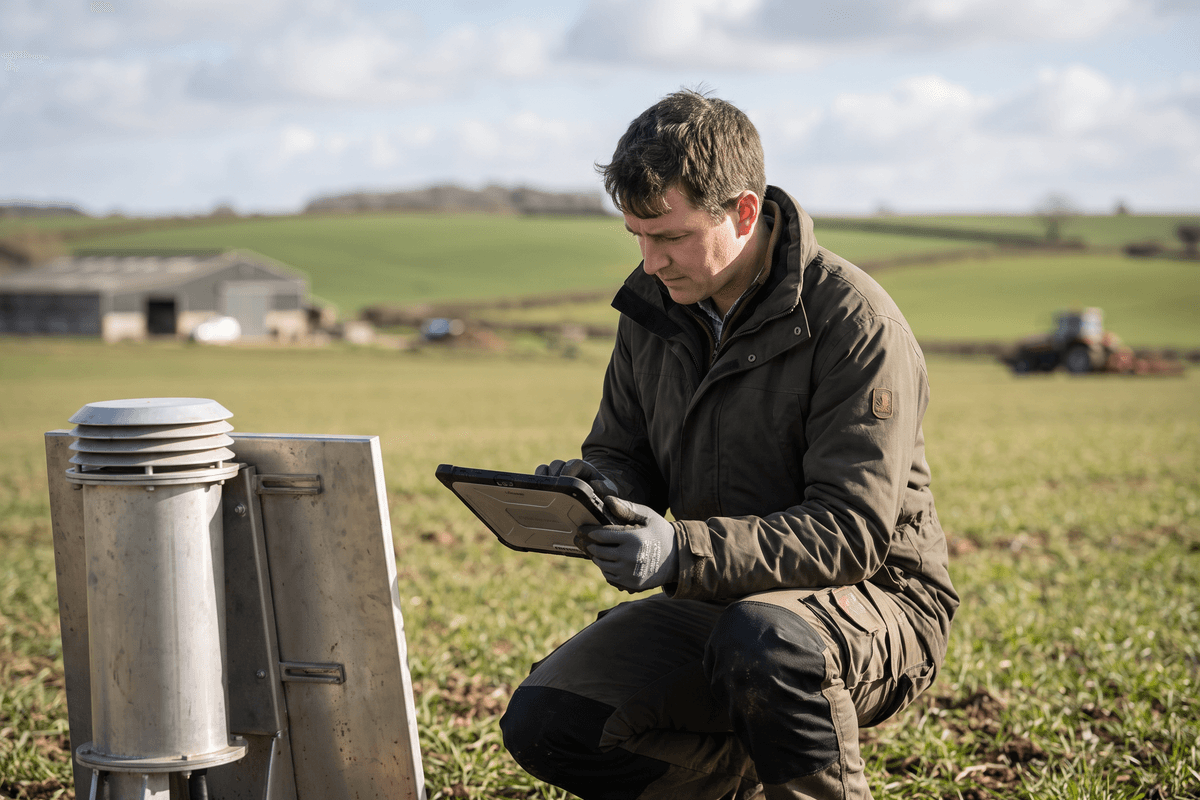
Compliance with water quality frameworks and emissions caps requires verifiable, real-time data. This demand is driving innovation in ruggedised field sensors, optical spectroscopy, and acoustic monitoring systems capable of operating autonomously in harsh, corrosive outdoor environments over multi-year deployments.
3. Circular Bioeconomy and Bioprocessing Engineering
The valorisation of agricultural side-streams requires sophisticated bioprocessing engineering. From closed-loop anaerobic digestion and nutrient recovery systems to the synthesis of bio-based materials from farm residues, engineering innovators are developing compact, modular processing units that turn environmental liabilities into revenue streams.
Bridging the Innovation Chasm: From Lab Bench to Commercial Scale
One of the primary structural challenges in Irish engineering has been the "valley of death"—the treacherous phase where high-potential research fails to transition from Technology Readiness Level (TRL) 3/4 (laboratory validation) to TRL 7/8 (commercial operational demonstration). In the agricultural sector, where biological variation and seasonal cycles dictate testing windows, this challenge is magnified.
| Development Vector | Academic / Pure R&D Approach | FAST-IP Commercial Engineering Model |
|---|---|---|
| Problem Identification | Hypothesis-driven, theoretical gap analysis | Direct field immersion and end-user operational pain points |
| Design & Prototyping | Custom, lab-optimised experimental rigs | Design for Manufacture (DFM), ruggedisation, modular scalability |
| Validation Cycle | Controlled bench trials and peer review | In-situ farm trials across variable weather and soil conditions |
| Intellectual Property | Academic publication and patent filing | Defensible commercial IP, freedom-to-operate, licensing strategies |
| Funding & Capital | Competitive academic research grants | Pre-seed venture capital, Enterprise Ireland HPSU funding |
By enforcing an entrepreneur-in-residence framework combined with rigorous technical mentoring, FAST-IP equips participants with the business acumen and engineering discipline required to build high-potential start-ups (HPSUs) that can compete on a global scale.
Strategic Implications for the Irish Engineering Ecosystem
The commencement of FAST-IP's third cohort signals several strategic shifts for Ireland's engineering workforce and research infrastructure:
Cross-Disciplinary Talent Convergence
Traditional engineering silos are dissolving. The successful AgTech engineer must now integrate mechanical design with embedded firmware, biochemical kinetics, and remote sensing telemetry. Initiatives like FAST-IP demonstrate that Ireland's talent pipeline is adapting to provide cross-disciplinary exposure, making engineering graduates significantly more versatile.
De-Risking Private Capital Investment
Venture capital and private equity investors often hesitate to invest in hardware-intensive or biological ventures due to high upfront Capex and prolonged development cycles. The rigorous validation framework provided by UCD and Teagasc gives institutional investors confidence that underlying technologies have been rigorously tested against real-world operational stressors.
Establishing Ireland as a Global AgTech Testbed
Given Ireland's temperate climate, intensive pastoral farming model, and strict environmental regulatory landscape, technologies engineered and proven here possess immediate exportability to key agricultural markets across Europe, the Americas, and Australasia.
Engineering the Sustainable Food Future
The intersection of engineering, biosystems, and climate resilience is rapidly becoming one of Ireland's defining competitive advantages. Programmes like FAST-IP do more than simply launch twelve individuals into entrepreneurship; they create the institutional muscle, technical pipelines, and commercial frameworks required to modernize the country's indigenous economy.
As the twelve participants begin their intensive commercialisation journey at UCD and Teagasc, they represent the vanguard of an industry where mechanical precision and biological systems work in lockstep. For the broader engineering community in Ireland, this marks another decisive step toward transforming complex decarbonisation mandates into world-class, exportable technological leadership.