
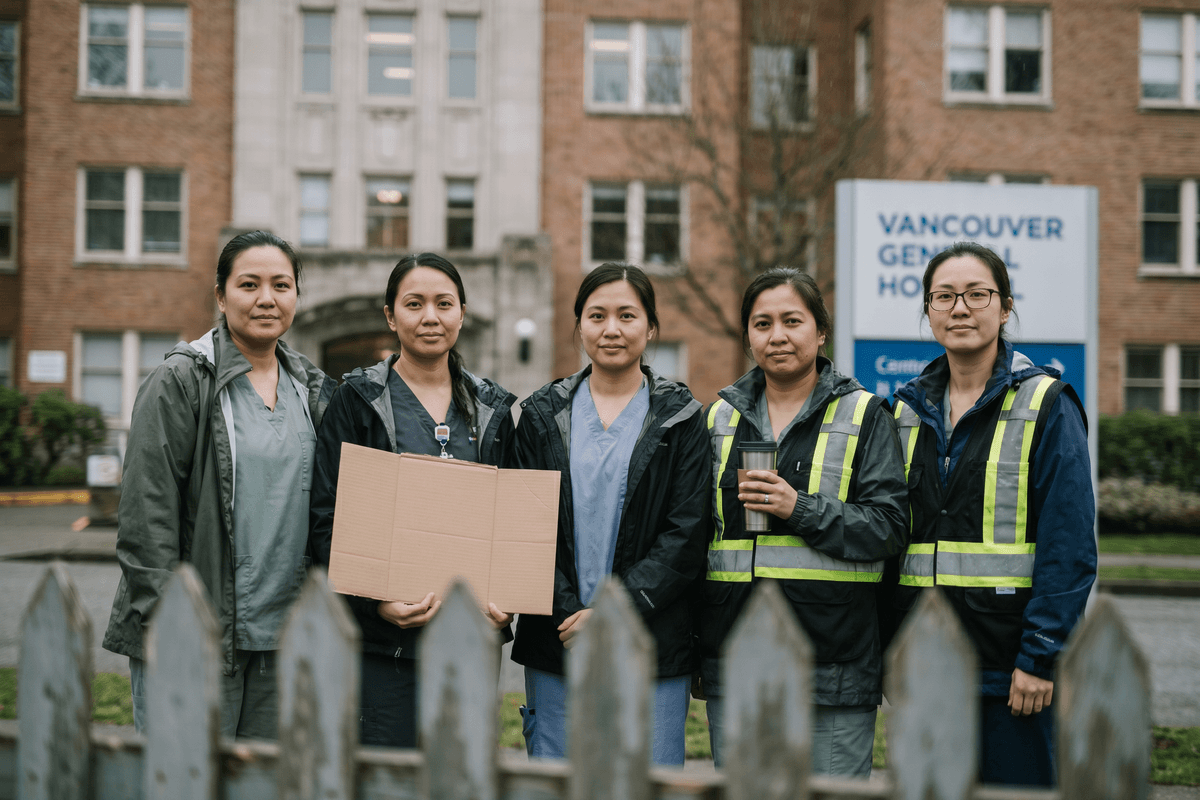



There is a profound shift in the atmosphere when the quiet, relentless exhaustion of a hospital ward spills out onto the pavement. For Canadian nurses, the transition from internal administrative protests to physical picket lines represents a crossing of the Rubicon. Beginning July 7, the British Columbia Nurses' Union (BCNU) will escalate its ongoing job action with a picket line at Vancouver General Hospital (VGH). This is not merely a localized labor dispute; it is a highly visible, strategic maneuver that will test the boundaries of healthcare labor relations across the country.
Following a historic strike vote where an unprecedented 98.2 percent of nearly 51,000 nurses voted in favor of job action, the move to picket B.C.'s largest hospital signals a critical evolution in the union's strategy. As healthcare professionals, nurses have long struggled with the tension between advocating for their own working conditions and ensuring uninterrupted patient care. The upcoming picket line at VGH forces a public reckoning with this dynamic, bringing the crisis of the nursing shortage directly to the doorstep of the province's flagship medical institution.
The Strategy Behind the VGH Picket
Choosing Vancouver General Hospital as the site for this escalation is no accident. As the largest hospital in British Columbia and a major referral center for the entire province, VGH is the beating heart of the regional healthcare system. A picket line here guarantees maximum public visibility, intense media coverage, and immediate pressure on provincial policymakers.
Until now, the BCNU's job action has largely been confined to administrative tasks—refusing to work unpaid overtime, declining to perform certain clerical duties, and strictly adhering to break schedules. While effective at highlighting the systemic reliance on nurses' unpaid labor, administrative action is largely invisible to the general public. A physical picket line changes the optics entirely.
"When nurses step outside the hospital walls and form a line, they are no longer just employees negotiating a contract; they become public advocates demanding a sustainable healthcare system for their patients."
Evolution of the BCNU Job Action
To understand the gravity of this escalation, it is helpful to look at how the union's strategy has unfolded over the past few weeks.
| Phase | Action Type | Impact on Nurses | Public Visibility |
|---|---|---|---|
| Phase 1 | Administrative Strike (Overtime bans, clerical refusals) | Reduced burnout, exposed reliance on unpaid labor | Low |
| Phase 2 | Work-to-Rule (Strict adherence to job descriptions) | Highlighting scope-of-practice creep | Medium |
| Phase 3 (July 7) | Physical Picketing at VGH | Requires balancing picket duties with essential service mandates | High |
The Tightrope of Essential Services
The most complex aspect of any nursing strike is the legal and ethical requirement to maintain essential services. Unlike workers in many other sectors, nurses cannot simply walk off the job and shut down production. Human lives are on the line. The BCNU has explicitly stated that essential service levels will be maintained during the VGH picket.
However, managing a picket line while staffing a hospital at essential levels requires meticulous logistical coordination. Essential service orders are negotiated between the union, the employer, and the provincial labor board to determine the absolute minimum staffing required to prevent immediate harm to patients.
For nurses on the ground, this creates a unique psychological and professional environment:
- The Dual Role: A nurse may spend the morning walking the picket line in high-visibility union gear, chanting for fair wages and safe ratios, only to cross their own union's line in the afternoon to report for an essential service shift.
- Moral Distress: Working under essential service levels often means working in the very bare-bones, short-staffed conditions that the strike is attempting to fix. This can temporarily exacerbate the moral distress nurses feel when they cannot provide optimal care.
- Public Perception: Nurses must carefully communicate to the public that while they are picketing, emergency and critical care are not being abandoned. The messaging must constantly reinforce that the strike is for patient safety, not at the expense of it.
Practical Implications for Nursing Professionals
For nurses working in B.C., and for those across Canada watching this situation unfold, the VGH picket offers several critical lessons in modern labor action. If you are a nursing professional navigating a strike environment, there are specific practical considerations to keep in mind:
1. Know Your Essential Service Designation
Every nurse must be crystal clear on their status before a picket begins. Are you designated as essential for your upcoming shift? If so, you are legally protected—and legally required—to cross the picket line to work. Employers cannot penalize you for union activity, but your regulatory college can penalize you for patient abandonment if you fail to report for an essential shift.
2. Navigating the Picket Line Professionally
When crossing a picket line to perform essential duties, do so with the understanding of your colleagues. Union leadership typically provides "essential worker" passes or clear protocols for members entering the building. Maintain solidarity by joining the line during your off-hours or breaks, demonstrating that your presence inside the hospital is a legal mandate, not a break in union solidarity.
3. Protecting Your License
During job action, the lines between employer disputes and professional regulatory standards can feel blurred. Remember that your primary obligation under your provincial nursing college is to patient safety. Document everything. If essential service staffing levels feel unsafe, use your standard professional reporting mechanisms (such as Professional Responsibility Forms) just as you would on a normal day.
A National Ripple Effect
The 98.2 percent strike mandate and the subsequent escalation to picketing at VGH are sending shockwaves across the Canadian healthcare landscape. Provincial governments in Ontario, Alberta, and Nova Scotia are undoubtedly watching the situation in British Columbia closely.
Historically, nurses have been hesitant to employ highly disruptive labor tactics, fearing public backlash or accusations of abandoning patients. The BCNU's aggressive, highly organized approach—combining a near-unanimous strike vote with targeted, high-profile picketing and strict essential service maintenance—provides a new blueprint for nursing unions nationwide.
This action proves that Canadian nurses are no longer willing to accept the premise that their ethical duty to patients requires them to silently endure deteriorating working conditions. By bringing the fight to the physical exterior of the hospital, nurses are demanding that the public and policymakers look directly at the people holding the healthcare system together.
As we look toward the resolution of this conflict, one thing is certain: the era of the passive, quietly suffering healthcare worker is over. The picket lines at Vancouver General Hospital are not just a demand for a better contract today; they are the foundation of a more assertive, empowered Canadian nursing workforce for decades to come.