
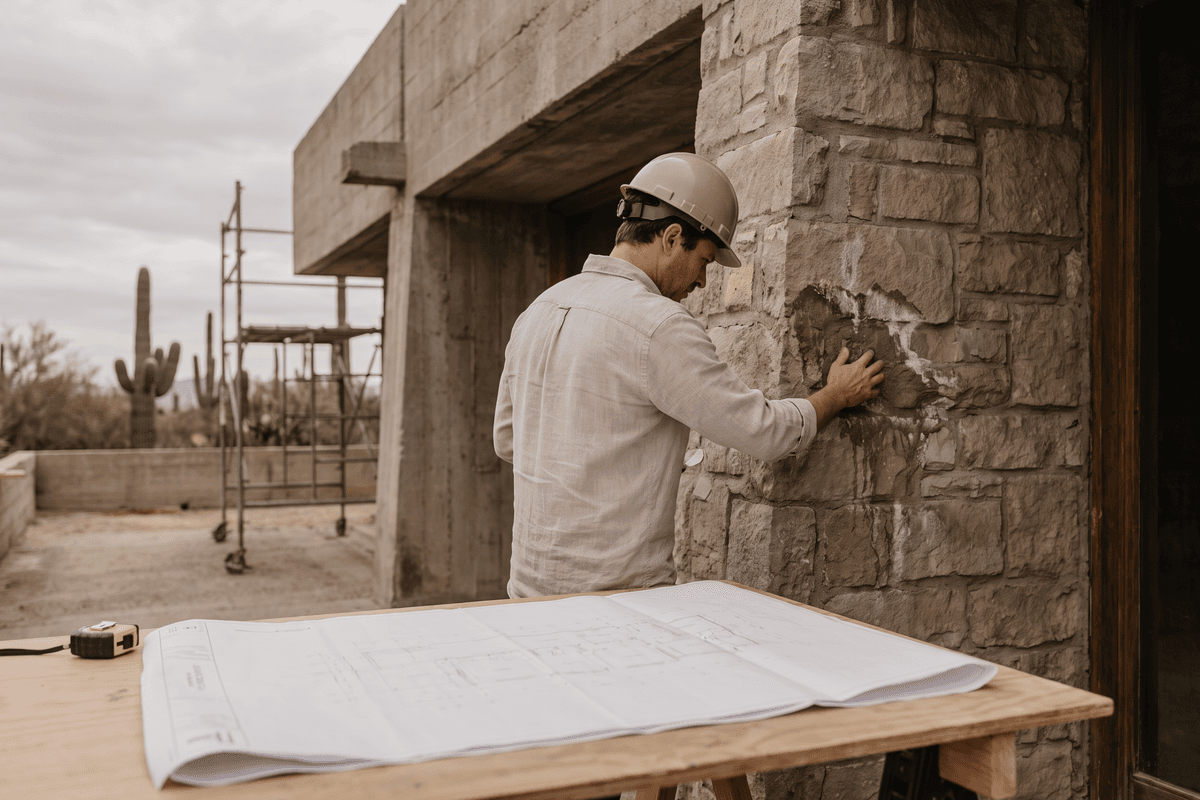



When sudden high winds sheared roofing material from Frank Lloyd Wright’s Taliesin West in Scottsdale, Arizona, fatally striking a visiting Brazilian university rector during an architectural tour, the profession was confronted with a harrowing truth. Even our most revered, meticulously stewarded masterworks are no longer insulated from the escalating volatility of North American microclimates. The tragedy at Wright’s desert laboratory—a UNESCO World Heritage site and foundational touchstone for organic architecture—transcends the category of a freak accident. It serves as a sobering bellwether for the American architecture, engineering, and construction (AEC) community, exposing the precarious intersection between experimental historic fabric, public safety, and the unprecedented physical stresses of climate change.
The Vulnerability of Experimental Heritage
Taliesin West, established by Wright in 1937, was conceived as an iterative proving ground for desert living. Wright and his apprentices deployed local desert masonry bound by low-strength concrete, paired with lightweight overhead structures—initially wooden trusses and canvas panels, later retrofitted over the decades with fiberglass and synthetic roofing membranes to diffuse the harsh Sonoran Desert light. While these assemblies achieved peerless atmospheric and spatial brilliance, their experimental tectonics were calibrated for the climate patterns of the mid-20th century, not the hyper-localized, severe downbursts and erratic gusts becoming standard across the American West.
According to reports detailing how high winds dislodged roofing material during a walking tour at Taliesin West, the failure highlights a systemic challenge facing preservation architects nationwide: how to honor the historic integrity of light, delicate assemblies while hardening them against 100-year wind loads that now occur with biennial frequency.
"Historic preservation can no longer treat baseline material retention as its sole mandate. In an era of accelerating climate hazards, preservation without dynamic structural resilience is an existential risk to both historic fabric and human life."
The Legislative Push: Codifying Hazard Mitigation Across the Built Environment
The incident at Scottsdale comes at a pivotal juncture for federal design policy. Marking the International Day for Disaster Risk Reduction, the American Institute of Architects (AIA) has thrown its institutional weight behind major bipartisan legislative packages designed to shore up community infrastructure against escalating climate threats. As highlighted by the AIA's support for federal disaster resilience legislation, national policy is rapidly pivoting from post-disaster recovery to preemptive hazard mitigation.
The legislative slate targets systemic vulnerabilities across both existing infrastructure and new public commissions, centering on three core objectives:
- Community Hazard Mitigation Funding: Establishing robust federal grant pipelines for municipalities to audit and retrofit aging civic structures against wind, flood, and seismic hazards.
- Adoption of Resilient Building Codes: Incentivizing states and local jurisdictions to enforce the latest iterations of the International Building Code (IBC) and ASCE 7 hazard standards without weakening local amendments.
- Infrastructure Hardening Tax Credits: Providing commercial and non-profit property stewards with economic mechanisms to upgrade non-compliant envelopes, roofs, and structural connections.
For practitioners, these legislative movements signal a coming transformation in project scopes. Historic preservation grants and public sector RFPs will increasingly mandate multi-hazard assessments as a prerequisite for funding allocation, requiring architects to marry conservation science with forensic structural engineering.
Balancing Public Trust, Architectural Value, and Regenerative Mandates
The life-safety crisis at a premier cultural landmark underscores a broader institutional reckoning regarding how the architectural profession communicates value and protects the public realm. The newly delivered AIA Strategic Council 2026 recommendations and 2027 study priorities position regenerative design and the public articulation of architectural value as the profession's top imperatives.
At the same time, discussions at the recent Public Architecture Symposium on advancing integrity and collaboration reinforced that civic trust hinges on the profession’s ability to guarantee physical safety while delivering inspiring, accessible public spaces. When iconic sites fail structurally under wind shear, that social contract is strained.
| Domain | Traditional Preservation Approach | Climate-Resilient Adaptive Practice |
|---|---|---|
| Envelope Design | In-kind material replacement matching original 20th-century specifications. | Concealed structural fasteners, engineered sub-framing, and aerodynamic wind-load testing. |
| Risk Management | Cyclical cosmetic inspection and historic documentation. | Continuous sensor monitoring, localized anemometer alerts, and extreme weather site protocols. |
| Civic Engagement | Curatorial interpretation focused on spatial geometry and biography. | Integrated education on regenerative stewardship, climate adaptation, and structural integrity. |
Adaptive Reuse and the Pedagogical Shift
This dialogue between preservation and physical resilience is actively reshaping academic discourse and gallery floors this fall. As surveyed in the Architectural Record October 2026 event preview, leading design institutions are centering exhibitions on adaptive reuse, multifamily housing innovation, and architectural pluralism. The pedagogical emphasis has decisively shifted from heroic new forms to the complex forensics of maintaining and retrofitting the existing built environment.
For firms navigating this transition, several concrete action items emerge for heritage and civic projects:
- Conduct Uplift and Shear Audits on Non-Standard Roofs: Historic canopies, clerestories, tensile membranes, and lightweight overhangs require immediate engineering reviews against revised local wind-speed maps.
- Establish Dynamic Weather Protocols for Public Access: Site managers and cultural institutions must coordinate with architectural consultants to establish operational thresholds—closing outdoor tours or sensitive pavilions when sustained gusts exceed safe engineering tolerances.
- Deploy Invisible Strengthening Systems: Work with structural conservation specialists to incorporate concealed tie-downs, carbon-fiber reinforcements, and modern anchoring hardware that preserve visual character while resisting modern uplift forces.
- Engage with Federal Resilience Grants: Position firm expertise to assist civic and non-profit clients in applying for FEMA and state-level mitigation funding before disaster strikes.
Looking Forward: A New Covenant for Organic Architecture
Frank Lloyd Wright famously insisted that organic architecture must proceed from the nature of the site, harmonizing human shelter with regional environmental forces. In the mid-20th century, that philosophy birthed open canvas roofs that embraced desert breezes and bathed drafting tables in soft light. Today, respecting the "nature of the site" demands a rigorous acknowledgement of an intensified atmosphere.
The tragedy at Taliesin West must catalyze an industry-wide reevaluation of how we protect both our architectural inheritance and the public that visits it. By combining the AIA's legislative advocacy for hazard mitigation with rigorous technical retrofits and transparent civic stewardship, American architecture can ensure that our historic landmarks remain safe sanctuaries of inspiration for generations to come.