
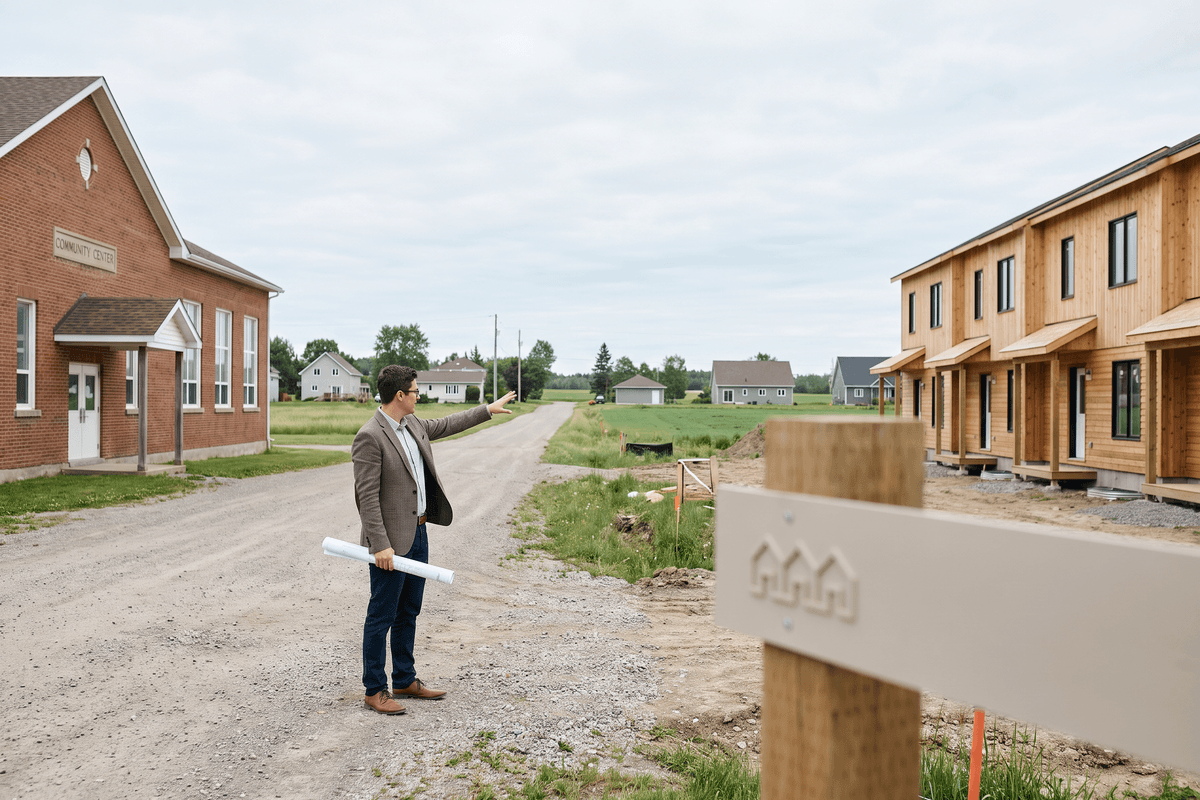



When national housing discussions dominate the headlines, the spotlight almost inevitably falls on multi-billion-dollar transit-oriented developments across Canada’s major metropolitan centres. Yet, some of the most acute housing pressures are unfolding in agricultural, industrial, and secondary municipal markets, where vacancy rates sit near zero, construction trades are stretched thin, and local tax bases lack the elasticity to absorb major capital deficits. In southwestern Ontario, a targeted nearly $3-million joint investment from Ottawa and Queen’s Park to build 18 affordable housing units in the Municipality of Leamington demonstrates how small and mid-sized municipalities can effectively leverage senior-level intergovernmental tools to expand their community housing stock.
Funded through the Canada-Ontario Community Housing Initiative (COCHI), this initiative serves as a practical blueprint for municipal administrators across Canada who must balance surging demand for supportive and deeply affordable units against tightly constrained municipal balance sheets.
The Small-Market Housing Imperative
Leamington, known as an agricultural and greenhouse powerhouse on Lake Erie, illustrates the distinct demographic and socio-economic dynamics facing non-metro hubs. Rapid economic growth and an influx of regional workers have driven rental supply to historic lows, pushing vulnerable populations and low-income earners into precarious living conditions. Unlike large urban centres with dedicated housing corporations and specialized non-profit developers, smaller municipalities often operate without extensive in-house housing delivery divisions.
To overcome these capacity limits, municipal leadership must transition from passive observers to proactive orchestrators of tri-level funding. As the Leamington announcement proves, the capital math for community housing requires precise alignment across all three orders of government:
- Federal Capital Contributions: Deployed through bilateral accords under the National Housing Strategy (NHS), federal dollars provide the baseline non-repayable equity needed to make projects viable.
- Provincial Allocation and Program Administration: Provincial ministries (in this case, Ontario’s Ministry of Municipal Affairs and Housing) route funding through designated Service Managers to ensure local priority alignment.
- Municipal Facilitation and Site Delivery: Local councils supply the crucial foundation—surplus municipal property, targeted infrastructure connections, waived application fees, and accelerated planning approvals.
"Expanding community housing in secondary and agricultural communities isn't just a social service imperative; it is essential economic infrastructure that stabilizes the local labour market and prevents rural homelessness."
Deconstructing the Funding Architecture: The COCHI Mechanism
The Canada-Ontario Community Housing Initiative is designed to maintain, repair, and expand the social and community housing portfolio across Ontario. For municipal staff navigating these programs, understanding the operational mechanics of bilateral streams is vital for project structuring.
Unlike competitive nationwide challenge funds that often inadvertently favor Tier-1 cities with dedicated grant-writing teams, bilateral initiative funding flows through structured allocations administered by regional Consolidated Municipal Service Managers (CMSMs) and District Social Services Administration Boards (DSSABs). In regions like Essex County, this structure enables smaller lower-tier municipalities to collaborate directly with county-level administrators to target micro-developments that deliver immediate local impact.
| Delivery Dimension | Large Metropolitan Model (Tier-1) | Small & Mid-Sized Model (Tier-2/3) |
|---|---|---|
| Scale of Build | 100+ unit high-density towers | 10–30 unit low-rise / infill builds |
| Development Lead | Dedicated Municipal Housing Corp / Major Non-Profit | Service Manager partnership / Regional Housing Authority |
| Municipal Contribution | Multi-million capital grants & density bonusing | Surplus land dedication, DC exemptions & expedited zoning |
| Operational Risk | Absorbed across large, diversified municipal portfolios | Relies on regional CMSM/DSSAB operating subsidies and service partners |
Overcoming the Operational Hurdle: Capital vs. Operating Budgets
Securing capital grants to pour foundations and construct framing is only half the battle for municipal practitioners. The most significant long-term vulnerability for community housing in smaller municipalities lies in operational sustainability.
Supportive and deeply affordable housing projects house individuals with complex needs, often requiring dedicated wrap-around social services, mental health supports, and active tenancy management. Capital funding programs like COCHI do not typically cover multi-year operating deficits. Municipalities must therefore establish robust operating frameworks prior to ground-breaking:
- Service Level Agreements (SLAs) with Non-Profit Operators: Partnering with established community non-profits shifts day-to-day property management to entities with specialized social service expertise.
- Stacking Provincial Healthcare and Social Services: Ensuring local supportive units are linked to provincial health team allocations prevents municipal property tax revenue from inadvertently funding core healthcare interventions.
- Sustainable Rent-Geared-to-Income (RGI) Formulas: Establishing clear rent subsidies backed by CMSM allocations protects the building’s physical reserve fund from deferred maintenance over a 30-year lifecycle.
Strategic Municipal Playbook for Smaller Communities
For Chief Administrative Officers (CAOs), Directors of Planning, and Housing Program Managers looking to replicate Leamington’s success, several practical takeaways emerge from the recent joint rollout:
1. Complete Comprehensive Municipal Land Audits
The single greatest municipal lever to attract senior-level funding is “free” or below-market land. Municipalities should maintain a live registry of surplus parcels, underutilized parking facilities, and decommissioned institutional buildings that can be designated exclusively for affordable infill housing.
2. Establish As-of-Right Supportive Housing Zoning
Delays in the statutory public meeting and zoning amendment process add carrying costs that jeopardize time-sensitive senior government grant deadlines. By proactively rezoning municipal parcels for multi-residential and supportive use, councils eliminate the primary regulatory bottleneck before funding applications are even submitted.
3. Leverage Regional Scale
Lower-tier municipalities must maintain continuous coordination with their upper-tier or regional service managers. Pooling pipeline needs across multiple small towns enables regional boards to present a cohesive, multi-site investment package to provincial and federal decision-makers, making smaller proposals just as compelling as high-density urban developments.
Looking Ahead: The Evolution of Non-Metro Housing Policy
As senior levels of government refine their housing delivery programs ahead of upcoming fiscal cycles, smaller municipalities can no longer afford to be sideline participants. The nearly $3-million investment in Leamington shows that right-sized, targeted community housing projects are not only politically and financially viable—they are vital to maintaining social cohesion and economic resilience across Canada’s foundational communities. Municipalities that prepare their land, zoning, and intergovernmental partnerships today will be first in line to turn federal and provincial capital into physical doors tomorrow.