
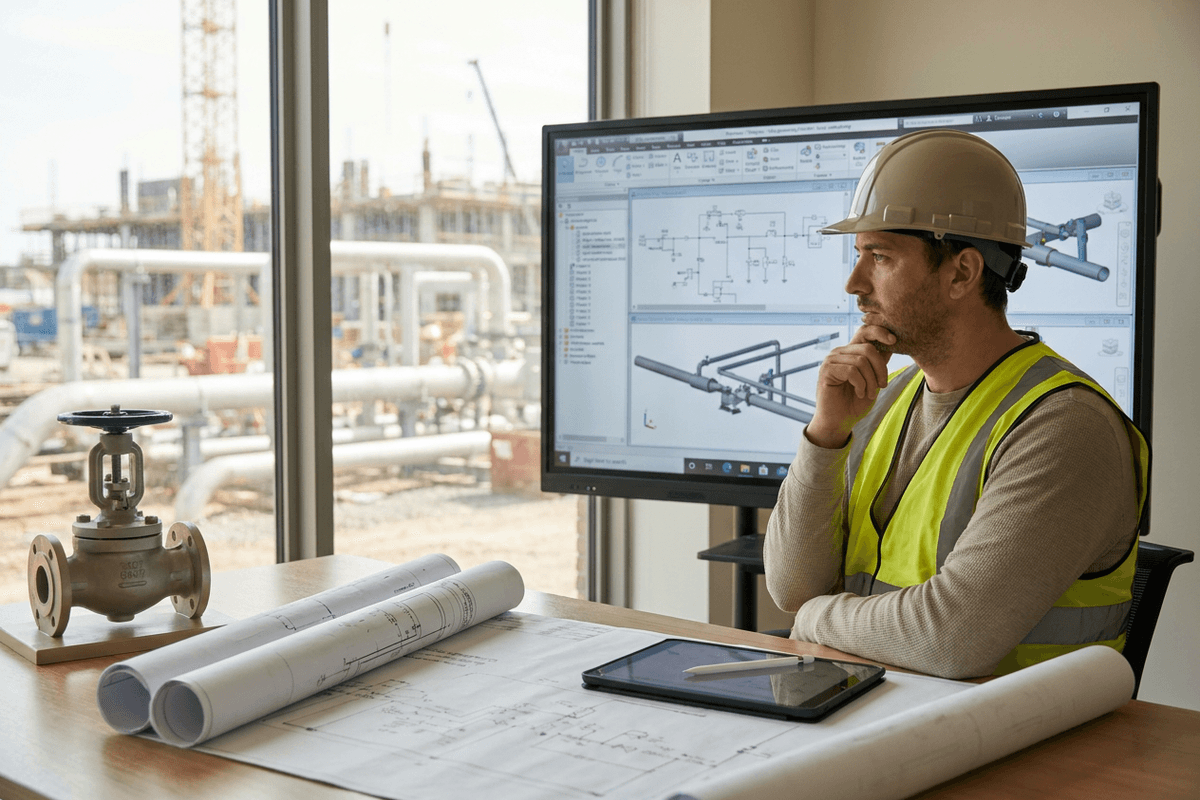

New Zealand’s engineering and infrastructure sectors are navigating a familiar, high-stakes paradox: an unprecedented pipeline of civil, municipal, and industrial renewals waiting in the wings, held hostage by pre-election investment paralysis and an intensifying trans-Tasman talent drain. When capital allocators hesitate, the ripple effect across engineering consultancies, tier-one contractors, and advanced manufacturing workshops is immediate. Technical capability doesn't sit idle on a balance sheet; it gets on a plane.
According to the Advocacy and Engagement Update for October 2026 from Infrastructure New Zealand, an extensive survey of nearly 300 sector leaders revealed deep unease regarding the twin threats of investment deferral and talent attrition. With election cycles routinely pausing procurement decisions and shifting project priorities, senior engineers, project directors, and specialized technical staff are fielding lucrative offers across the ditch and further afield. To counter this structural volatility, engineering practices across Aotearoa are being forced to reinvent their delivery models—pivoting upstream toward early contractor involvement, leaning into digital automation, and extracting maximum resilience from every dollar committed.
The Offshore Magnet and the Cost of Political Hesitation
The feedback gathered by Infrastructure New Zealand captures an industry exasperated by the recurring “wait-and-see” posture that grips public procurement ahead of national elections. When sovereign and municipal infrastructure commitments stall, engineering firms bear the immediate holding costs. While junior graduates continue to enter the domestic market, the critical cohort of chartered engineers with 8 to 15 years of complex delivery experience is proving increasingly vulnerable to Australian recruitment drives.
“Every hiatus in procurement isn't just a temporary delay in physical construction; it is a permanent loss of domestic intellectual property. Once a chartered structural or geotechnical specialist relocates their family to Queensland or New South Wales to work on fully committed megaprojects, bringing them back requires years of concerted effort and significant capital.”
The consequences extend far beyond recruitment line items. When institutional knowledge and engineering leadership evaporate, remaining teams face increased project delivery risk, longer review cycles, and reduced capacity to guide younger engineers through their professional chartership pathways. Breaking this cycle requires moving past traditional project-by-project transactional procurement toward enduring partnerships that value technical advisory as a core economic stabilizer.
The Consultancy Compact: Why Advisory Cannot Be Commoditised
At the center of this capability debate is the persistent political temptation to view engineering consultancy fees as low-hanging fruit for budget rationalisation. However, treating consultancy as an administrative overhead rather than an essential risk mitigation mechanism directly compromises infrastructure durability. This issue was forcefully argued in an analysis published with ACE New Zealand on The Spinoff, titled ‘Find a way to make it work: Why Aotearoa needs engineering consultants’.
The piece highlights that engineering consultants do not merely generate technical reports; they navigate the intricate web of seismic resilience, climate adaptation, environmental compliance, and asset life-cycle economics that prevents public assets from failing prematurely. Cutting consultancy hours upfront inevitably yields compounded rectification costs downstream during construction and operational maintenance.
Upstream Mitigation: ECI, 4D BIM, and Embodied Carbon Gains
To defend margins and de-risk delivery amid this constrained talent landscape, forward-thinking contractors and consulting practices are shifting their collaboration models upstream. Construction major Hawkins has demonstrated that the greatest economic and sustainability gains occur well before the first excavator touches topsoil, as detailed in an Engineering News feature on Hawkins’ planning and sustainability methodologies.
By pairing Early Contractor Involvement (ECI) with rigorous 4D Building Information Modelling (BIM), project teams are resolving structural, spatial, and logistical clashes in a virtual environment. This pre-construction engineering rigor delivers measurable savings across three vital metrics:
- Material Efficiency: Precise spatial sequencing eliminates site-level rework, cutting concrete and steel wastage by double-digit percentages.
- Embodied Carbon Reduction: Early digital iterations enable structural engineers to test alternative low-carbon mix designs and hybrid timber systems prior to procurement finalisation.
- Talent Optimization: Multidisciplinary teams collaborate inside a shared digital model, enabling a single senior technical specialist to oversee multiple project workstreams efficiently.
| Project Metric | Traditional Siloed Delivery | Integrated ECI & 4D BIM Workflow |
|---|---|---|
| Design Clash Resolution | Discovered on-site during trade execution; causes RFIs and delay claims | Solved virtually during pre-construction; eliminates physical spatial clashes |
| Embodied Carbon Targeting | Retrospective calculations often applied as an offset exercise | Iterative material testing and structural volume optimization during concept phase |
| Engineering Resource Load | Fragmented; heavy rework required as designs change on-site | Front-loaded; consolidated expertise prevents late-stage structural revisions |
| Schedule Certainty | Vulnerable to supply chain delays and trade stacking | Time-linked 4D visualisations streamline site trade access and crane utilization |
Industrial Agility: Addressing Capacity Bottlenecks on the Factory Floor
The talent crunch and pipeline uncertainty are by no means confined to civil infrastructure. Advanced manufacturing and heavy industrial engineering across New Zealand face parallel headwinds. In response, engineering faculties and local manufacturers are actively bridging the gap between theoretical R&D and commercial productivity.
A prime example of this convergence took place at Auckland University of Technology, where New Zealand manufacturers partnered with AUT engineering researchers and students to tackle chronic operational bottlenecks. By applying advanced materials, localized automation tooling, and AI-driven process engineering to real-world industrial plant constraints, local manufacturers are finding ways to scale throughput without requiring massive headcount expansions.
This technical cross-pollination aligns closely with broader industrial shifts. As detailed in an examination of how technology is reshaping the economics of manufacturing closer to customers, investments in digital twins, industrial robotics, and adaptive automation software are making domestic production competitive against unpredictable offshore supply chains. For mechanical and industrial engineers, this transition represents a fundamental role evolution: moving away from routine maintenance toward systems architecture, data integration, and algorithmic process control.
Decarbonising the Works: Smarter Site Power Systems
Even as design models and manufacturing lines modernize, civil contractors face immediate client expectations to reduce physical worksite emissions. Traditionally, running remote sites, site offices, and temporary equipment meant relying on continuously idling diesel generators—a practice that is both carbon-heavy and costly under current fuel tariffs.
Equipment suppliers are answering the call with hybrid infrastructure. United Rentals has expanded its worksite power range in New Zealand, deploying solar-powered worksite hubs and Battery Energy Storage Systems (BESS) designed for demanding civil engineering operations. These integrated systems shave peak power demand, automatically cycling between stored solar energy, battery reserve, and highly efficient backup generation.
For civil site engineers and environmental managers, integrating BESS and solar microgrids transforms site utility engineering. It cuts diesel burn and noise pollution in urban environments while establishing auditable, real-time telemetry on energy usage that can be directly incorporated into Scope 1 and Scope 2 project disclosures.
The Strategic Path: Re-Anchoring Engineering in Aotearoa
The warnings issued by Infrastructure New Zealand’s survey must not be brushed aside as standard election-year grumbling. The departure of high-tier engineering capability creates a structural vulnerability that cannot be rapidly corrected once an election cycle concludes and funding taps are reopened.
To retain our best practitioners and deliver the resilient built environment Aotearoa requires, the sector must pull three critical levers simultaneously:
- Commit to Counter-Cyclical Procurement: Central and local government agencies must maintain baseline design and consenting pipelines regardless of the electoral calendar, ensuring engineering firms can retain specialist teams.
- Institutionalize Upstream Engineering: Mandate Early Contractor Involvement and digital BIM collaboration across public works to reduce costly physical redesigns and enhance project carbon efficiency.
- Accelerate Technology Integration: From the factory floor to the construction compound, embrace digital twins, automation, and hybrid microgrids to amplify the productivity of the engineering workforce we have.
New Zealand’s engineering challenges—aging water systems, seismically precarious transport links, climate adaptation, and industrial decarbonisation—are substantial. Meeting them requires a market where engineering capability is recognized as the strategic catalyst of national resilience, not a variable cost to be pared back whenever the political pendulum swings.