
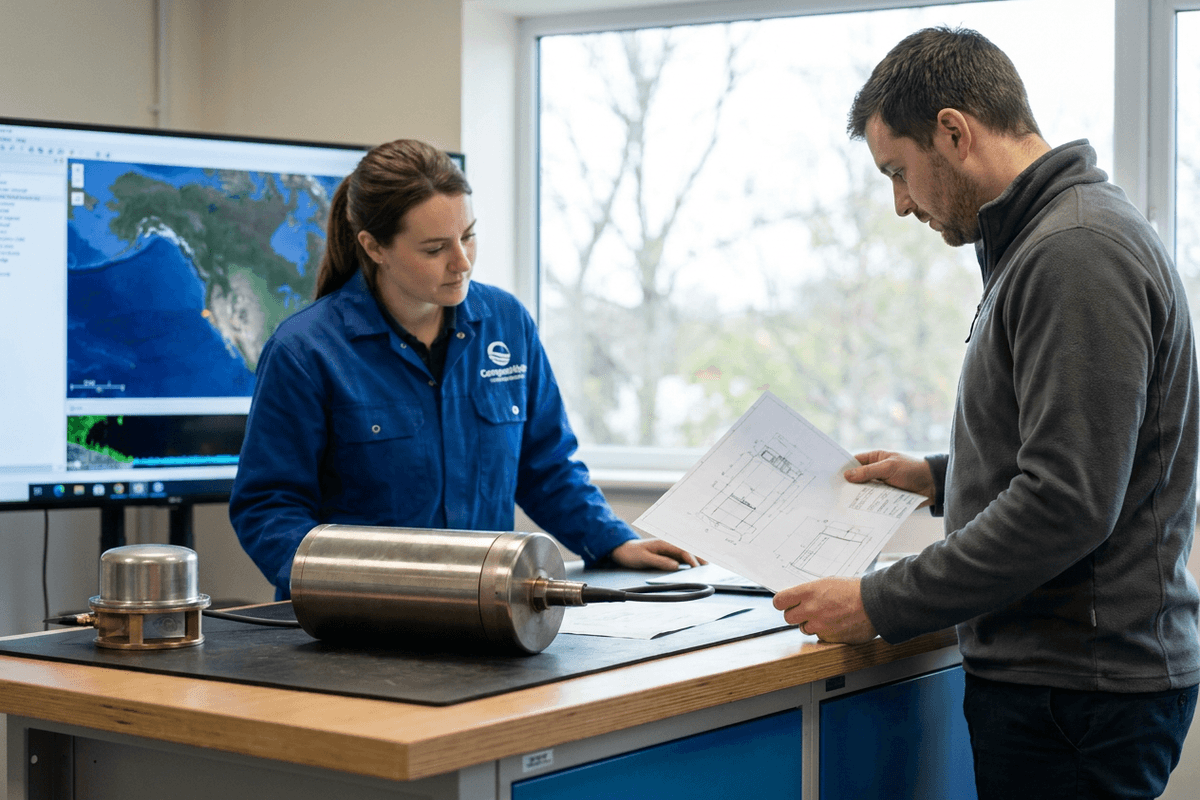

From the deep acoustic channels of the North Atlantic to low Earth orbit, Canadian precision engineering is undergoing a coordinated surge in physical testing infrastructure, advanced manufacturing capacity, and sovereign technical capabilities. The recent federal investment to expand GeoSpectrum Technologies’ manufacturing, engineering, and acoustic testing facility in Dartmouth, Nova Scotia highlights how domestic demand for specialized marine defense systems is translating directly into capital equipment, cleanroom calibration, and high-value technical employment. Simultaneously, parallel investments in aerospace testbeds—most notably Montreal’s $15-million satellite navigation and mission operations center with Xona Space Systems—signal a strategic national emphasis on severe-environment systems engineering.
For Canadian consulting engineers, systems integrators, and project managers, these developments represent more than isolated corporate grants. They mark a critical maturation in how Canada designs, tests, and certifies mission-critical hardware against stringent acoustic, thermal, and mechanical baselines.
The Acoustic Frontier: Advanced Transducers and In-Water Testing in Dartmouth
Underwater acoustics remains one of the most unforgiving domains in modern applied physics and mechanical engineering. Designing active and passive sonar systems, towed horizontal arrays, and variable-depth dipping sonars requires reconciling extreme hydrostatic pressures, corrosive saline environments, and ultra-sensitive piezoelectric transducer arrays. GeoSpectrum Technologies’ facility expansion in Dartmouth, Nova Scotia addresses a growing global bottleneck in specialized ocean acoustics manufacturing and validation.
The project will create 40 full-time, highly skilled engineering and technical production roles, significantly expanding Dartmouth's footprint in underwater sensing and anti-submarine warfare (ASW) technologies. The expanded facility will integrate:
- Piezoelectric Ceramic Fabrication & Encapsulation: Precision polyurethane and elastomer over-molding processes designed to withstand continuous exposure to multi-hundred-bar ambient pressures without acoustically attenuating transceived signals.
- Specialized Acoustic Test Tanks: In-house, temperature-controlled, reflection-attenuated calibration basins capable of simulating deep-water acoustic impedance, directional beamforming validation, and frequency-response verification across low-to-medium acoustic spectrums.
- Towed Body Assembly & Mechanical Integration: High-tolerance mechanical bays for fabricating hydrodynamic tow-bodies, fairings, and winch handling systems capable of dynamic deployment from patrol frigates, uncrewed surface vessels (USVs), and subsea gliders.
"Scaling domestic underwater acoustic engineering ensures that Canada does not merely specify international marine hardware, but maintains sovereign mastery over hydrophone design, signal processing hardware, and maritime sensor integration."
Orbital Parallels: Montreal’s Precision Satellite Navigation Expansion
The engineering challenges governing deep-water acoustic sensors bear striking architectural similarities to the spatial constraints of low Earth orbit (LEO). Just as marine engineers must isolate acoustic arrays from the structural noise of a ship’s hull, aerospace engineers must harden precision positioning, navigation, and timing (PNT) payloads against solar radiation, thermal vacuum cycling, and launch vibration spectra.
In Montreal, Canada’s $15-million partnership with Xona Space Systems is establishing a mission operations, environmental testing, and satellite systems engineering center to support next-generation LEO navigation constellations. This facility will deliver dedicated cleanroom integration bays, hardware-in-the-loop (HIL) simulation racks, and automated telemetry testing suites. Together, Dartmouth’s marine acoustic center and Montreal’s aerospace hub provide Canadian engineering teams with end-to-end sovereign qualification facilities for harsh-environment sensors.
| Engineering Metric | Subsea Acoustic Systems (Dartmouth, NS) | LEO Satellite Navigation Systems (Montréal, QC) |
|---|---|---|
| Primary Environmental Hazard | Hydrostatic pressure (up to 600 bar), galvanic corrosion, biofouling | Vacuum thermal cycling (-120°C to +120°C), ionizing radiation, orbital debris |
| Key Physical Transducers | Piezoelectric ceramics, hydrophone arrays, vector sensors | Atomic clocks, UHF/L-band RF phased arrays, high-gain antennas |
| Primary Validation Facility | Acoustic test basins, pressure chambers, vibration tables | Thermal-vacuum (TVAC) chambers, cleanrooms, RF anechoic suites |
| System Integration Target | Surface combatants, autonomous subsea vessels, towed winches | SmallSat buses, ground station networks, micro-propulsion stages |
Bridging Precision Sensors with Heavy Maritime and Port Infrastructure
These sensor and payload manufacturing investments do not operate in a vacuum; they sit at the apex of Canada’s broader marine infrastructure and industrial pipeline. As documented in ongoing reviews of Canada’s multi-billion dollar megaprojects across transport corridors and ports, modern port expansions, naval dockyards, and offshore installations increasingly require embedded underwater acoustic monitoring arrays and high-precision satellite positioning.
1. Coastal Defense and Marine Traffic Infrastructure
Deep-water port facilities and sensitive coastal approaches require permanently moored hydrophone barriers and active acoustic gatekeepers to track underwater traffic, marine mammal migration, and unauthorized submersibles. GeoSpectrum’s capacity to manufacture fixed bottom-mounted hydrophone systems directly supports port engineering authorities integrating smart maritime domain awareness (MDA) networks into civil harbor infrastructure.
2. Autonomous Vessel Interfacing
With Canadian logistics corridors testing autonomous surface vessels and subsea pipeline inspection drones, the fusion of subsea acoustic modems with LEO-based PNT signals becomes essential. Engineers are actively designing dockside charging cradles, acoustic telemetry links, and GPS-denied navigation algorithms that allow autonomous craft to transition seamlessly between open ocean satellite guidance and harbor-depth acoustic homing.
Strategic Implementation Takeaways for Canadian Engineers
For engineers and project delivery teams navigating these evolving sectors, the growth of sovereign testing and manufacturing facilities in Nova Scotia and Quebec suggests several clear operational imperatives:
- Prioritize In-Country Environmental Stress Screening (ESS): With domestic acoustic calibration basins and satellite testing facilities coming online, specifications should leverage Canadian testbeds for thermal, vibration, and pressure testing, reducing international shipping latency and export compliance friction.
- Adopt Multiphysics Acoustic-Mechanical Simulation: Designing sonar housings and towed arrays requires tightly coupled finite element analysis (FEA) and computational fluid dynamics (CFD) to predict self-noise generated by turbulence at operational tow speeds.
- Design for Harsh-Environment Dual-Use Applications: Hydrophones and PNT receivers developed for defense deployments share identical reliability requirements with civil oceanography, subsea power cable monitoring, and Arctic navigation platforms.
- Strengthen Cross-Domain Systems Engineering: As subsea sensors increasingly communicate with aerospace constellations via surface gateway buoys, engineers must build expertise spanning underwater acoustic modems, RF satellite uplinks, and ruggedized edge computing.
Looking Forward: Securing the Technical Supply Chain
The expansion of GeoSpectrum Technologies in Dartmouth and Xona Space Systems in Montreal reflects a critical shift from engineering dependency to sovereign execution. By building dedicated physical test infrastructure, clean manufacturing lines, and specialized technical teams on Canadian soil, the country is establishing robust regional clusters capable of competing internationally in high-specification ocean and aerospace technologies.
As complex infrastructure projects, naval modernization programs, and autonomous maritime networks continue to deploy across Canada's coastlines, the engineers who master acoustic physics, orbital dynamics, and ruggedized hardware integration will remain the primary architects of Canada’s strategic technical future.