



- “Buy the dip” and “Stay the course” presume the worst is almost over.
- Two different forecasting methods predict a 54% stock market loss in 2022
- Someday the stock market bubble will burst, perhaps now?
"The pain from which we were spared did not go away; it was being bottled up in the pain jar."Vitaliy Katsenelson, author of Contrarian Edge
Here are a couple of quick estimates of how much more the stock market could lose. One method uses a tautology in forecasting that relies mostly on changes in Price/Earnings, namely a contraction to normal levels. Another method uses regression to the mean
Using a return forecasting formula
As shown in green in the following, the stock market will return 8% if P/Es stay at 35 and earnings grow at 6%. But as shown in the yellow, stocks will lose 53% if P/Es revert to the historic level of 15. That’s if the P/E returns to 15 in 2022. If the move to 15 occurs gradually over the next decade, stocks will lose 1% per year.
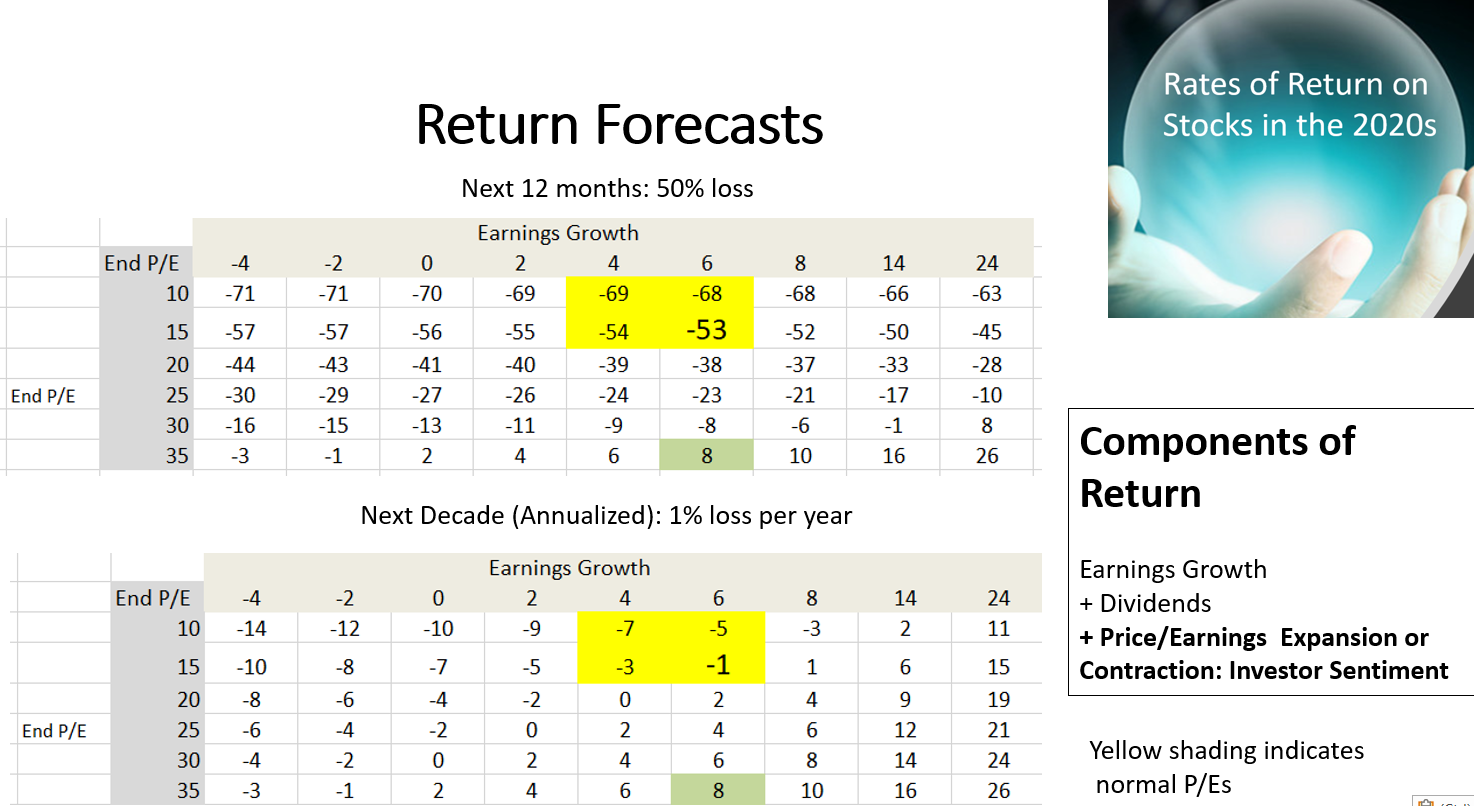
A 53% loss means stocks will lose another 40% because (1-.23)*(1-.4)-1 = -53%
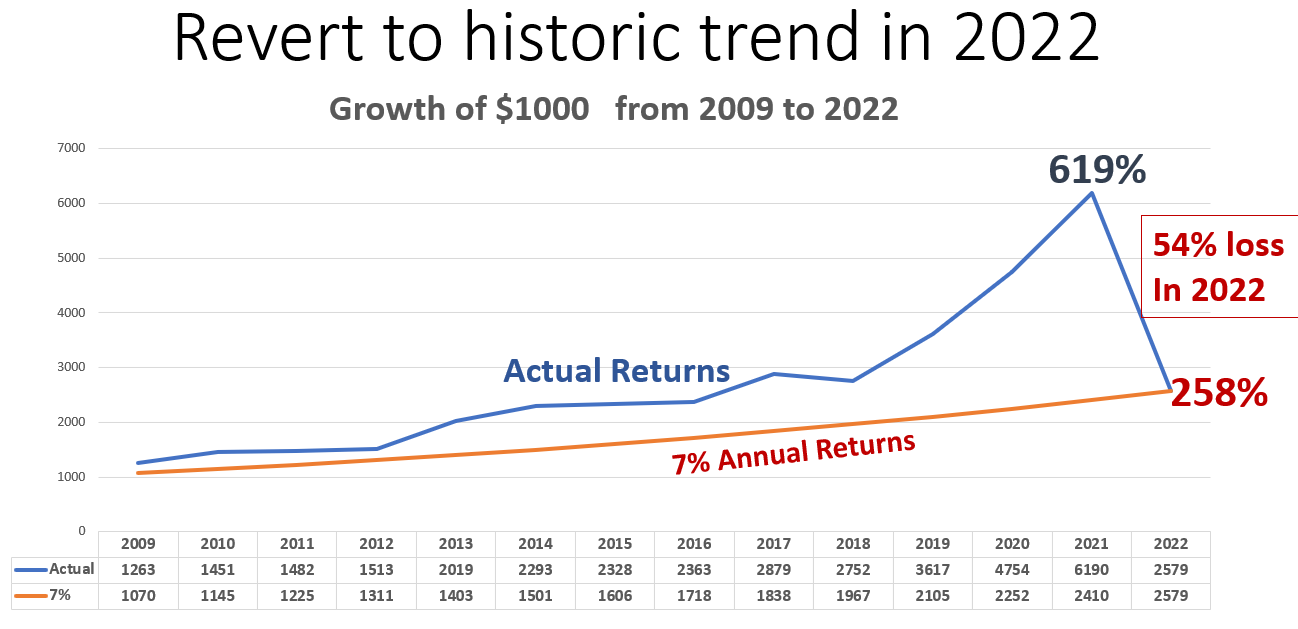
Another approach: regression to the mean.
The following graph shows the actual growth of $1000 from 2009 to 2021 compared to the historic average growth of 7% above inflation. If stocks returned to their 7% trendline in 2022, they would lose 54%, the same loss generated by the formula above.
Conclusion
We’re all hearing the advice to “buy the dip” and “stay the course,” advice that envisions a quick recovery because the bottom has been reached. Now you know how far away the bottom might be.