
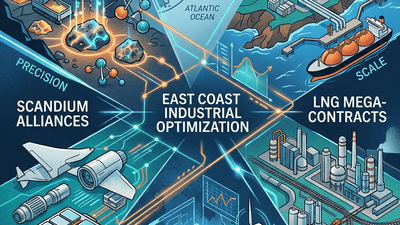



The Canadian engineering landscape is no longer defined strictly by what we can build within our borders, but by how effectively we can integrate global expertise to unlock our domestic potential. In the high-stakes arena of 2026, the profession is navigating a fascinating dual mandate: mastering the microscopic precision required for advanced critical minerals, while simultaneously executing the macro-scale logistics of multi-billion-dollar energy infrastructure. For engineering professionals across the country, this convergence signals a profound shift in how projects are conceptualized, designed, and optimized.
This week, three distinct developments highlight this evolving paradigm. From a strategic metallurgical alliance with Turkey to a massive front-end engineering design (FEED) contract in British Columbia, and a critical industrial optimization summit on the East Coast, the message is clear: the future of Canadian engineering relies on a seamless blend of international collaboration and relentless domestic efficiency.
The Advanced Materials Frontier: Scandium Canada’s Strategic Alliance
Canada’s push to become a global superpower in critical minerals requires more than just extraction; it requires advanced metallurgical commercialization. This reality was underscored by the recent announcement that Scandium Canada has signed an agreement with Turkish advanced materials engineer ALPOMET. The collaboration establishes a strategic framework focused on the development and commercialization of specialty scandium-based alloys.
For materials scientists and metallurgical engineers, scandium is a holy grail element. When alloyed with aluminum, even in fractional percentages, it produces a material that is exceptionally strong, lightweight, and highly resistant to corrosion and heat. These properties are critical for the next generation of aerospace manufacturing, electric vehicle (EV) lightweighting, and advanced defense technologies.
"The transition from raw mineral extraction to the production of high-value specialty alloys requires a highly specialized knowledge base. By partnering with international experts in advanced materials, Canadian firms can bypass years of iterative R&D and accelerate their time-to-market."
Practical Implications for Materials and Mining Engineers
- Cross-Border IP Integration: Engineers must become adept at integrating foreign intellectual property and proprietary processing techniques into Canadian regulatory and environmental frameworks.
- Supply Chain Traceability: As scandium alloys enter critical sectors like defense and aerospace, engineers will need to design processing facilities that ensure absolute metallurgical purity and secure supply chain traceability.
- Focus on Downstream Value: The ALPOMET partnership signals a shift away from the traditional "dig and ship" model. Canadian engineering firms will see increased demand for the design of specialized domestic smelting and alloying facilities.
Scaling the Energy Behemoth: LNG Canada’s Phase 2 FEED Contract
While materials engineers focus on the microscopic lattice structures of scandium alloys, process and structural engineers in Western Canada are tackling scale of a vastly different magnitude. LNG Canada has officially selected TR Canada E&C—a subsidiary of the Spanish global engineering heavyweight Técnicas Reunidas—to carry out the front-end engineering design (FEED) services for Phase 2 of its massive export facility, which integrates with the Coastal GasLink pipeline in British Columbia.
The FEED stage is arguably the most critical phase in the lifecycle of a mega-project. It is where the conceptual design is transformed into a rigorous technical and economic blueprint. The selection of a global firm like Técnicas Reunidas highlights the sheer complexity of scaling up liquefied natural gas infrastructure while navigating Canada's stringent environmental and emissions targets.
The FEED Challenge in 2026
For Canadian engineering professionals, this contract represents a massive mobilization of talent. The Phase 2 FEED will require deep expertise in several critical areas:
- Electrification and Emissions Mitigation: Unlike legacy LNG facilities, Phase 2 designs must incorporate advanced electrification strategies to minimize the carbon footprint of the liquefaction process, requiring tight integration between electrical and chemical engineers.
- Modular Construction Logistics: To mitigate the high costs and labor shortages typical of remote Canadian mega-projects, the FEED will heavily emphasize modularization—designing massive components that can be built off-site and assembled in BC with millimeter precision.
- Cost Certainty in a Volatile Market: The primary goal of this FEED is to establish a bankable cost estimate. Estimators, risk analysts, and project engineers will need to utilize advanced predictive modeling to account for supply chain volatility and labor dynamics.
The Connective Tissue: Designing Productivity on the East Coast
Whether you are producing specialty alloys in Quebec or designing natural gas liquefaction trains in British Columbia, the ultimate success of these endeavors hinges on one foundational metric: productivity. Recognizing this critical need, Dalhousie University is preparing to host the "Designing Productivity 2026" conference, an event designed to coalesce Nova Scotia's Industrial Engineering community for vital networking and collaboration.
Industrial engineering is the critical connective tissue of the broader engineering ecosystem. As projects become more complex and capital-intensive, the role of the industrial engineer in eliminating waste, optimizing workflows, and integrating automation has never been more vital. The Dalhousie summit reflects a growing recognition that regional engineering hubs must foster continuous optimization to remain globally competitive.
Why Industrial Engineering is Having a Renaissance
The themes likely to dominate the Dalhousie conference mirror the broader challenges facing Canadian industry. With labor shortages persisting across the trades and technical professions, industrial engineers are being tasked with "doing more with less." This involves deploying digital twins to simulate factory floor optimizations, utilizing AI-driven predictive maintenance to keep legacy infrastructure running, and redesigning human-machine interfaces to maximize workforce efficiency.
The 2026 Engineering Matrix: A Comparative Look
To understand how these three developments fit into the broader narrative of Canadian engineering, we can map them across their respective disciplines and strategic impacts.
| Initiative / Project | Primary Engineering Disciplines | Core Technical Challenge | Strategic Value for Canada |
|---|---|---|---|
| Scandium Canada & ALPOMET | Metallurgical, Materials, Chemical | Scaling specialty alloy production with high purity. | Capturing downstream value in the critical minerals supply chain. |
| LNG Canada Phase 2 FEED | Process, Structural, Electrical, Project | Balancing massive scale with stringent emissions targets. | Solidifying Canada's position as a reliable, lower-carbon global energy supplier. |
| Designing Productivity 2026 | Industrial, Systems, Manufacturing | Optimizing workflows amidst labor and capital constraints. | Ensuring domestic manufacturing and mega-projects remain economically viable. |
Conclusion: The Integrator's Era
As we look at the trajectory of Canadian engineering in 2026, a clear profile of the successful modern engineer emerges. Technical excellence within a specific discipline is no longer sufficient. Today’s professionals must be fluent in the language of global supply chains, comfortable with international regulatory frameworks, and relentlessly focused on productivity.
The alliances being forged by Scandium Canada, the massive FEED mobilization by TR Canada E&C for LNG Canada, and the grassroots optimization efforts spearheaded by institutions like Dalhousie University are not isolated events. They are interconnected gears in an engine that is driving Canada toward a more resilient, innovative, and globally integrated future. For engineering professionals, the mandate is clear: embrace the complexity, leverage global expertise, and engineer for a world where scale and precision are inextricably linked.