
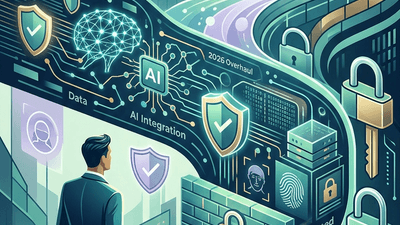



Tax season in Canada has long been characterized by a familiar rhythm of document gathering, portal submissions, and the inevitable waiting game. But as we step into 2026, the Canada Revenue Agency (CRA) is fundamentally changing the tempo. Driven by a mandate to modernize and protect the integrity of the national tax system, the CRA has rolled out a suite of technological updates that are forcing Canadian accounting professionals to rethink their standard operating procedures.
According to a recent industry brief by Sterlinx Global, everyone in the financial sector is talking about the CRA's latest updates—and for good reason. The introduction of AI-powered assistance and significantly tighter security protocols isn't just a backend IT upgrade; it is a structural shift in how taxpayers, and by extension their representatives, interact with the revenue authority. For Canadian CPAs, adapting to this new landscape is no longer optional; it is the baseline for competitive practice in 2026.
The Dawn of the AI-Powered CRA
For years, accounting professionals have grumbled about the archaic nature of CRA support—navigating phone trees, waiting on hold for specialized agents, and dealing with fragmented digital portals. The 2026 updates introduce a robust layer of AI-powered assistance designed to triage, troubleshoot, and resolve common queries before human intervention is required.
While consumer-facing chatbots are the most visible aspect of this update, the real impact for accounting firms lies beneath the surface. The CRA is leveraging machine learning algorithms to process routine assessments, flag discrepancies in real-time, and provide predictive guidance on complex filing scenarios.
"The integration of AI into the CRA's framework isn't just about answering taxpayer questions faster; it's about accelerating the entire lifecycle of tax assessment and compliance. For practitioners, this means the window between filing and automated auditing is shrinking dramatically."
What This Means for Firm Workflow
With AI handling the heavy lifting on the CRA's end, accounting firms must ensure their own data hygiene is impeccable. AI systems are notoriously rigid when it comes to formatting anomalies and mismatched data points. A minor transposition error that a human agent might have historically overlooked or corrected manually will now likely trigger an automated flag, resulting in a Notice of Assessment (NOA) delay or an instant request for additional information.
- Pre-Filing Verification: Firms must implement stricter pre-filing diagnostic checks. If your firm isn't using AI-enhanced tax software to mirror the CRA's anomaly detection, you are operating at a disadvantage.
- Faster Query Resolution: The AI-assisted "Represent a Client" (RAC) portal now allows practitioners to resolve routine authorization and historical data queries in minutes rather than days.
- Shift in Advisory: Because the CRA is educating taxpayers directly via intelligent digital assistants, clients are coming to their accountants with more sophisticated questions. The CPA's role is shifting further away from basic compliance and deeper into strategic interpretation.
Security First: The Friction We Need
Alongside the AI advancements, the CRA has implemented what are arguably the most stringent security protocols in its history. In an era where cyber threats and identity theft are escalating, the agency is fortifying its gates. However, elevated security inherently introduces operational friction.
The 2026 updates mandate advanced multi-factor authentication (MFA) protocols, shortened session timeouts, and more rigorous identity verification steps for linking new clients to a firm's business number (BN).
Managing the Operational Bottlenecks
For sole practitioners and large enterprise firms alike, these security measures require a redesign of the client onboarding process. The days of quickly adding a client to the RAC portal with a simple signature are fading. The CRA now requires dynamic verification, often requiring the taxpayer to actively confirm the authorization through their own secure "My Account" portal or via an authenticated third-party identity service.
To navigate these new security protocols, firms should adopt the following strategies:
- Client Education: Proactively educate clients about the new CRA security measures before tax season peaks. Explain that these steps protect their financial data, framing the friction as a benefit rather than an annoyance.
- Centralized Credential Management: Utilize enterprise-grade password and credential management systems within your firm. With the CRA tracking IP anomalies and login behaviors, disparate login practices by junior staff can trigger temporary account lockouts.
- Revamped Onboarding Timelines: Build an extra 48 to 72 hours into your client onboarding timeline specifically for CRA authorization clearance.
Comparing the Landscape: 2025 vs. 2026
To truly understand the magnitude of the CRA's updates, it is helpful to contrast the historical operational baseline with the new reality accounting professionals face today.
| Operational Area | The Old Baseline (Pre-2026) | The 2026 CRA Reality |
|---|---|---|
| Practitioner Support | Long telephone hold times; reliance on manual agent intervention. | AI-assisted practitioner portals for instant resolution of tier-1 and tier-2 queries. |
| Client Authorization | Paper-based or simple digital signature submissions with minimal secondary verification. | Dynamic, multi-step verification requiring active taxpayer confirmation via authenticated channels. |
| Anomaly Detection | Post-assessment manual reviews, often taking months to trigger a desk audit. | Real-time, AI-driven data matching that flags discrepancies almost immediately upon submission. |
| Portal Security | Standard MFA (SMS/Email) with generous session limits. | Advanced biometric-compatible MFA, strict session timeouts, and IP behavior monitoring. |
The Strategic Imperative for Canadian CPAs
The conversation around the CRA's 2026 updates—as highlighted by industry observers like Sterlinx Global—often centers on the technology itself. But for Canadian CPAs, the focus must remain on the human element of practice management.
Technology is a multiplier. The CRA's new AI systems will multiply the speed at which clean data is processed, but it will also multiply the headaches associated with sloppy filings. Similarly, the enhanced security protocols will multiply the safety of taxpayer data, but they will also multiply the administrative burden on firms that lack streamlined onboarding processes.
As we navigate this modernized tax environment, the most successful accounting firms will be those that view the CRA not just as a regulatory hurdle, but as a digital partner. By aligning internal firm technology with the CRA's new standards—upgrading firm-wide security, utilizing AI-driven diagnostic tools, and resetting client expectations—CPAs can turn these sweeping updates into a distinct competitive advantage. The future of Canadian tax practice is faster, smarter, and more secure; it's time to ensure your firm is keeping pace.