
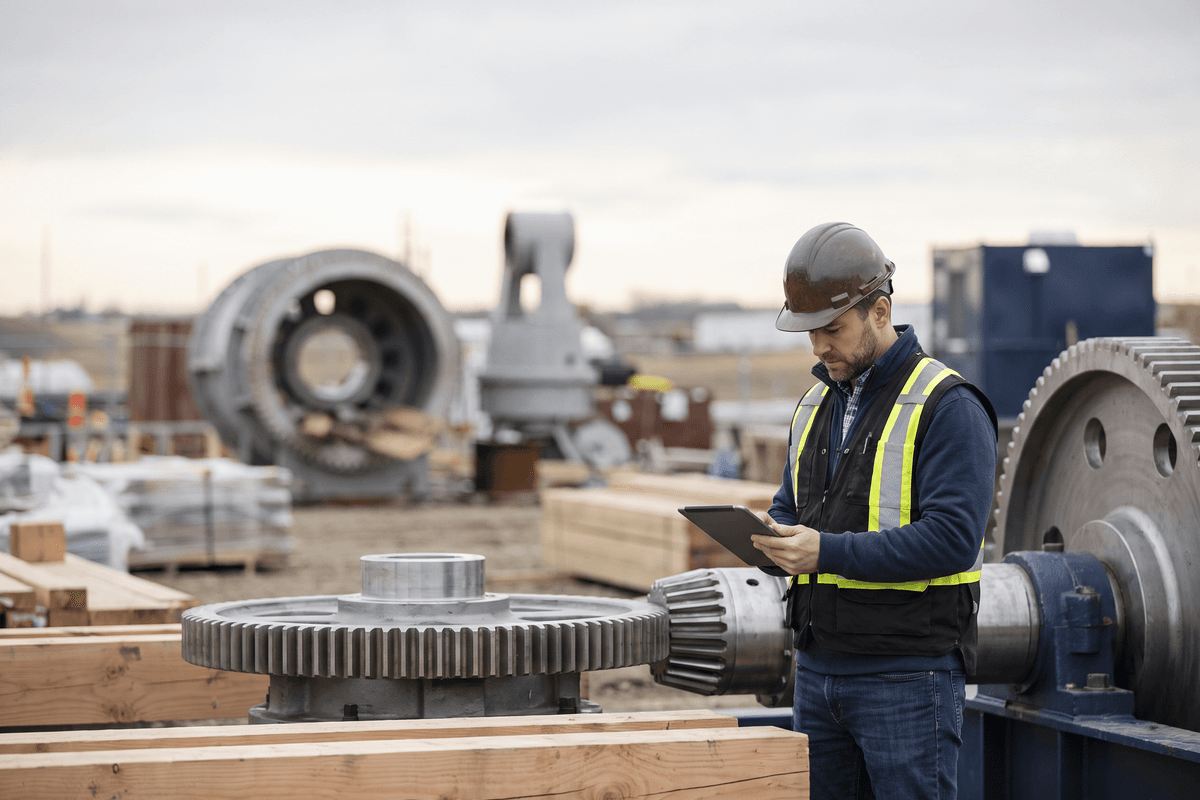



Across the United States, an unprecedented realignment of industrial capacity is underway at the intersection of heavy machinery manufacturing and high-performance sustainable engineering. As domestic reshoring, grid modernization, and infrastructure megaprojects continue to place extraordinary stress on physical project delivery, the equipment that builds America is undergoing a massive capital overhaul. Simultaneously, the engineering standards governing those projects are shifting rapidly toward deep decarbonization, creating a powerful feedback loop between the factories fabricating heavy iron and the design-build teams deploying it on site.
According to market intelligence from Industrial Info Resources, the U.S. currently hosts more than 75 active construction equipment manufacturing projects valued at a collective $2 billion. This aggressive capital investment across heavy industrial engineering reflects not merely an expansion of assembly line volume, but a wholesale structural retooling. At the same time, the latest industry metrics from Engineering News-Record’s 2026 Top 100 Green Design Firms and Contractors reveal that green design and contracting revenues are deepening significantly, with engineering firms rapidly expanding their capabilities in sustainable construction, energy optimization, and whole-life-cycle decarbonization.
The Heavy Iron Renaissance: Inside the $2 Billion Tooling Wave
The $2 billion capital wave tracked by Industrial Info Resources represents a decisive strategic pivot for domestic equipment manufacturers. Facing supply chain vulnerabilities exposed over recent cycles and heightened domestic content requirements tied to federal infrastructure programs, major original equipment manufacturers (OEMs) and tier-one suppliers are actively building new facilities, expanding footprint capacities, and modernizing brownfield plants.
These 75+ active manufacturing projects are fundamentally different from historical expansions. Rather than simply adding conventional welding and assembly bays, modern equipment plants are being engineered as high-tech industrial ecosystems. They incorporate:
- Automated Robotic Fabrication and Laser Cladding: Enhancing the structural resilience and precision tolerances of chassis, booms, and earthmoving components under intense operating loads.
- Dedicated Electric Powertrain and Battery Pack Integration Lines: Engineering clean-room-adjacent assembly environments specifically tailored for industrial-grade battery enclosures, high-voltage harnesses, and electric drive units.
- Closed-Loop Thermal and Hydraulic Testing Cells: Enabling precision in-situ calibration of advanced hydraulic manifolds and digital displacement systems that slash parasitic energy loss.
"The heavy equipment supply chain is no longer just manufacturing steel and diesel powerplants; it is building software-defined, electrically optimized machines that must satisfy rigorous environmental and productivity metrics from day one of deployment."
The Green Specification Flywheel: Deepening Sustainable Project Delivery
While equipment manufacturers expand their production footprint, design and construction engineering teams are facing unprecedented client and regulatory mandates for sustainable execution. As highlighted in ENR’s Top 100 Green Design Firms and Contractors report, the green building sector is no longer confined to standard LEED point-chasing or superficial efficiency measures. Instead, green design revenues are expanding across complex industrial, mission-critical, and civic infrastructure.
Engineering firms leading the market are embedding sustainable design principles into early-stage front-end engineering design (FEED). This includes comprehensive scope 1, 2, and 3 emissions tracking, dynamic building envelope simulations, and high-performance structural systems utilizing low-carbon concrete and recycled-content structural steel. Crucially, the green mandate has expanded from operational carbon (energy consumption during building use) to embodied carbon—which encompasses the emissions generated throughout material extraction, manufacturing, transportation, and jobsite construction activities.
The Direct Link Between Jobsite Machinery and Green Ratings
This deep shift in green contracting is directly fueling the demand for the very machinery being built across those 75+ manufacturing projects. Major project owners—from hyperscale data center operators to advanced semiconductor and battery plant developers—are embedding strict jobsite emission and acoustic limits into their procurement specifications.
Contractors seeking to maintain tier-one status on high-profile green builds must demonstrate low-emission construction execution. This has made zero-tailpipe-emission excavators, electric telehandlers, and hybrid compaction machinery critical competitive differentiators rather than experimental pilot units.
Cross-Disciplinary Comparison: Manufacturing Expansions vs. Green Execution Demands
To understand how these dual forces are reshaping engineering disciplines, consider the operational priorities, technical constraints, and capital allocations currently defining both segments of the market:
| Engineering Dimension | Construction Equipment Manufacturing ($2B Capex) | Green Design & Contracting (Top 100 Deepening) |
|---|---|---|
| Primary Capital Driver | Reshoring supply chains, plant automation, and hybrid/electric machinery production. | Decarbonization mandates, client net-zero targets, and embodied carbon compliance. |
| Key Technical Bottleneck | High-voltage battery thermal management, heavy-duty electrical architectures, high-load hydraulics. | Scope 3 supply chain carbon validation, MEP electrification, clean grid interconnection timing. |
| Facility Engineering Impact | Megawatt-scale industrial power hookups, hazardous materials containment for battery handling, automated guided vehicle (AGV) logistics. | High-performance envelopes, microgrid integration, mass timber/low-carbon structural framing, heat pump plant design. |
| Primary Regulatory Catalyst | Buy America provisions, domestic reshoring incentives, Tier 5/off-highway emissions standards. | Municipal building performance standards (BPS), LEED v5 frameworks, SEC/corporate ESG disclosure requirements. |
The Systems Engineering Challenge: Electrification, Telematics, and Infrastructure Readiness
The intersection of these two trends introduces significant technical challenges for systems engineers and project managers. Electrifying heavy off-highway equipment is orders of magnitude more complex than passenger vehicle electrification. An 80,000-pound excavator operating in severe duty cycles requires continuous high-power output, massive instantaneous torque, and extreme thermal resilience in hostile ambient environments.
1. Microgrid and Temporary Power Engineering
As contractors deploy electric fleets on massive green construction sites, jobsites frequently lack the grid interconnection capacity needed to charge high-capacity equipment simultaneously. Engineering teams are stepping in to design temporary, containerized microgrids—pairing mobile battery energy storage systems (BESS), hydrogen fuel cells, and bi-directional DC fast chargers directly in staging yards.
2. Telematics-Driven Carbon Accounting
Modern equipment leaving newly built domestic manufacturing plants is equipped with sophisticated telemetry suites. These systems stream real-time operational data, tracking engine load factors, idle time, and kilowatt-hour consumption. For green design and construction contractors, this data stream feeds directly into dynamic Life Cycle Assessment (LCA) software, providing auditable verification of jobsite carbon reductions for owners and rating agencies.
3. Modular Manufacturing and MEP Realignment
Within the equipment manufacturing plants themselves, MEP engineers are redesigning facility footprints to handle heavy battery assembly. Industrial plants require advanced dry rooms with ultra-low dew points, precision explosive-dust mitigation systems in robotic weld bays, and massive grid interconnects to test high-voltage fast-charging systems before machinery rolls off the assembly floor.
Strategic Imperatives for Engineering Leaders
For engineering executives, lead designers, and construction managers, navigating this dual-track transformation requires proactive operational adjustments:
- Integrate Equipment Procurement with Early Site Utility Planning: Do not treat construction equipment logistics as an afterthought. Coordinate temporary power engineering and on-site charging infrastructure during the preconstruction phase of major projects to support electrified fleets without delaying site work.
- Upskill Design Teams in Dynamic Embodied Carbon Modeling: As green design revenues deepen across all building typologies, engineering firms must master whole-building life cycle assessments and specify materials that achieve aggressive Global Warming Potential (GWP) thresholds.
- Establish Resilient Industrial Supply Partnerships: With $2 billion committed to domestic machinery plants, design-build firms should partner closely with domestic OEMs to secure allocation for next-generation, high-efficiency equipment with long lead times.
Looking Ahead: The Unified Delivery Ecosystem
The U.S. construction and engineering sector is rapidly moving past the era where project sustainability was measured solely by the building's operational energy bill. By simultaneously expanding domestic manufacturing capacity for advanced construction machinery and deepening the technical sophistication of green design, the industry is establishing a unified, closed-loop delivery ecosystem.
From the automated assembly lines in the Midwest producing intelligent, high-efficiency excavators to the architectural and engineering studios engineering net-zero mega-facilities, the trajectory is clear. The organizations that successfully bridge the gap between heavy hardware innovation and rigorous environmental engineering will dominate the next decade of American infrastructure delivery.