
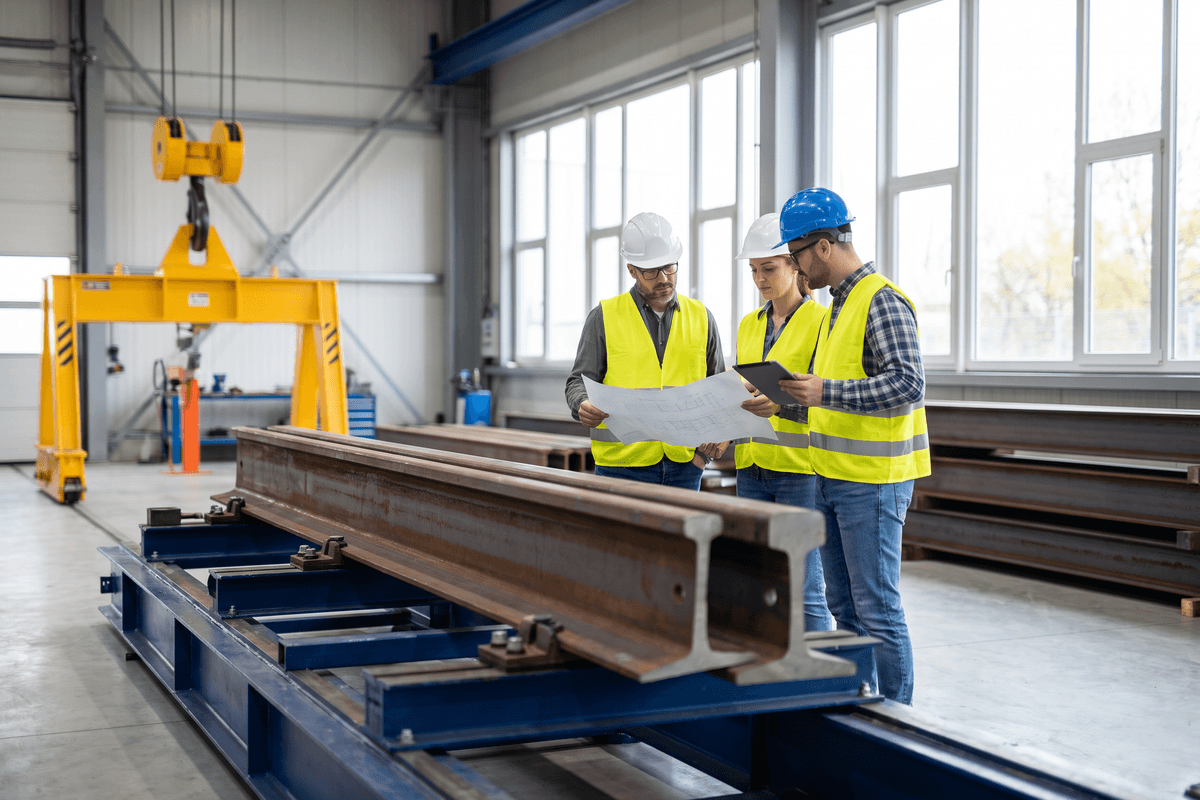



Canada’s industrial backbone is undergoing a structural transformation, driven by an imperative to localize critical transport supply chains, harden linear infrastructure against severe climate cycles, and scale high-precision engineering manufacturing. At the centre of this shift is the announcement that global rail infrastructure technology leader voestalpine Railway Systems is constructing a state-of-the-art railway turnout and component manufacturing facility in Thorold, Ontario. Anchored by a long-term supply agreement with Canadian National (CN), this greenfield investment represents more than localized manufacturing capacity; it marks a strategic convergence of metallurgical precision, track asset digitization, and heavy-haul civil engineering across North American freight corridors.
This industrial expansion coincides with a measurable macroeconomic turning point. According to Statistics Canada’s Q2 2026 national economic accounts, business gross fixed capital formation in engineering structures rebounded by 2.3%, complemented by sustained capital spending in industrial machinery and equipment. Concurrently, the validation, testing, and certification landscape underpinning Canadian engineering is being reshaped by Kiwa Group’s €1.3-billion acquisition of Toronto-headquartered CSA Group Testing & Certification Inc. Together, these developments signal a pivotal evolution: Canadian infrastructure engineering is rapidly moving away from cyclical maintenance models toward integrated, high-availability lifecycle engineering.
The Mechanics of Modern Turnout Engineering: Thorold’s Strategic Footprint
Turnouts and special trackwork represent the most mechanically complex and high-maintenance nodes within any heavy-haul railway network. Under Canadian operating conditions—where axle loads frequently reach 32.5 tonnes and ambient temperatures swing from -40°C in winter to over +35°C in summer—switches, frogs, and point machines endure extreme dynamic impact forces, cyclic thermal expansion, and severe metallurgical fatigue.
voestalpine’s decision to establish a dedicated turnout and component manufacturing hub in Thorold, situated in Ontario's Niagara Region, targets these exact operational vulnerabilities. By positioning advanced manufacturing near key Great Lakes logistics corridors and major rail trunk lines, the facility will produce engineered track systems tailored specifically to Class I freight and passenger specifications.
"Localizing advanced turnout and special trackwork manufacturing is fundamental to mitigating network-wide service disruptions. Modern heavy-haul rail engineering demands micrometer-level geometric tolerances and metallurgical formulations that can withstand dynamic wheel-rail interface loads under extreme thermal cycles."
From an engineering standpoint, modern turnout design has evolved significantly beyond static structural steel fabrication. The Thorold facility is expected to integrate several critical engineering capabilities:
- Explosion-Hardened and High-Manganese Frog Castings: Mitigating impact wear and plastic deformation at the crossing point where dynamic wheel transitions induce maximum stress.
- Continuous Welded Turnout Geometry: Eliminating mechanical rail joints within the switch assembly to drastically reduce localized vibration and ballast degradation.
- Smart Point Machines and Asset Monitoring: Integrating integrated sensor suites that measure switch throw resistance, hydraulic pressure, and vibration profiles in real time to predict mechanical binding before track circuit failures occur.
- Thermal Compensation Kinematics: Engineering switch rods and locking devices to maintain operational tolerances without binding during extreme seasonal rail expansion and contraction.
| Engineering Parameter | Conventional Turnout System | Next-Generation Engineered Turnout (voestalpine Standard) |
|---|---|---|
| Frog Technology | Bolted rail / Standard cast manganese | Monobloc explosion-hardened manganese with welded rail transitions |
| Switch Rail Profile | Standard carbon steel with periodic grinding | Heat-treated, asymmetric rail sections with optimized gauge-face wear resistance |
| Condition Monitoring | Manual visual inspection and scheduled geometry car runs | Integrated IoT sensor packages (continuous throw-force, temperature, and vibration telemetry) |
| Lifecycle Maintenance | Frequent corrective surfacing and component replacement | Condition-based preventive intervention with extended mean-time-between-failures (MTBF) |
Macroeconomic Backing: The Rebound in Engineering Structures
The timing of voestalpine’s Thorold investment aligns directly with broader economic data indicating that Canadian industrial capital deployment is regaining momentum. Statistics Canada’s second-quarter 2026 gross domestic product report recorded a 2.3% increase in business investment in engineering structures, marking a notable reversal from previous quarters of macroeconomic hesitation.
This structural capital growth is driven by several overlapping priorities across Canadian engineering:
- Supply Chain Reshoring and Intermodal Capacity: Major Class I railways, including CN and CPKC, are investing heavily in network velocity, siding extensions, and yard modernization to accommodate increased industrial and bulk export throughput.
- Energy and Industrial Decarbonization: Upstream and midstream facilities are channeling capital into process electrification, hydrogen blending, and carbon capture infrastructure, requiring robust linear logistics support.
- Transit Electrification and Expansion: Regional transit agencies across Ontario and Quebec continue to deploy capital into grade separations, double-tracking, and high-frequency civil corridors.
For civil and structural engineers, the 2.3% growth figure underscores a shift in project execution. Clients are increasingly willing to allocate front-end capital toward highly engineered, durable components to lower thirty-year operational expenditures (OpEx), directly benefiting suppliers of premium track infrastructure and automated industrial facilities.
The Compliance Shift: Kiwa’s €1.3B Acquisition of CSA Testing & Certification
As railway systems, industrial plants, and utility grids become increasingly digitized and structurally complex, the frameworks governing engineering compliance and safety certification are undergoing equal transformation. This is highlighted by the landmark agreement in which European inspection giant Kiwa Group will acquire CSA Group Testing & Certification Inc. for €1.3 billion.
While the non-profit CSA Group retains its mandate as an independent standards development organization, the commercial testing, inspection, and certification (TIC) arm—headquartered in Toronto—joins Kiwa’s expansive international network. This transaction carries deep operational implications for Canadian engineering professionals:
- Harmonization of International Engineering Standards: The integration will accelerate the alignment of Canadian technical standards (CSA) with European (CEN/CENELEC) and international (ISO/IEC) benchmarks, streamlining certification for domestic manufacturers exporting abroad and international vendors entering Canada.
- Electrification and Hydrogen Safety Validation: Kiwa’s specialized expertise in hydrogen systems, advanced energy testing, and rail components will scale CSA’s testing throughput for clean-tech and industrial automation systems.
- Rigorous Third-Party Auditing for Infrastructure Components: From railway signalling hardware to structural steel alloys, the expanded testing footprint provides Canadian engineers with comprehensive domestic validation facilities, reducing lead times for critical safety sign-offs.
Closing the Loop: Design, Certification, and Commissioning
The intersection of voestalpine’s domestic manufacturing capability and Kiwa-CSA’s expanded testing infrastructure demonstrates how the Canadian engineering ecosystem is maturing. In previous decades, highly specialized track components or industrial machinery often faced long qualification backlogs, requiring international shipping for specialized fatigue and environmental stress testing.
With localized manufacturing hubs in Southern Ontario and enhanced testing infrastructure in the Greater Toronto Area, the cycle from metallurgical design to compliance testing and field commissioning is contracting significantly. This compressed cycle allows engineering teams to iterate switch geometry, test novel alloy compositions, and validate sensor-equipped trackwork rapidly under genuine cold-weather operating envelopes.
Strategic Implications for Canadian Engineering Practice
For rail engineers, structural designers, and project managers across Canada, these industry developments outline several clear operational priorities for the decade ahead:
- Prioritize System-Level Reliability Over Component Cost: The long-term CN-voestalpine partnership reflects an asset management philosophy focused on total life-cycle cost (LCC). Turnouts must be designed as cohesive electromechanical systems rather than collections of disparate switch points and stock rails.
- Embed Real-Time Diagnostics at the Design Stage: Mechanical and electrical engineers must integrate condition-monitoring transducers directly into turnout assemblies, switch machines, and structural track beds during early-stage procurement.
- Navigate a Dynamic Standards Environment: As Kiwa integrates CSA Testing & Certification, engineers must stay abreast of updated dual-certification protocols across North America and Europe, particularly in hydrogen rail, wayside electrical distribution, and functional safety systems (SIL ratings).
As business capital continues to flow into Canada’s engineering structures, the Thorold turnout plant stands as a tangible marker of what the next era of industrial infrastructure looks like: localized, technologically advanced, rigorously certified, and engineered to endure the harshest operating realities on the continent.