

Across the United States, engineering teams delivering mission-critical capital projects are confronting an unrelenting reality: traditional design-bid-build workflows and fragmented field fabrication are buckling under the velocity required for semiconductor fabs, hyperscale data centers, and modern municipal infrastructure. As high-voltage electrical demand surges and skilled technical labor remains scarce, the margin for error in controls engineering, electrical panel assembly, and structural prefabrication has narrowed to near zero. Meeting this demand requires more than incremental hiring—it demands an end-to-end realignment of how industrial engineering software connects directly to automated factory floors.
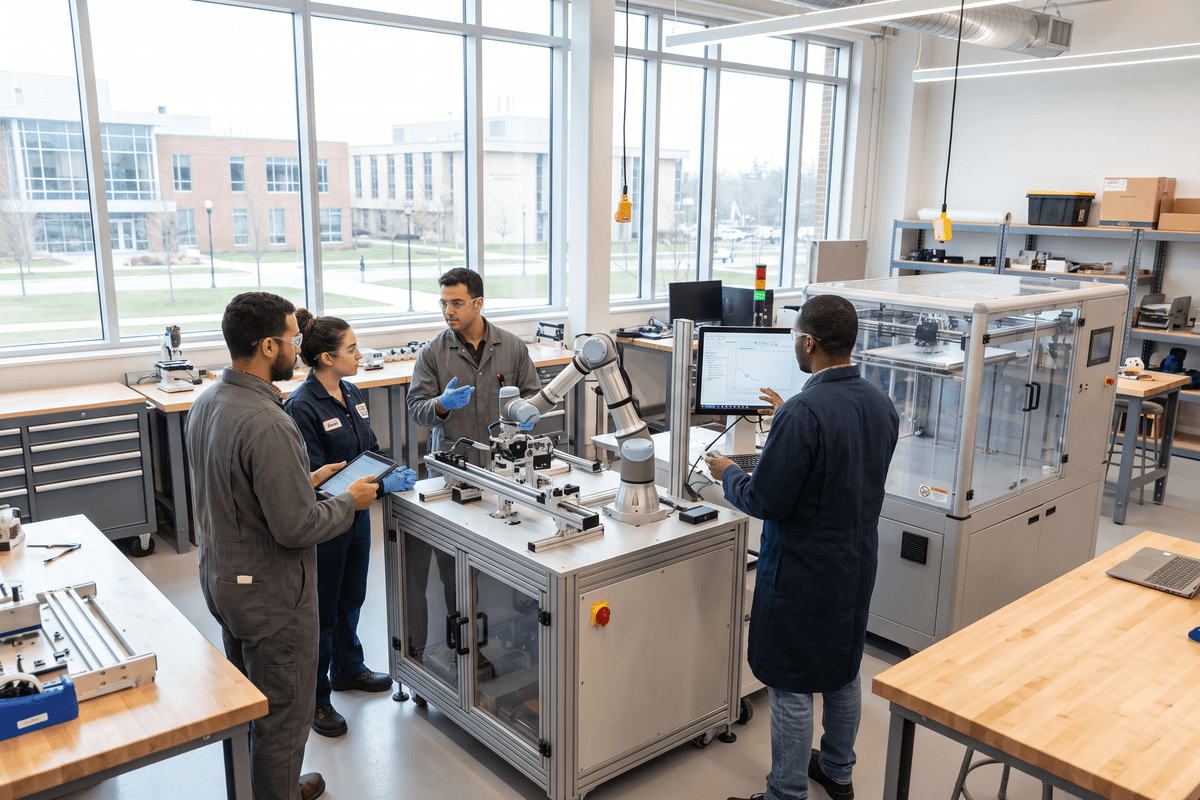
This structural transformation reached a pivotal milestone with the announcement that Purdue University has expanded its partnership with Rittal and Eplan to launch state-of-the-art Engineering Technology Labs. By integrating automated panel-building machinery, industrial enclosure systems, and advanced electrical design software into applied engineering curricula, the initiative bridges the persistent gap between computer-aided design and high-throughput physical execution. Coupled with major off-site fabrication expansions and robust municipal infrastructure programs across the nation, this convergence is redefining the standard operating model for American engineering practitioners.
Connecting the Digital Twin to the Factory Floor
At the center of the industrial modernization push is the elimination of design friction between electrical engineers and mechanical fabricators. For decades, the development of switchgear, industrial control panels, and automation enclosures relied on disconnected 2D schematics, manual bill-of-materials (BOM) reconciliation, and hand-wired field assembly—processes notorious for compounding delays and generating costly field modifications.
The new facilities established through Purdue's collaboration with Rittal and Eplan are designed specifically to train the next generation of engineers in seamless digital-twin-to-machine production. By pairing Eplan’s electrical design and engineering software with Rittal’s automated modification centers and laser-machining systems, engineers can generate complete 3D virtual prototypes that directly drive physical computer numerical control (CNC) machining, automated wire processing, and terminal assembly without intermediate human translation.
"The integration of intelligent design software with automated industrial manufacturing hardware represents the bedrock of Industry 4.0. Engineers can no longer afford to treat design and physical production as distinct phases."
— Purdue University Polytechnic Institute
For engineering firms operating in high-consequence sectors—such as advanced battery manufacturing and power distribution—this automated continuity cuts cycle times by up to 40% while nearly eliminating wiring discrepancies and enclosure fit errors on job sites.
Scaling Regional Off-Site Manufacturing Hubs
The operational shift toward standardized, industrialized design is simultaneously accelerating capital investments in regional prefabrication infrastructure. As engineering complexity multiplies, contractors and specialized fabricators are shifting critical mechanical and electrical production out of uncontrolled field conditions and into dedicated advanced manufacturing environments.
Underscoring this shift, U.S. Engineering Metalworks announced a $25 million expansion of its manufacturing facility in Lawrence, Kansas. The company is significantly scaling its footprint to supply custom sheet metal components, heavy mechanical skids, and complex structural modular assemblies destined for nationwide data centers, biopharmaceutical facilities, and semiconductor packaging plants.
This expansion demonstrates how industrialized construction and pre-assembly are no longer niche options but essential risk mitigation strategies for mega-projects. By manufacturing modular utility assemblies, ductwork, and structural headers under strict factory-controlled quality assurance protocols, engineering leaders can guarantee tighter tolerances, accelerate installation schedules, and optimize logistics corridors across the Midwest and beyond.
Navigating Cost Volatility and Material Pressures
The push toward automation and modular prefabrication is occurring against an unforgiving economic backdrop. According to the latest analysis from Engineering News-Record’s Construction Economics for September 2026, construction cost indexes across 20 major U.S. metropolitan markets reflect steady upward pressure on skilled trades and specialized industrial materials.
Fluctuating structural steel pricing, high-grade copper costs for electrical switchboards, and elevated equipment delivery lead times continue to stress project cash flows. In this environment, off-site standardization and digital-first design act as critical financial hedges:
- Scrap and Waste Minimization: Automated cutting and nesting systems reduce raw steel and copper waste by double-digit percentages compared to field fabrication.
- Labor Arbitrage and Productivity: Factory-based manufacturing environments yield higher labor productivity rates per work-hour than congested job sites.
- Reduced Schedule Contingency: Prefabricated mechanical and electrical skids arrive on-site pre-tested and ready for hookup, shielding project schedules from seasonal weather disruptions.
Execution Framework: Traditional Field Build vs. Industrialized Convergence
| Operational Metric | Traditional Field Assembly | Industrialized / Automated Model |
|---|---|---|
| Engineering-to-Fabrication Hand-off | Manual 2D drawings; human BOM entry; high error risk | Integrated 3D digital twin driving automated CNC machines |
| Enclosure & Panel Assembly | Field layout, manual drilling, custom wire routing | Automated wire termination, laser-milled enclosures |
| Quality Control & Testing | Field verification under adverse site conditions | Factory-controlled testing prior to site transport |
| Labor Exposure | Heavy reliance on scarce on-site master electricians | Optimized hybrid: shop technicians and targeted field teams |
| Schedule Predictability | Vulnerable to weather, trade stacking, and rework | Just-in-time modular delivery directly into structural grid |
Translating Industrial Discipline to Municipal Infrastructure
The demand for rigorous engineering execution is not confined to high-tech private developments. Public sector agencies are similarly restructuring their project delivery mechanisms to deploy historic federal allocations under tight deadlines.
A prime example is documented in the 2026 Philadelphia Infrastructure Solutions Team Progress Report. The city’s cross-agency engineering coordination unit has accelerated capital deployments funded through the federal Bipartisan Infrastructure Law, advancing critical water treatment upgrades, resilient transit corridors, and electrical grid enhancements across southeastern Pennsylvania.
Municipal delivery teams are increasingly adopting the same industrialized engineering strategies used by private mega-project developers. Standardized component specifications, early procurement frameworks for electrical switchgear, and integrated multi-trade reviews are enabling Philadelphia and peer cities to bypass bureaucratic silos and execute large-scale civil overhauls without blowing past inflationary budget caps.
Strategic Imperatives for Engineering Practitioners
As the convergence of digital engineering, factory automation, and modular delivery accelerates, engineering leaders across civil, mechanical, and electrical disciplines must adapt their technical workflows to maintain a competitive edge:
- Invest in Interoperable Digital Twin Toolchains: Transition legacy engineering drafting into object-oriented 3D software suites that export directly to automated manufacturing systems and building information modeling (BIM) coordination platforms.
- Design for Manufacturing and Assembly (DfMA): Prioritize modular skids, standardized electrical sub-panels, and prefabricated assemblies at the conceptual design phase rather than attempting post-design value engineering.
- Deepen Academic and Vocational Partnerships: Emulate the Purdue-Rittal-Eplan model by collaborating with regional technical colleges and universities to build local engineering talent versed in industrial automation, PLC programming, and advanced CNC workflows.
- Secure Supply-Chain Critical Paths Early: Factor the realities highlighted in ENR’s economic data into baseline contracts, locking in long-lead electrical and metalwork packages early through trusted regional fabrication partners.
The trajectory of American engineering is clear: the dividing lines between system design, software development, and factory production are permanently dissolving. By embedding smart manufacturing tools within educational institutions, expanding domestic fabrication hubs, and enforcing rigorous project controls across both private mega-projects and public infrastructure, the engineering profession is actively constructing a more resilient, scalable, and productive industrial base.