
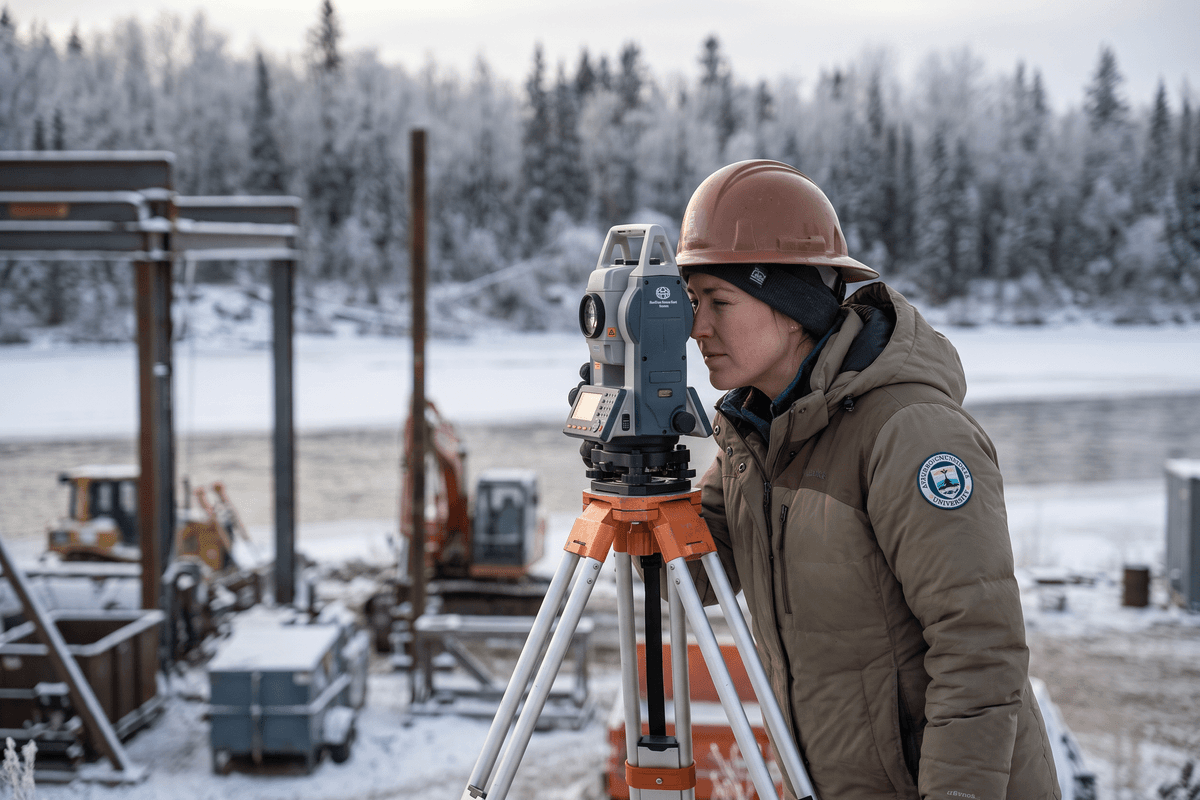

For decades, Canadian engineering has wrestled with a stubborn geographic paradox: while the majority of the nation’s primary resource wealth, heavy civil infrastructure projects, and climate-vulnerable assets are located across the northern tier, the advanced doctoral research institutions driving industrial innovation have remained overwhelmingly concentrated in southern metropolitan hubs. That structural imbalance took a decisive step toward realignment with the announcement that the University of Northern British Columbia (UNBC) has launched a new PhD in Engineering program—its first new doctoral engineering pathway in more than 15 years.
Targeted squarely at advancing research in regional resource development, cold-climate structural design, and environmental engineering, UNBC’s doctoral rollout is far more than an academic milestone. For engineering executives, project directors, and specialized consultants operating in British Columbia’s resource-heavy interior and northern corridors, the program creates a dedicated pipeline of terminal-degree technical talent trained in the very geotechnical, climatic, and industrial conditions where mega-capital projects are executed.
The Geotechnical and Climatic Realities of Northern Practice
Engineering in northern and rural jurisdictions presents baseline technical constraints that standard southern models often fail to capture accurately. From degrading discontinuous permafrost and extreme freeze-thaw thermal cycles to remote logistics and stringent watershed protections, northern projects demand localized empirical research.
Historically, heavy industrial operators—spanning liquefied natural gas (LNG), mining, forestry, and hydro transmission—have had to export complex computational fluid dynamics (CFD), soil-structure interaction, and environmental remediation research to urban universities in Vancouver, Calgary, or Toronto. While top-tier, these southern laboratories often lack immediate proximity to operational field conditions and real-time site monitoring networks.
"Advancing research directly within the region where industrial extraction, forestry innovation, and northern infrastructure meet changing climate dynamics fundamentally alters the feedback loop between theoretical engineering and field deployment."
By establishing advanced doctoral research clusters in Prince George, UNBC positions doctoral candidates and faculty to collaborate directly with industrial partners across several critical research vectors:
- Cold-Climate Geotechnical Engineering: Designing resilient foundation systems, slope stabilization protocols, and road embankments subject to severe seasonal frost heave and changing hydrological baselines.
- Advanced Timber & Bio-Based Structural Materials: Leveraging the regional forestry sector to develop high-performance mass timber connections, seismic damping systems, and hybrid composite materials tailored for northern industrial construction.
- Environmental and Tailings Remediation: Engineering passive water treatment systems, biogeochemical remediation methods, and long-term mine waste containment suitable for sub-boreal and alpine climates.
- Decentralized & Resilient Energy Systems: Developing resilient microgrids, industrial heat recovery loops, and biomass-to-energy integration for remote off-grid industrial nodes.
Strategic Alignment: Academic Capabilities vs. Industry Demands
The operational landscape of Northern British Columbia is undergoing unprecedented capital deployment, driven by the clean energy transition, critical minerals exploration, and export infrastructure. The table below illustrates how UNBC’s doctoral engineering framework aligns with current industrial engineering demands across the province:
| Industrial Sector | Core Engineering Challenge | Doctoral R&D Focus Area | Impact on Professional Practice |
|---|---|---|---|
| Mining & Critical Minerals | Tailings stabilization and acid rock drainage in wet, high-latitude environments. | Hydro-geochemical modeling and passive ecological barrier design. | Reduced environmental liability and faster regulatory permitting cycles. |
| Mass Timber & Civil Works | Structural durability under severe thermal cycling and moisture gradients. | Non-destructive testing, dynamic loading, and hybrid timber-steel joints. | Expanded use of engineered wood in large-scale industrial and civic structures. |
| Energy & Pipelines | Terrain stability, river crossings, and low-carbon compression systems. | Geohazard predictive analytics and advanced thermodynamic modeling. | Enhanced asset integrity management and proactive geohazard mitigation. |
| Municipal & Transportation | Accelerated pavement degradation and culvert washout under extreme weather. | Resilient materials engineering and cold-weather pavement composites. | Extended asset lifecycles and lower lifecycle maintenance costs. |
Retaining High-Yield Technical Talent in the North
One of the most persistent operational hurdles for engineering consultancies operating outside major metropolitan areas has been talent retention—particularly for senior technical specialists holding advanced postgraduate degrees (MASc and PhD). When regional talent must relocate to southern institutions for post-graduate work, a disproportionate percentage remains in urban centers, exacerbating regional engineering labor shortages.
By offering an accredited doctoral pathway in Prince George, UNBC creates a permanent talent anchor. Consulting firms such as WSP, Stantec, McElhanney, and specialized regional boutique firms can now co-sponsor doctoral fellowships, engage in collaborative Mitacs research grants, and retain rising engineering leaders who wish to remain based in northern communities.
The Professional Development Multiplier
- Direct Industry Sponsorship: Practicing Professional Engineers (P.Eng.) can pursue applied doctoral research while maintaining active project advisory roles, bridging the gap between practice and academia.
- Accelerated Technology Transfer: Specialized modeling techniques, instrumentation setups, and numerical simulations developed within PhD dissertations can be commercialized and deployed directly onto ongoing northern projects.
- Enhanced Regulatory Credibility: Proponents navigating rigorous environmental assessment processes benefit from peer-reviewed, regionally conducted empirical studies that withstand public and regulatory scrutiny.
Looking Ahead: Rewiring the Canadian Engineering Ecosystem
The introduction of UNBC’s PhD program arrives at a pivotal juncture for Canadian engineering. As infrastructure owners face the dual pressures of climate adaptation and accelerated natural resource modernization, the reliance on generic southern engineering templates is rapidly giving way to site-specific, data-rich engineering approaches.
UNBC's doctoral program sets a compelling benchmark for how mid-sized, regional universities can establish targeted centres of excellence that punch well above their weight. For Canadian engineering practitioners, this development signals a broader decentralization of high-end research capacity—moving computational rigor and advanced material science directly to the frontlines of Canada’s resource frontier.