
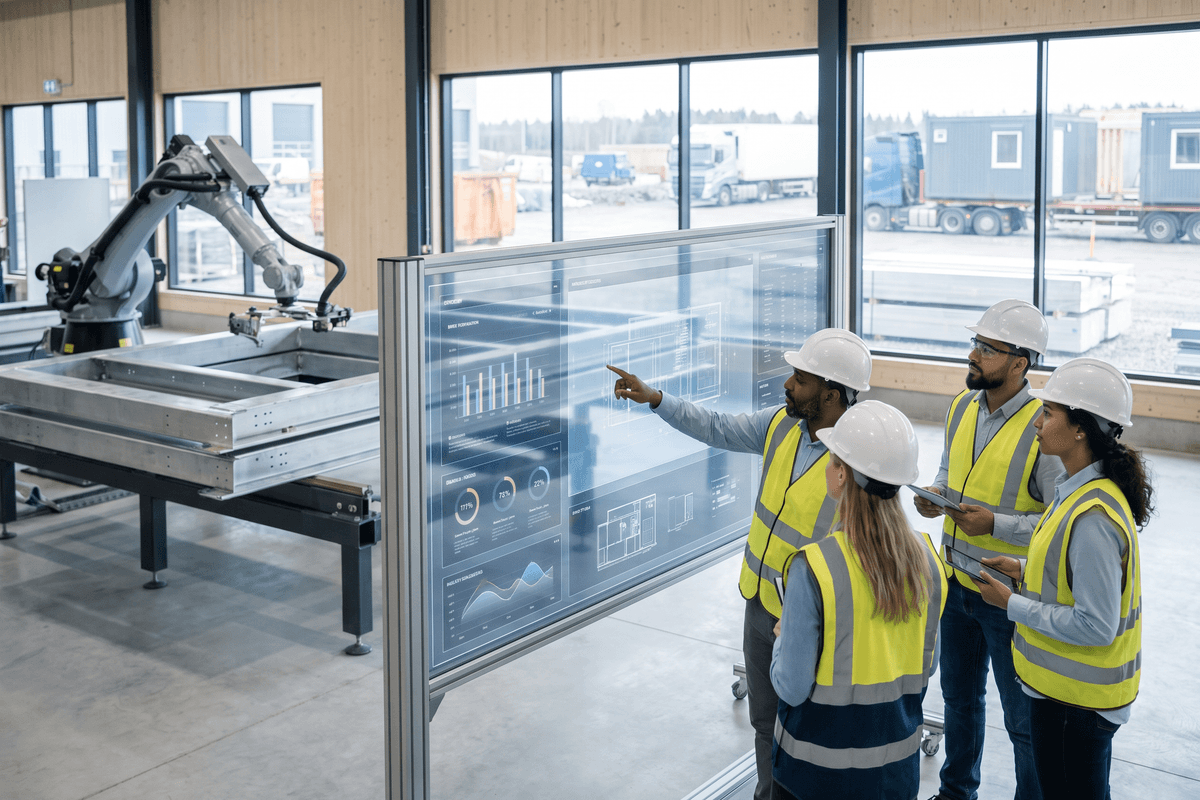

For decades, the standard hardware engineering workflow in the United States has operated as a series of disconnected, high-friction silos: design in CAD, mesh in finite-element tools, wait days or weeks for multi-physics high-performance computing (HPC) simulations, discover non-linear structural or thermal conflicts, and restart the cycle. That sluggish iteration loop is rapidly becoming untenable as hyperscale data center buildouts, aerospace defense platforms, and advanced semiconductor packaging demand compressed timelines under escalating cost pressures. Today, a pivotal realignment is underway—one that bridges cutting-edge physics intelligence algorithms with physical industrial fabrication on the shop floor.
Highlighting this paradigm shift, Palo Alto-based engineering intelligence platform Vinci raised a $250 million Series B funding round at a $1.5 billion valuation to scale its Continuous Physics Reasoning platform. Designed to eliminate the lag between conceptual design and multi-physics validation, the platform delivers instantaneous generative insights across complex aerospace, automotive, and semiconductor disciplines. Simultaneously, physical delivery contractors are modernizing downstream execution: mechanical engineering giant U.S. Engineering launched a new 110,000-square-foot metal fabrication facility in Lawrence, Kansas, expanding modular capacity to meet surging regional mechanical demands. Coupled with Engineering News-Record’s latest economic indicators showing persistent labor wage gains and data center acceleration, the U.S. engineering sector is witnessing the convergence of virtual physics reasoning and automated physical production.
The Bottleneck: High-Performance Simulation vs. Speed-to-Market
Hardware engineering has long lagged behind software in deployment velocity. While code can be compiled, tested, and integrated continuously via automated CI/CD pipelines, physical hardware engineering—encompassing thermal fluid dynamics, structural vibrational analysis, and electromagnetic interference—has required fragmented simulation cycles. Traditional numerical solvers such as computational fluid dynamics (CFD) and finite element analysis (FEA) demand massive compute clusters and complex meshing, often requiring days of compute time per major design iteration.
“Engineering complexity in mission-critical hardware has outpaced the throughput of legacy simulation solvers. Continuous physics reasoning bridges the chasm between raw generative models and first-principles physics verification, turning design exploration into a real-time, deterministic discipline.”
Vinci’s $250 million round reflects an urgent industry-wide demand to treat physical simulation not as an afterthought gate check, but as a continuous, ambient intelligence layer embedded directly into the engineering workflow. By utilizing neural operators, physics-informed neural networks (PINNs), and high-fidelity surrogate models, Continuous Physics Reasoning enables engineers to evaluate thousands of multi-variable hardware iterations in seconds rather than quarters.
Core Disciplines Being Transformed by Real-Time Physics
- Aerospace & Defense: Aerodynamic surface optimization, thermal shielding response during atmospheric re-entry, and structural stress dissipation in high-vibration engine compartments.
- Semiconductor Packaging: Micro-channel liquid cooling dynamics, thermal expansion stress in 3D stacked chip architectures, and extreme ultraviolet (EUV) optical stability.
- Advanced Automotive & EV: Battery pack thermal runaway mitigation, structural crashworthiness simulation, and power electronics inverter cooling under high continuous electrical load.
From Computational Model to the Shop Floor: The Kansas Expansion
Computational breakthroughs solve only half the engineering equation. Without advanced manufacturing infrastructure capable of translating algorithmic precision into physical assemblies, virtual gains remain theoretical. This reality is driving major mechanical engineering firms to aggressively expand their dedicated fabrication footprints across the American heartland.
A premier example is U.S. Engineering’s new 110,000-square-foot metal fabrication facility in Lawrence, Kansas. As regional industrial activity accelerates across data centers, biopharma manufacturing, and mission-critical power infrastructure, high-spec modular mechanical skids and sheet metal assemblies cannot be fabricated efficiently on active job sites.
| Engineering Metric | Traditional On-Site Mechanical Delivery | Continuous Physics + Offsite Prefabrication |
|---|---|---|
| Simulation & Iteration Time | Weeks per major CFD/FEA design change | Sub-second to minutes via neural physics reasoning |
| Rework & Clash Rates | 4% to 9% total installation rework on-site | < 0.5% due to high-tolerance factory fabrication |
| Field Labor Exposure | 100% exposed to site wage inflation & weather | Up to 60% shifted to controlled indoor facility |
| Commissioning Schedule | Linear, prone to trade stack delays | Concurrent: site prep runs parallel with skid assembly |
By moving precision welding, modular ducting, and structural piping into an indoor manufacturing environment, firms insulate their delivery timelines from jobsite weather disruptions while maximizing automated cutting, robotic orbital welding, and strict quality control.
Economic Realities: Navigating Labor Inflation and the Data Center Boom
The push toward physics-guided AI and offsite prefabrication is not merely an intellectual pursuit—it is an economic imperative. As detailed in ENR’s early October 2026 construction economic indicators, skilled craft wages and materials costs remain structurally elevated, while commercial data center buildouts are setting record pace across North America.
Data center infrastructure represents the ultimate stress test for mechanical and thermal systems. Hyperscale operators are deploying multi-megawatt AI compute racks that generate unprecedented heat densities, rendering traditional air-cooling architectures obsolete. Designing, validating, and building multi-loop liquid-to-chip cooling systems, cooling distribution units (CDUs), and massive hydronic piping loops requires flawless execution under brutal construction deadlines.
- Thermal Simulation Compression: Engineers must rapidly simulate transient fluid flows, pressure drop dynamics, and pump cavitation risks inside high-density data halls before metal is bent.
- Offsite Skid Packaging: Mechanical contractors pre-assemble complex hydronic pumping skids, complete with valves, sensors, and structural frames, within controlled regional facilities like Lawrence, Kansas.
- Plug-and-Play Field Deployment: Completed modules arrive on-site pre-tested and certified, cutting field installation hours by up to 50% and protecting project margins from compounding wage pressures.
Strategic Implications for U.S. Systems Engineers
As Continuous Physics Reasoning platforms mature and physical modular fabrication scales, engineering leaders must re-evaluate their operational toolchains and delivery models. The historical boundary between digital engineering design firms and physical trade contractors is dissolving into an integrated, closed-loop ecosystem.
To capitalize on this transformation, organizations should focus on three strategic priorities:
- Adopt Physics-Informed Design Workflows: Integrate neural surrogate modeling tools into early-stage conceptual exploration to identify optimal multi-physics configurations before committing capital to tooling or heavy computing runs.
- Standardize for Modular Fabrication: Design mechanical and structural components with offsite fabrication constraints in mind, leveraging standardized parametric dimensions that fit directly onto automated laser cutting and CNC forming equipment.
- Harmonize Digital Deliverables with Manufacturing ERPs: Ensure that simulation outputs and parametric CAD models export directly into shop-floor manufacturing execution systems (MES), eliminating manual re-drafting and data translation errors.
The Road Ahead: Building the Autonomous Hardware Pipeline
The convergence of Vinci’s $250 million investment in physical AI reasoning and industrial expansions like U.S. Engineering’s Lawrence facility signals a profound maturation of American engineering infrastructure. In an era marked by rapid technological change, skilled labor constraints, and complex thermodynamic demands across computing, defense, and power sectors, traditional trial-and-error hardware cycles are no longer viable.
By pairing instantaneous, first-principles physics intelligence with precision offsite fabrication, U.S. engineering is establishing a resilient, scalable blueprint. For practitioners across the aerospace, semiconductor, and mission-critical construction sectors, the mandate is clear: embrace continuous physics reasoning in the digital sphere and master offsite modularity on the shop floor to lead the next generation of American hardware execution.