
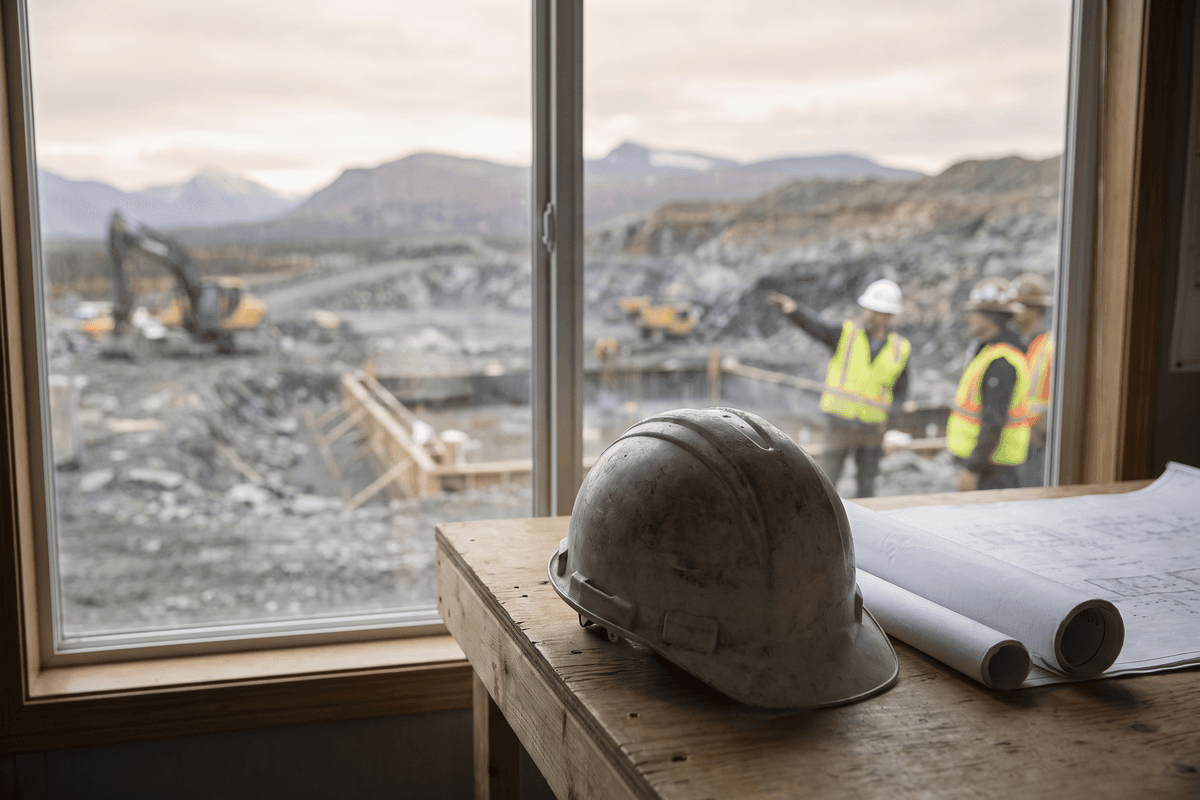



Before a single timber is framed or a concrete foundation is poured, a housing development is fundamentally a civil engineering problem. For years, Canada’s national discourse on housing has been dominated by zoning debates, interest rates, and lumber costs. But the true bottleneck to density is entirely invisible to the average citizen: the subterranean networks of drinking water, wastewater, and solid waste infrastructure that make urbanization possible. Without pipes, you cannot build homes.
This week, the engineering reality of the housing crisis took center stage. The federal and Alberta governments forged a new agreement to inject over $510 million into local infrastructure through the Canada Housing Infrastructure Fund. Concurrently, the Canada Mortgage and Housing Corporation (CMHC) released its 2026 Northern Housing Report, painting a starkly contrasting picture of development in Canada’s most unforgiving climates. Together, these developments signal a massive pivot in how Canada is funding growth, shifting the spotlight directly onto municipal and civil engineering firms to execute.
The Alberta Blueprint: $510 Million for the Underground Economy
Alberta is currently experiencing unprecedented population growth, placing immense strain on legacy municipal infrastructure. The new $510 million partnership is a targeted strike at the core of this issue. Rather than funding housing construction directly, this capital is strictly earmarked for the essential civic lifelines: drinking water treatment and distribution, wastewater collection and processing, and solid waste management.
For engineering firms operating in Western Canada, this announcement is the starting gun for a multi-year procurement supercycle. Municipalities from Edmonton and Calgary to mid-sized hubs like Red Deer and Lethbridge will now have the capital to advance projects that have been stalled in the design phase due to budget constraints.
Scaling Up and Digging Deep
The engineering challenges here are twofold. First is capacity scaling. Existing wastewater treatment plants, many designed decades ago, are reaching their hydraulic and biological limits. Upgrading these facilities requires complex, phased engineering to expand capacity without disrupting current operations. Second is greenfield servicing. Pushing the suburban boundary outward requires massive new trunk lines, lift stations, and stormwater management ponds—all of which must now be designed to withstand increasingly volatile weather patterns.
"The Alberta agreement recognizes what civil engineers have been saying for a decade: you cannot legislate housing targets into existence if the local wastewater plant is at 98% capacity. This $510 million is the prerequisite for the province's housing ambitions."
The Northern Contrast: Engineering on the Edge
While Alberta aims to solve its housing crisis with a massive influx of infrastructure capital, the situation in Canada's northern capitals—Whitehorse, Yellowknife, and Iqaluit—demonstrates what happens when engineering challenges compound with logistical nightmares. The CMHC's 2026 Northern Housing Report reveals that while affordability pressures have slightly eased, housing supply remains severely constrained.
The culprit? A critical lack of serviced land driven by exorbitant construction costs and unique geotechnical hurdles.
The Geotechnical Tax
In the North, municipal engineering is a battle against geology and climate. In Yellowknife, laying a standard water main often requires blasting through solid Canadian Shield bedrock. In Iqaluit, the presence of permafrost means traditional subterranean pipes are impossible; engineers must rely on "utilidors"—heavily insulated, above-ground pipe networks that are incredibly expensive to construct and maintain. Furthermore, as climate change accelerates permafrost degradation, the structural integrity of both existing infrastructure and new developments is under constant threat.
The CMHC report highlights that these logistical challenges—coupled with a short construction season and the need to barge or truck in specialized materials—push the cost of servicing a single residential lot to astronomical levels. It is a harsh reminder that capital alone cannot solve infrastructure deficits when the physical environment is actively working against you.
Practical Implications for the Engineering Sector
The juxtaposition of the Alberta funding influx and the Northern servicing constraints offers several critical takeaways for Canadian engineering professionals and infrastructure firms:
- A Surge in Municipal RFPs: Firms in Alberta should prepare for a wave of Requests for Proposals (RFPs) focused on water and wastewater master planning, detailed design for trunk expansions, and treatment plant retrofits. Agility in project delivery will be a key differentiator.
- Demand for Trenchless Technologies: As Alberta municipalities look to upgrade infrastructure in dense, existing neighborhoods to support infill housing, the demand for trenchless engineering (like horizontal directional drilling and pipe bursting) will skyrocket. Minimizing surface disruption is no longer a luxury; it is a mandate.
- Innovation in Remote Servicing: The crisis in the North highlights a desperate need for decentralized, modular water and wastewater solutions. Engineering firms that can develop scalable, cold-climate-resilient micro-utilities will find a highly lucrative, albeit niche, market in remote communities and northern mining camps.
- The Talent Squeeze: The $510 million injection in Alberta will exacerbate the existing shortage of intermediate and senior civil engineers, hydrologists, and municipal planners. Firms will need to aggressively recruit and leverage AI-driven civil design tools to meet the incoming workload.
Comparing the Realities: Urban vs. Remote Infrastructure
To understand the dichotomy of Canada's infrastructure challenge, we must look at how engineering requirements differ between high-growth southern corridors and constrained northern environments.
| Parameter | Alberta (High-Growth Corridors) | Northern Capitals (e.g., Yellowknife, Iqaluit) |
|---|---|---|
| Primary Bottleneck | Capital availability for capacity expansion | Geotechnical realities (bedrock, permafrost) |
| Servicing Method | Traditional subterranean trenching | Bedrock blasting, above-ground utilidors |
| Logistical Complexity | Moderate (Standard supply chains) | Extreme (Short seasons, barge/ice-road transport) |
| Engineering Focus | Hydraulic modeling, scale, climate resilience | Thermal modeling, permafrost preservation, modularity |
The Blueprint Forward
The narrative surrounding Canada’s housing crisis is finally maturing. Policymakers are realizing that ambitious housing targets are merely theoretical without the municipal engineering backbone to support them. The $510 million partnership in Alberta is a massive victory for the civil engineering sector, providing the tangible capital needed to turn blueprints into operational lifelines.
However, as the CMHC's findings in the North demonstrate, the engineering profession must also rise to the occasion with technical innovation. Whether it is designing high-capacity wastewater retrofits in Calgary or engineering permafrost-resilient utilidors in Nunavut, the mandate is clear: the future of Canadian housing rests not in the hands of politicians, but on the drafting tables of its engineers.