
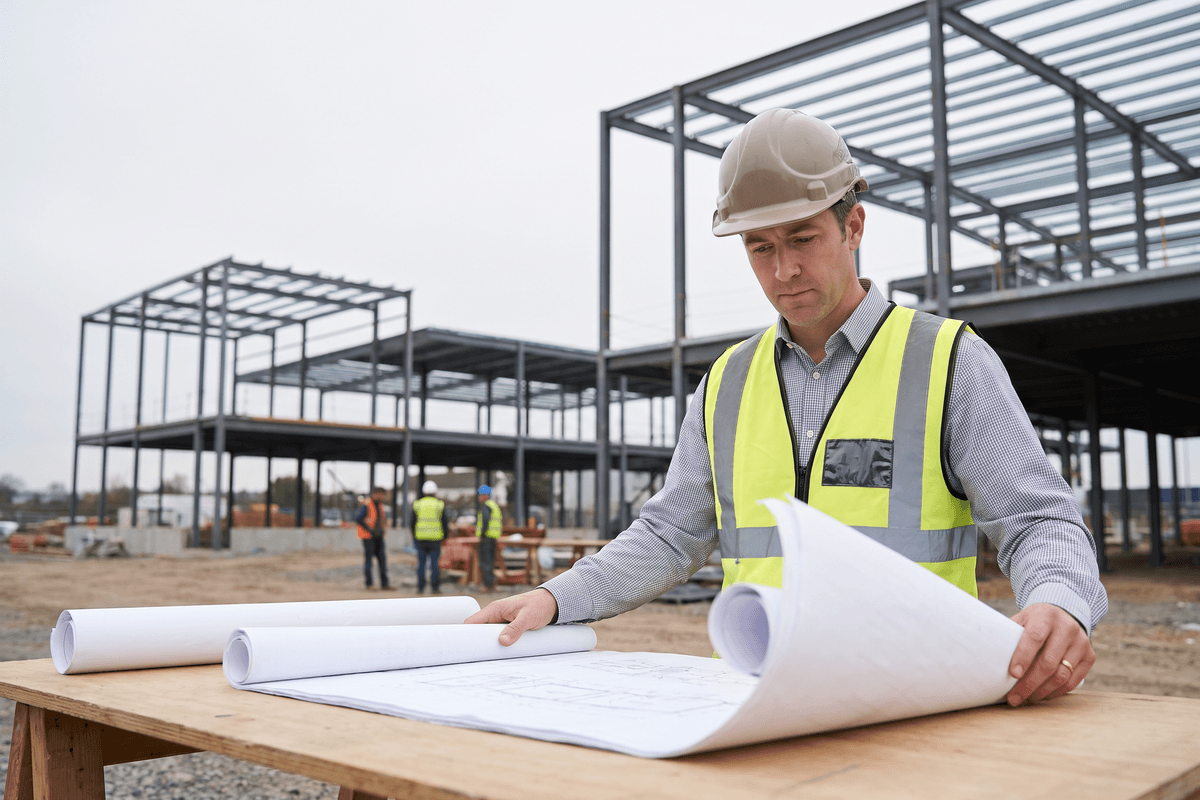

Across Canada, the physical infrastructure supporting the artificial intelligence era is accelerating at a pace that traditional commercial frameworks were never built to accommodate. With more than 150 large-scale data centres currently under active development nationwide, the sheer velocity, power intensity, and thermal complexity of these facilities are fundamentally straining conventional insurance underwriting and project risk delivery. What was once treated as standard commercial real estate or light industrial engineering has transformed into high-density, critical infrastructure engineering—forcing a profound reassessment of liability, design tolerances, and construction methodologies from coast to coast.
According to recent market analyses reported by Insurance Business Magazine, the convergence of extreme power densities—often exceeding 60 to 100 kW per rack—with advanced liquid-to-chip cooling loops and compressed delivery schedules is exposing severe blind spots in standard underwriting models. For Canadian professional engineers (P.Engs), engineering, procurement, and construction (EPC) contractors, and technical project directors, the message is unmistakable: structural, electrical, and mechanical designs can no longer be decoupled from complex risk engineering and actuarial verification.
The Physics of AI Density vs. Conventional Actuarial Risk
Traditional data centre designs relied on well-understood airflow dynamics, hot-aisle/cold-aisle containment, and standard mechanical chillers operating with predictable electrical redundancies. However, generative AI clusters require computational power and power density profiles that render conventional HVAC designs obsolete.
Engineers are now specifying complex hydronic loops, direct-to-chip liquid cooling manifolds, and secondary dielectric fluid immersion systems inside multi-megawatt facilities. While these thermal management systems solve the heat dissipation problem, they introduce acute fluid dynamics and water-damage risks directly above multi-million-dollar computing clusters. As highlighted in Gallagher’s 2026 Canadian Construction and Engineering Report, industrialization, artificial intelligence, and sophisticated risk modeling are rapidly becoming mandatory prerequisites for securing project underwriting.
"When a facility concentrates 100 megawatts of power and thousands of gallons of pressurized liquid cooling into a single facility envelope, a localized mechanical failure is no longer a maintenance ticket—it is a catastrophic risk event. Underwriters are demanding engineering-grade validation before writing policies."
The resulting engineering shift involves several non-negotiable design priorities:
- Dual-Loop Isolation & Leak Detection: Implementing point-addressable sensor grids and fast-acting automated isolation valves to decouple fluid manifolds within milliseconds of pressure drop detection.
- Harmonic & Voltage Transient Mitigation: Engineering heavy-duty active harmonic filters and solid-state transfer switches to protect municipal sub-stations from severe load swings driven by AI training spikes.
- Thermal Battery & Closed-Loop Integration: Designing closed-loop heat recovery networks that capture low-grade thermal exhaust to feed district heating systems or preheat industrial processes, mitigating environmental permitting hurdles.
Industrialized Delivery and Applied Intelligence on Site
To reduce onsite execution risks—where labor shortages and weather delays can compromise critical commissioning windows—the Canadian engineering sector is leaning heavily into modularization and smart site automation. Prefabricated, pre-commissioned power blocks, packaged electrical rooms (E-Houses), and modular pump skids are moving mechanical complexity from unpredictable job sites to controlled factory environments.
This industrial pivot is being matched by an aggressive uptake in applied robotics and data intelligence across project workflows. A prime example is Québec engineering and tech consultancy Osedea’s acquisition of Ventriloc, an integration aimed directly at uniting custom software, data intelligence, and autonomous robotics for industrial environments. By deploying autonomous scanning robots and AI-driven computer vision across heavy civil and structural sites, engineering teams can achieve continuous, millimeter-accurate verification against BIM (Building Information Modeling) baselines, virtually eliminating costly interface clashes before MEP (mechanical, electrical, plumbing) trades arrive.
Cross-Sector Parallels: Mega-Contracts and Marine Engineering Precision
The imperative for rigorous systems engineering and risk containment is not confined to digital infrastructure. Canada's broader engineering landscape is experiencing a parallel demand for extreme technical oversight across heavy civil, marine, and defense mega-projects.
In Lévis, Québec, the federal government officially announced an $11-billion investment with Chantier Davie to engineer and build six new heavy program icebreakers under the National Shipbuilding Strategy. The project represents the largest single shipbuilding contract in Québec’s history, demanding advanced naval architecture, polar-class steel structural mechanics, and complex ice-clearing hull hydrodynamics.
| Engineering Domain | Primary Technical Hurdle | Core Risk / Underwriting Driver | Dominant Engineering Mitigation |
|---|---|---|---|
| AI Hyper-Data Centres | Extreme rack power density (60–100+ kW) & liquid cooling integration | Catastrophic dielectric/water leaks, grid instability, power outages | Factory-built modular skids, digital twin simulations, micro-isolation valving |
| Polar Marine (Chantier Davie) | Dynamic ice-loading, extreme fatigue, propulsion under polar stress | Hull breach, lifecycle system failure in isolated Arctic corridors | High-yield Polar Class steel alloy design, multi-redundant diesel-electric pods |
| Industrial Modular EPC | Offsite tolerance mismatch, supply chain transit deformation | Onsite rework delays, insurance liability disputes between trade tiers | LiDAR site robotics, automated digital twin verification, integrated BIM-to-fab workflows |
Just as in mega-data centres, mega-scale marine programs require deep multi-disciplinary systems engineering where lifecycle reliability, materials fatigue modeling, and redundant auxiliary systems are fully integrated into the design phase to satisfy sovereign operational mandates.
The Strategic Scale Play: Engineering M&A as a Risk Buffer
Executing multi-billion-dollar infrastructure mandates requires not only technical ingenuity but also immense balance-sheet resilience. As a result, the Canadian engineering consulting market is consolidating at an unprecedented rate, enabling firms to absorb larger liabilities, access global specialist talent, and provide unified end-to-end delivery.
Montreal-based global engineering powerhouse WSP Global is pursuing an ambitious $7.5-billion combination with Dutch consultancy Arcadis NV. If realized, the transaction would solidify a dominant global engineering entity equipped with the environmental, water management, and high-tech infrastructure capacity needed to dominate worldwide data centre and climate adaptation pipelines.
Similarly, regional and specialized consultancies are combining forces to broaden their interdisciplinary reach. In Western Canada, Vancouver-based architecture and planning firm David Nairne + Associates partnered with Dillon Consulting, uniting First Nations infrastructure planning, structural engineering, and environmental stewardship under a unified operational banner. These strategic alliances provide the multidisciplinary breadth required to guide projects through Canada's rigorous regulatory, environmental, and underwriting matrices.
Practical Mandates for Canadian Engineering Teams
- Design for Verifiability: Incorporate continuous sensor architectures and automated telemetry into primary mechanical and electrical schemes to give insurers auditable, real-time lifecycle operational data.
- Embrace Modular Offsite Skids: Shift volatile MEP installation work into controlled manufacturing settings to minimize site congestion and ensure pre-tested, zero-defect installation.
- Bridge the IT-Civil Chasm: Ensure civil and structural engineers work in direct coordination with data science, controls, and software teams from concept design through commissioning.
- Front-Load Actuarial Collaboration: Engage insurance risk engineers during the 30% design phase rather than treating underwriting as an afterthought at substantial completion.
The Forward Outlook
Canada stands at the intersection of a massive industrial transformation. The deployment of 150+ data centres, the revitalization of sovereign naval shipbuilding at Chantier Davie, and the aggressive consolidation of engineering consultancies demonstrate that the complexity of modern capital projects has outgrown traditional delivery frameworks.
For Canadian engineering professionals, navigating this landscape requires embracing intelligent construction technologies, mastering dense systems integration, and treating risk modeling not as a legal hurdle, but as a foundational design parameter. Those who master the union of advanced engineering mechanics and proactive risk validation will define the trajectory of Canada's built environment for decades to come.